
Indonesian Citizens Put Brakes on Overseas Holidays Amid Weakening Purchasing Power
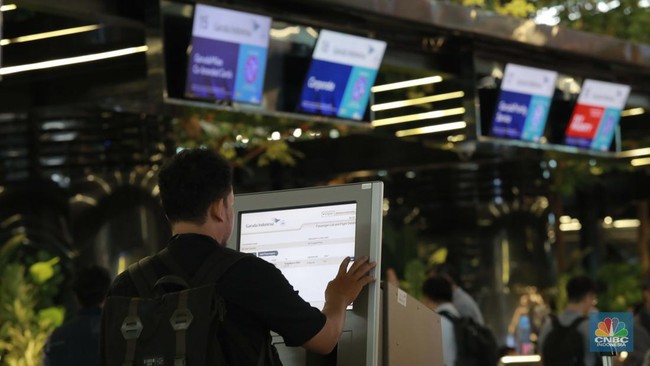
The weakening of public purchasing power has begun to affect travel decisions. Pressured economic conditions are making some people more cautious in allocating spending for travel needs.
Pauline Suharno, Chairperson of the Indonesian Travel Agent Association (ASTINDO), sees a number of economic factors weighing on people’s interest in travelling. These conditions do not stand alone, as several cost components have changed as well.
“Purchasing power is weakening, ticket prices are rising, raw material costs are up, and there have been many layoffs,” Pauline Suharno told CNBC Indonesia on Wednesday (26/8/2026).
Pressure is also coming from changes in people’s financial assets. Financial market movements can influence consumer confidence when deciding on spending for recreational needs.
“The weakening of share prices and the decline in gold prices are also factors affecting people’s interest in travelling,” she said.
However, these conditions are not felt evenly across all segments of society. Consumers with higher economic capacity are still considered to have room to maintain their travel budgets.
“The upper-middle segment is actually not affected,” Pauline said.
Bank Indonesia data provides a picture of changes in Indonesia’s international travel flows. In the Indonesia Balance of Payments Report for the second quarter of 2026, the number of outbound travellers was recorded at 1.96 million people, down from 2.5 million people in the previous quarter.
In contrast, the number of inbound travellers to Indonesia actually increased to 4.01 million people from 3.43 million people previously. This movement shows a difference in trend between Indonesians travelling abroad and the arrival of foreign travellers.
Amid these pressures, the travel industry still has room to recover its performance. Sales momentum and travel fairs are one indicator that consumers have not entirely abandoned the need to travel.
“Hopefully it will be better. Looking at our results in the second half, they are better, because at the Astindo Travel Fair on 20-23 August our results were very good, up 40 percent from last year,” Pauline said.
Indonesia’s travel services performance still recorded a surplus in the second quarter of 2026. Bank Indonesia recorded a travel services surplus of US$606 million, although it shrank from US$1.09 billion in the first quarter of 2026.
Source: jawawa.id (https://jawawa.id/newsitem/indonesian-citizens-put-brakes-on-overseas-holidays-amid-weakening-purchasing-power-1787748688)
Originally published by CNBC Indonesia (https://www.cnbcindonesia.com/news/20260826155049-4-762448/muncul-fenomena-warga-ri-lagi-rem-liburan-ke-luar-negeri-ada-apa), translated from Indonesian