
Indonesian Citizens, Don't Be Envious! Malaysian Ringgit Now Asia's Strongest Currency
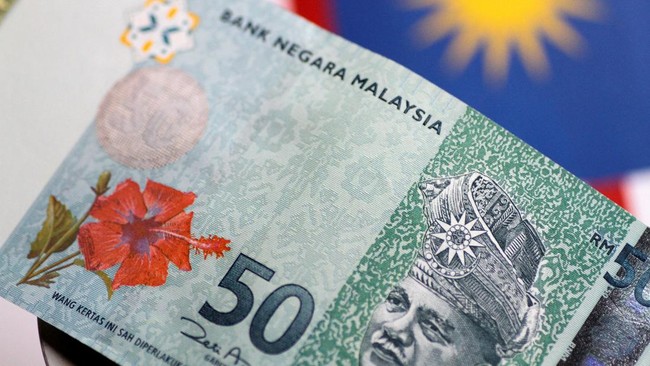
The Malaysian ringgit has become one of Asia’s best-performing currencies throughout 2026. Its performance is notable amid lingering uncertainties in the global financial markets. The war in Iran remains a concern due to its potential to disrupt energy supplies and drive oil prices higher. From the start of the year until the close of trading on Tuesday (28 April 2026), the ringgit has appreciated by 2.64% against the greenback, making it the highest in Asia, with China’s yuan in second place, strengthening 2.23% against the US dollar. This appreciation is supported by solid Malaysian trade data, sustained economic growth, and inflows of foreign funds into the capital markets. According to Refinitiv, the Malaysian ringgit strengthened in Tuesday’s trading (28 April 2026). The currency of the neighbouring country closed with a slight gain of 0.03% at MYR 3.949/US.Thisstrengtheningcontinuesthepositiveperformancefromtheprevioustradingday.OnMonday(27April2026), theMalaysianringgitalsoclosedup0.30. The ringgit’s strength is inseparable from Malaysia’s still healthy trade balance. Based on data from the Department of Statistics Malaysia (DOSM), Malaysia’s total trade in March 2026 grew 9.3% year-on-year to MYR 273.0 billion, equivalent to Rp 1,188 trillion (assuming an exchange rate of Rp 4,352/MYR). This figure rose from MYR 249.8 billion in the same period the previous year. The increase was supported by stronger growth in exports and imports. Malaysia’s exports rose 8.3% to MYR 148.8 billion, while imports increased 10.4% to MYR 124.2 billion. Nevertheless, Malaysia’s trade surplus narrowed slightly by 0.9% to MYR 24.6 billion in March 2026. Head of Economics at Bank Muamalat Malaysia Bhd, Mohd Afzanizam Abdul Rashid, assesses that the Malaysian economy is still showing strong resilience. Initial estimates indicate that Malaysia’s gross domestic product (GDP) growth in the first quarter of 2026 is above 5%. He also stated that the latest international trade data shows Malaysia’s nominal exports grew 12.7% in the first quarter of 2026. This figure is higher than the 11.0% growth in the previous quarter. “Thus, the Malaysian economy is in a strong position to face the current challenges due to the surge in oil prices from the war in Iran,” said Mohd Afzanizam, quoted from Bernama. The ringgit also receives support from foreign fund inflows into the Malaysian capital markets. Mohd Afzanizam said that foreign fund flows in the capital markets are quite positive, thereby boosting demand for the ringgit from global investors. With this support, the ringgit is considered to still have strong buffers, even though global markets are still overshadowed by concerns over the war in Iran. On a year-to-date basis up to the close of trading on Monday (28 April 2026), the Malaysian ringgit is also recorded to have strengthened against almost all major Asian currencies. The largest strengthening of the ringgit occurred against the Indian rupee, by 8.07%, followed by the Philippine peso at 7.31%, the rupiah at 6.76%, and the Thai baht at 6.46%. The ringgit also strengthened against the Korean won by 5.24%, the Japanese yen by 4.63%, the Taiwan dollar by 3.57%, the Vietnamese dong by 2.82%, and the Singapore dollar by 1.97%. Meanwhile, the ringgit’s strengthening against the Chinese yuan is relatively limited, at just 0.41%.