
Indonesian Children Spend 7.5 Hours Daily on Gadgets, Ministry Pushes Outdoor Activities
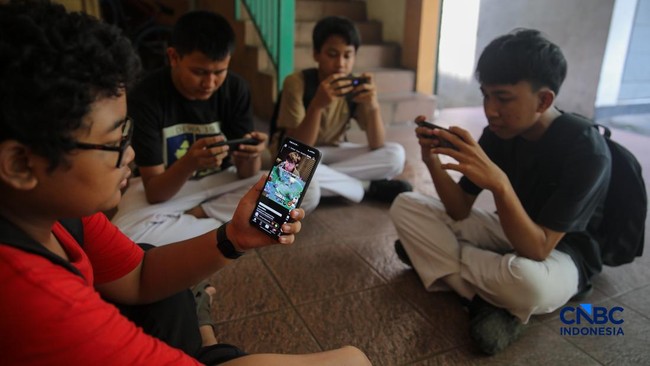
Jakarta, CNBC Indonesia - The amount of time children spend on gadgets is becoming increasingly concerning. Data from the Ministry of Communication and Digital shows that their screen time has reached 7.5 hours per day.
Consequently, the ministry is urging children to return to outdoor activities rather than remaining fixated on device screens.
“They have been very active digitally, even up to around 7.5 hours per day. However, what we continue to support most is their return to interacting in a physical condition,” said the Head of the Human Resources Development Agency (BPSDM) of Communication and Digital, Boni Pudjianto, during the ‘Tunggu Anak Siap Jakarta’ event at Taman Bendera Pusaka on Friday (12/06/2026).
He explained that children need to interact with the physical world, including playing and socialising, as this interaction is vital for their social-emotional development.
“How children can learn to play, make friends, and recognise the physical world is very important. Our children are spending more time on screens nowadays, but less time in public spaces,” he added.
Special Staff to the Minister of Communication and Digital, Alfreno Kautrade, stated that many parents are confused about finding alternative activities for children once gadget and digital platform usage is restricted.
Previously, the Ministry of Communication and Digital (Komdigi) released Government Regulation Number 17 of 2025 regarding the Governance of Electronic System Implementation in Child Protection (PP Tunas), which limits platform usage for children under the age of 16.
“Many parents ask us, ‘It is fine, we must now restrict children’s access to the digital world, but what are the alternatives?’ Ultimately, we are reintroducing the public space to the community,” said Alfreno.
As an alternative, Komdigi, together with the Provincial Government, is undertaking the national movement ‘Tunggu Anak Siap’ (Tunas) Jakarta, held at Taman Bendera Pusaka from 12-13 June 2026. Within this initiative, children can engage in physical activities and play, ranging from Lego to basketball.
“Today’s activity targets approximately 3,000 children. We want our children today to be able to touch public spaces again,” he added.