
Indonesian Capital Market Reforms Continue as Fundamentals Grow and Foundations Remain Strong
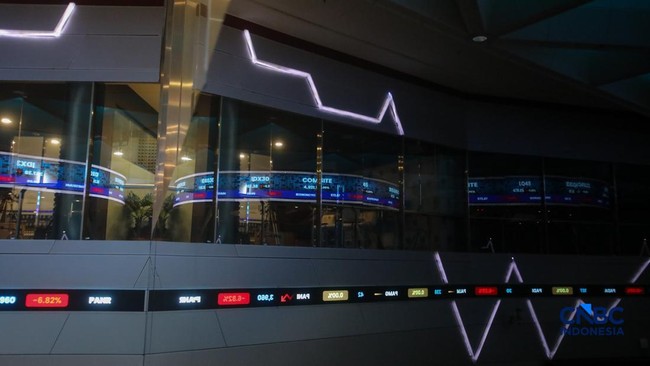
Jakarta, CNBC Indonesia — Recent developments in Indonesia’s capital market have drawn investors’ attention, particularly following MSCI Inc.’s announcement on 15 October 2026 that it had opened a consultation on a proposed change to Indonesia’s classification from Emerging Market to Standalone Market. The Indonesia Stock Exchange (IDX) stressed that the consultation had not produced a final decision, capital-market reforms were continuing, and listed companies’ fundamentals were still growing.
These developments should be considered comprehensively, taking into account the various factors affecting the market, from global dynamics and domestic conditions to market quality and accessibility, as well as the fundamental performance of listed companies. The IDX, the Financial Services Authority (OJK) and the Self-Regulatory Organisations (SROs) are continuing to improve transparency and the quality of Indonesian capital-market data to maintain investor confidence and support long-term market growth.
Improving transparency and market integrity is an important part of Indonesia’s capital-market reform agenda. Measures already taken include publishing data on shareholdings above 1%, providing more detailed share ownership information, and strengthening trade surveillance.
The IDX and the Indonesian Central Securities Depository (KSEI) have also refined the High Shareholding Concentration (HSC) methodology by expanding the shares covered by reviews to include those with a Price Impact Ratio and a market capitalisation above Rp5 trillion. This is an additional indicator for monitoring ownership concentration and share-trading activity.
IDX Director Iding Pardi said that improving transparency and data quality was an important part of efforts to strengthen the credibility of Indonesia’s capital market.
“We are continuing to make improvements to increase transparency, strengthen data quality and ensure investors have better access to information. These efforts are also part of our commitment to addressing MSCI’s concerns about Indonesia’s capital market,” Iding said, as quoted on Tuesday (20 October 2026).
On liquidity, measures include removing minimum share prices and gradually raising the minimum free-float requirement for listed companies to 15%. As at 30 September 2026, the average free float of listed companies stood at 22.99%, with 560 of 918 companies (61%) meeting the requirement.
To support the transition, Iding said the exchange was continuing its outreach, issuing reminders about the transition period, conducting one-to-one engagement and providing a hot-desk service for listed companies. The IDX has also established a Free Float Monitoring Task Force with KSEI and representatives of market associations.
“We are also facilitating meetings between listed companies and prospective investors through roadshows, business meetings and live public exposés, to increase companies’ exposure while supporting compliance with the requirements in a measured way,” he added.
Surveillance and law enforcement are also important to safeguarding capital-market integrity. In a recent development, OJK announced fines totalling Rp2.1 trillion against related parties. The penalties comprise Rp1.5 trillion for market manipulation involving one listed company and Rp600 billion for violations of the initial public offering (IPO) process involving two listed companies. The action is part of efforts to strengthen compliance and maintain investor confidence.
Despite the ongoing reforms, Indonesia’s economy continues to perform positively. In the second quarter of 2026, the economy grew by 5.29% year on year, while September inflation was 3.28%. Foreign exchange reserves stood at US$146.3 billion at the end of September.
Compared with Nigeria and Argentina, which are classified as Standalone Markets, Indonesia has a larger market capitalisation, at US$497.96 billion, against US$106.27 billion and US$72.94 billion respectively. Indonesia also recorded higher economic growth and lower inflation than both countries.
Listed companies’ fundamentals are also continuing to grow. In the first half of 2026, aggregate net profit among all listed companies rose 16.25% compared with the first half of 2025, while net profit at companies in the LQ45 index increased by 18.49%. Some 74% of listed companies reported profits, with the energy sector recording the highest net-profit growth, at 78.28%.
Against the backdrop of last week’s IDX Composite correction, these developments show that share-price movements and corporate fundamentals should be understood as two distinct aspects. Falling share prices do not necessarily reflect an immediate deterioration in a company’s operational performance. Investors should continue to consider each company’s fundamental quality, business prospects, valuation and investment risks.
The comparison shows that although Indonesia has a relatively large market and strong economic growth, MSCI’s classification also takes account of ownership transparency, market accessibility and data quality. The IDX is therefore continuing to strengthen reforms and oversight, including monitoring listed companies’ compliance with free-float requirements.
Indonesia has several characteristics supporting its eligibility as an Emerging Market, particularly in terms of market size and liquidity and accessibility for global investors. With market capitalisation of around US$498 billion and nine constituents in the MSCI Standard Index, Indonesia exceeds the minimum requirement of three constituents for the Emerging Market category.
Indonesia’s capital market is also open to foreign investors, allows capital to flow in and out freely, and has normally operating, liquid trading infrastructure. In addition, the country’s foreign exchange reserves of US$146.3 billion support the economy’s external resilience.
Under MSCI’s classification framework, Indonesia meets several key criteria, including economic development, market size and liquidity, and accessibility under Pillars 1–4. These cover openness to foreign investors, freedom of capital flows, operational efficiency, and the availability of instruments and data. Transparency under Pillar 5 remains an area of concern that is being addressed through capital-market reforms.
With market characteristics that continue to support investment and reforms under way, Indonesia has a strong foundation for maintaining its competitiveness in the Emerging Market classification, although the final classification decision rests with MSCI.
Indonesia’s position with other index providers is also relevant context. The country’s reform efforts have received a positive response from international index provider FTSE Russell. On 6 October 2026, FTSE Russell retained Indonesia in the Secondary Emerging category and did not place it on the Watch List. This shows that assessments of market classifications can differ according to each index provider’s methodology.
For investors, current developments are an opportunity to examine information more comprehensively, understand risks and assess investments in line with their own fundamentals and financial objectives. While MSCI’s consultation is still under way and no final decision on Indonesia’s classification has been reached, capital-market reforms remain focused on strengthening transparency, disclosure and market integrity.
With listed companies’ fundamentals still growing and market characteristics supporting accessibility and liquidity, these efforts are expected to sustain confidence among domestic and global investors and support the development of a healthier, more resilient and sustainable Indonesian capital market.
Source: jawawa.id (https://jawawa.id/newsitem/indonesian-capital-market-reforms-continue-as-fundamentals-grow-and-foundations-remain-strong-1792471861)
Originally published by CNBC Indonesia (https://www.cnbcindonesia.com/market/20261020111443-17-777772/pasar-modal-ri-reformasi-berjalan-fundamental-tumbuh-fondasi-kuat), translated from Indonesian