
Indonesian Businessman Embroiled in S$4.3 Billion Counterfeit Currency Case in Singapore Casino
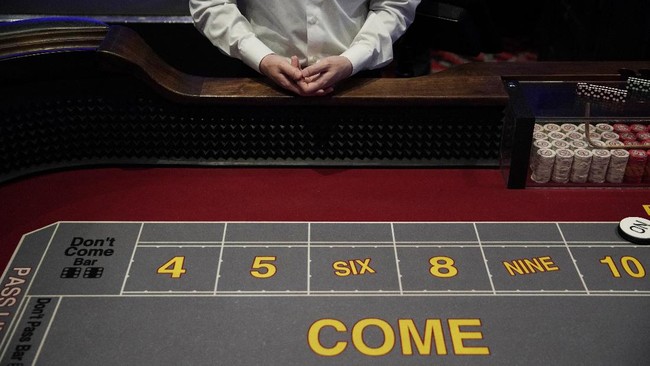
An Indonesian businessman is currently being interrogated by the Singapore police after allegedly using 34 counterfeit S$10,000 notes at the Resorts World Sentosa casino. The total value of the currency amounts to S$340,000, or approximately Rp4.3 billion.
The businessman, identified only as Steven, allegedly exchanged the notes for casino chips during three visits in June 2026. At the time, the high-denomination notes were initially accepted as genuine.
Steven’s lawyer, Yosia Ginting, stated that his client was unaware that the money was counterfeit and claimed that Steven is actually a victim of fraud. “Steven is a victim of fraud and is not part of a counterfeit money network. We have reported this case to the South Tangerang Police,” Yosia said, as reported by the Malay Mail on Tuesday (22/9/2026).
Yosia stated that Steven obtained the Singaporean currency in connection with a transaction for the sale of a shop-house in South Tangerang. Steven had previously been introduced by a friend to a man named Anthony.
On 8 June, Anthony gave Steven one S$10,000 note, claiming he wanted to exchange the old banknote. A friend of Steven, named Rangga, reportedly convinced him that the note had been verified at an OCBC branch in Indonesia and declared authentic.
Steven subsequently brought the money to Singapore. However, a money changer refused to accept it because the denomination was too large. While at Resorts World Sentosa, a VIP host reportedly suggested that Steven exchange the money at the casino, where the notes were then accepted and converted into chips.
Thereafter, Anthony handed Steven another 33 pieces of S$10,000 notes, claiming the money was an inheritance from his parents and requesting Steven to exchange them for smaller denominations in Singapore. Steven returned to Singapore and allegedly deposited 27 of these notes at the casino, while six others remained in Indonesia.
Casino Security Interception
The case came to light when Steven returned to Singapore with his wife, children, and the daughter of a property agent on 26 June, a trip reportedly related to the settlement of another property payment. Upon arrival, he was stopped by casino security and police.
It was discovered that the six notes remaining in Indonesia had been used as part of a payment for a house in Pamulang, Banten. However, the daughter of the house seller encountered difficulties when attempting to exchange the notes at a money changer in Jakarta.
According to Steven’s lawyer, when stopped at the casino, his client was informed that the serial numbers on several of the six notes matched the serial numbers of the notes he had exchanged during previous visits.
Steven was subsequently interrogated at the Police Cantonment Complex. He was informed that he is under investigation for allegedly bringing large sums of cash into Singapore without declaration, circulating counterfeit currency, and using counterfeit money. His passport and mobile phone were surrendered to the authorities. His lawyer added that Steven has been told he must remain in Singapore for approximately three to six months until the investigation concludes.
Coordination Between Indonesian and Singaporean Police
The South Tangerang Police Chief, AKBP Boy Jumalised, stated that Indonesian and Singaporean police discussed the case during a Zoom meeting on 14 September. “In that meeting, we requested the SPF [Singapore Police Force] to issue a letter stating that the 34 seized 1973-series S$10,000 notes are counterfeit,” said Boy.
Boy noted that Indonesian investigators have so far only received a copy of the seizure receipt describing the money as “allegedly not genuine.” Indonesian police have now begun summoning several witnesses related to the case.
Meanwhile, a spokesperson for the Singapore Police Force confirmed that a report regarding the case has been received and that investigations are ongoing.
The S$10,000 banknote was first issued in 1973, but Singapore ceased issuing this denomination in 2014. The Monetary Authority of Singapore (MAS) also stopped issuing the S$1,000 denomination in 2021. The discontinuation of these high-value denominations was a preventative measure to reduce the risks of money laundering and terrorism financing associated with large cash transactions.
Under Singaporean law, anyone proven to be using counterfeit or forged banknotes can face up to 20 years in prison. This is not the first time an Indonesian national has been involved in an S$10,000 counterfeit currency case. In February 2026, an Indonesian man was sentenced to seven months in prison after attempting to deposit counterfeit S$10,000 notes into his uncle’s bank account. In 2025, another Indonesian man was charged after allegedly attempting to deposit S$10,000 in counterfeit notes at a DBS branch in Singapore.
Source: jawawa.id (https://jawawa.id/newsitem/indonesian-businessman-embroiled-in-s-4-3-billion-counterfeit-currency-case-in-singapore-casino-1790074621)
Originally published by CNBC Indonesia (https://www.cnbcindonesia.com/lifestyle/20260922150737-33-769923/pengusaha-ri-tersandung-kasus-uang-palsu-rp43-m-di-kasino-singapura), translated from Indonesian