
Indonesian Bay Leaves Become a Global Favourite, with Japan as a Loyal Buyer
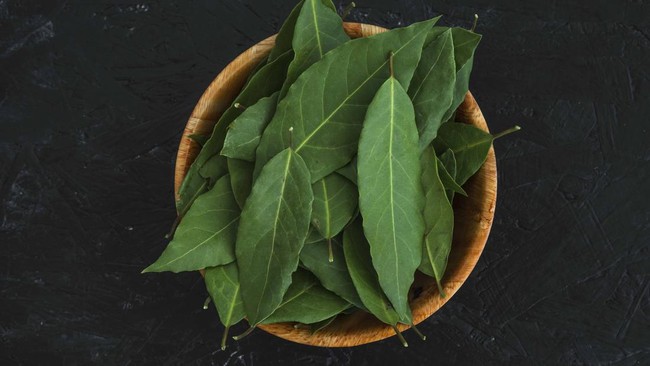
Jakarta, CNBC Indonesia - Bay leaves have long been synonymous with the distinctive aroma of Indonesian cuisine. From rendang to soto, these leaves are a simple spice that enhances the flavour and fragrance of dishes.
However, bay leaves are not only sought after in Indonesian kitchens. This spice, scientifically known as Syzygium polyanthum, is also gaining recognition in international markets. Several countries, including Japan, South Korea, Australia, and the Netherlands, have become destinations for Indonesian bay leaf exports.
The demand from abroad is not only due to the use of bay leaves as a culinary spice. These leaves are also attracting attention for their active compounds, which classify them as high-value herbs.
The Central Bureau of Statistics (BPS) recorded that the value of Indonesian bay leaf exports in 2024 reached US$123,778. This figure is significantly lower compared to its peak in 2021, which reached US$301,506.
A decline is also evident in terms of volume. Indonesian bay leaf exports, which were close to 70 tons in 2019 and 2021, decreased to around 23 tons in 2024.
This situation presents an irony. On the one hand, Indonesian bay leaves still have a market abroad. On the other hand, its export performance has weakened in recent years.
Bay Leaves Evolving into a High-Value Herbal Product
In Indonesia, bay leaves are better known as a natural flavour enhancer. These leaves are usually added to soups or richly spiced dishes to provide a deeper, distinctive aroma.
However, in the global market, the value of bay leaves extends beyond being a kitchen spice. These leaves are also seen as a herbal ingredient due to their active compounds, such as flavonoids, eugenol, tannins, and essential oils.
Several studies suggest that these compounds have antioxidant, anti-inflammatory, antidiabetic, and antihypertensive properties. As a result, bay leaves are increasingly being incorporated into health and herbal products in several countries.
In Japan and South Korea, for example, bay leaves can be used in products such as herbal teas, blood sugar-regulating supplements, and herbal-based skincare products.
Meanwhile, Australia and the Netherlands have a large spice market due to the continued growth of their culinary and natural health product industries. In these countries, bay leaves can be used in dried spice products, herbal broths, and processed spices for retail.
Japan is the Largest Export Market for Indonesia
Although Indonesian bay leaf exports have decreased overall, Japan is one of the most consistent markets. In 2024, the value of Indonesian bay leaf exports to Japan reached US$66,726.
This value is the highest in the last six years for the Japanese market, indicating that demand from the country remains strong, especially for herbal and spice products with functional value.
South Korea also shows an increase in demand. In 2024, Indonesian bay leaf exports to South Korea reached US$16,608, up from US$6,604 in the previous year.
Conversely, markets such as Australia and the Netherlands, which were previously quite dominant, are starting to weaken. This decline is influenced by competition from other supplier countries, such as India and Sri Lanka, as well as increasingly stringent import regulations.
Export Standards Remain a Challenge
One of the major challenges for Indonesian bay leaf exports is the uneven post-harvest quality. Many bay leaf products are still sold in whole form and have not undergone processing that meets export market standards.
In fact, destination countries usually have strict requirements. Spice products must meet standards of cleanliness, low moisture content, be free of contamination, and be safe from pesticide residues.
Japan, for example, applies strict rules to imported food and herbal products. Products must meet pesticide-free certification and heavy metal testing. These standards may not be easy for small exporters or MSMEs to meet.
In addition, the bay leaf supply chain in the country also faces the issue of raw material standardization. The quality of leaves from farmers can vary in terms of size, dryness, aroma, and cleanliness.
As a result, Indonesian products are difficult to compete consistently in the global market, especially if foreign buyers require large quantities with uniform quality.
Although bay leaf exports have declined, market opportunities remain open. The trend of consuming herbal products, plant-based foods, and natural ingredients continues to increase in various countries.
The global market for herbal ingredients is also expected to continue to grow in the coming years. A report by Allied Market Research estimates that the global herbal ingredients market will grow at an average of about 7% per year until 2030.
This opportunity is significant because Indonesia has a wide variety of spices. Bay leaves can be one of the products that move up the value chain, from a household spice to a high-value herbal commodity.
However, these opportunities can only be utilized if product quality is improved from upstream to downstream. This includes training for farmers, drying standards, packaging, strengthening spice cooperatives, and support for MSMEs to enter export markets.
With better processing, Indonesian bay leaves can not only be fragrant in Indonesian kitchens but also increasingly recognized in the global market.
CNBC INDONESIA RESEARCH