
Indonesian Batik Dates Back to the Kingdom Era: A Historical Trace
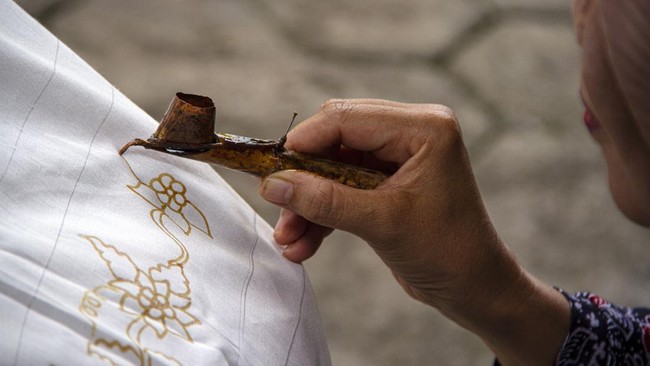
Every 2nd October, the Indonesian people commemorate National Batik Day. This commemoration is linked to the 2009 UNESCO recognition, which designated batik as an Intangible Cultural Heritage (ICH) during the 4th session of the Intergovernmental Committee in Abu Dhabi.
UNESCO views batik as more than just fabric. It encompasses manufacturing techniques, symbols, and cultural meanings expressed through various patterns on cotton or silk fabrics, applied manually.
The history of batik itself has a long trail. Batik-patterned cloth has been known to Javanese society since the Hindu-Buddhist kingdom era. As it developed, batik subsequently received influences from various cultures arriving from abroad.
The arrival of Islam, for instance, contributed to the development of batik motifs. This influence can be seen in the emergence of Arabic calligraphy patterns. Meanwhile, international trade relations brought diverse forms of floral and animal decorations originating from various regions, including India, Japan, China, and Persia.
The development of batik accelerated as Islam spread widely across Java. The spread of Islam, which occurred in part through the roles of traders from Malacca and Sumatra, helped enrich the variety of batik.
Islamic influence also led to the practice of no longer including living creatures in batik motifs. This condition subsequently encouraged the birth of new motif forms, such as calligraphy and simpler symbols.
European attention towards Javanese batik became evident when the British occupied Java in 1811. Stamford Raffles, in his book ‘History of Java’, noted that batik in Java already possessed hundreds of motifs with different characters according to their regional characteristics.
Subsequent infrastructural developments, including the construction of highways and railways, facilitated the distribution of the cloth. Consequently, batik spread more widely to various regions.
Pieces of Javanese batik were even taken to the Netherlands and donated to several museums in that country. From this point, Javanese batik began to gain international recognition.
About a century later, Dutch batik researcher G.P. Rouffaer discovered that the number of developed batik motifs had reached into the thousands.
After Indonesia gained independence, batik became more deeply embedded in the lives of the people and is used as clothing for various occasions.
Efforts to preserve the existence of batik were strengthened through the establishment of National Batik Day. In 2009, the government issued Presidential Decree No. 33 of 2009 as a step to protect and preserve batik, while simultaneously increasing public awareness of batik as a cultural heritage and a symbol of Indonesian national identity.
Source: jawawa.id (https://jawawa.id/newsitem/indonesian-batik-dates-back-to-the-kingdom-era-a-historical-trace-1790913282)
Originally published by CNBC Indonesia (https://www.cnbcindonesia.com/lifestyle/20261002100335-33-772777/batik-ri-sudah-ada-sejak-zaman-kerajaan-ini-jejak-sejarahnya), translated from Indonesian