
Indonesian Auto Parts Industry on Alert as Hormuz Strait Tensions Drive Up Costs
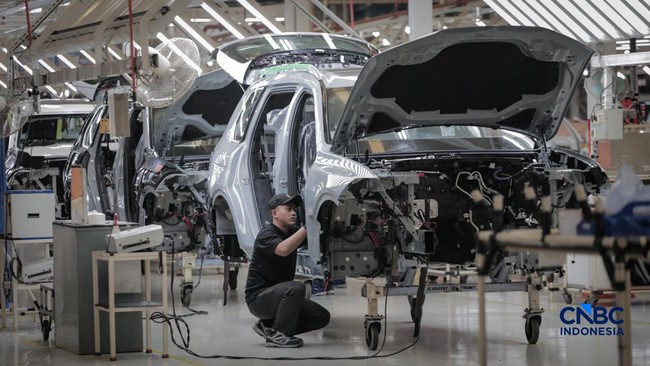
The national automotive component industry is beginning to face increasing pressure amid rising prices of various raw materials. From lubricating oil and grease to plastics, price hikes are directly impacting manufacturers’ production costs.
This situation is forcing industry players to find ways to avoid passing the full increase in production costs onto consumers. At the same time, companies must keep products affordable so that market demand does not weaken further.
“Due to the unfavourable global situation with the conflict in the Strait of Hormuz, raw materials, especially oil derivatives, have automatically experienced price increases. For example, plastics, oil, lubricants, grease and others, causing production costs to rise. Meanwhile, selling prices to consumers must remain as affordable as possible,” said Rachmad Basuki, Secretary General of the Indonesian Automotive Parts and Components Association (GIAMM), on Friday (17/7/2026).
The biggest challenge for the industry at present is maintaining a balance between rising production costs and people’s purchasing power. Companies are required to maintain efficiency so that operations can continue without sacrificing competitiveness.
Efficiency has now become a necessity pursued by almost all component manufacturers. This step is taken so that business margins remain sufficient to ensure business continuity amid uncertain global conditions.
“The pressure is there. Production costs are rising, but consumers still want to buy. This means we have to find ways to produce as efficiently as possible so that the margins obtained are still sufficient to run the business going forward,” Rachmad said.
In addition to rising production costs, the industry is also facing challenges on the demand side. Economic uncertainty is making people more selective in their spending, so purchases of components and vehicle servicing could potentially be delayed.
This situation needs to be anticipated early so that pressure on the industry does not deepen. According to him, the balance between production efficiency and people’s purchasing power is a key factor in maintaining the sustainability of the national component industry.
“If prices rise, people will usually prioritise essential needs such as transportation. Servicing or non-urgent purchases can be postponed, and that will affect the component industry,” he said.