
Indonesian and Malaysian Police Agree to Handle Malaysian Nationals Involved in Drugs via Police-to-Police Channel
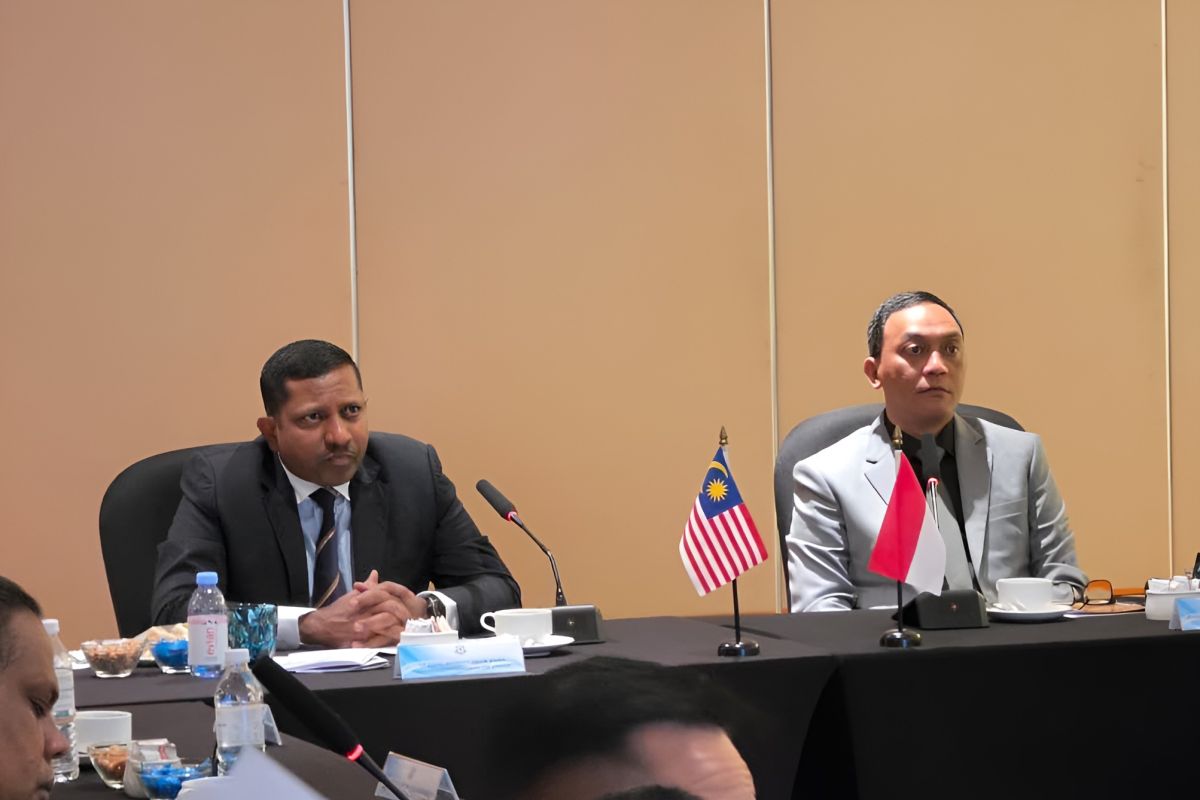
Jakarta (ANTARA) - The Narcotics Crime Directorate of the Indonesian National Police Criminal Investigation Department (Bareskrim Polri) and the Narcotic Crime Investigation Department of the Royal Malaysia Police (JSJN PDRM) have agreed that coordination regarding Malaysian nationals involved in drug cases in Indonesia will be conducted through the official Police to Police channel.
“This channel (Police to Police, ed.) is considered faster and more effective for the exchange of preliminary and operational information, while still conveying official information to the Embassy/Consulate General,” said the Director of Narcotics Crime at Bareskrim Polri, Brigadier General Eko Hadi Santoso, in a statement received in Jakarta on Monday.
The agreement was the conclusion of a bilateral meeting between a Polri delegation led by the Director of Narcotics Crime, Brigadier General Eko Hadi Santoso, and a JSJN PDRM delegation, held from Wednesday (2/9) to Friday (4/9) in Malaysia.
Eko continued that during the meeting, the Malaysian side conveyed internal obstacles in the legislative process to include New Psychoactive Substances (NPS) in Malaysia’s Narcotics Act.
This is a concern as it has the potential to create legal loopholes in the enforcement of NPS trafficking in Malaysian territory.
The Malaysian side also proposed a strategy for arresting fugitives residing in Malaysia so as not to always depend on lengthy and bureaucratic extradition processes.
The alternative proposed is the cancellation or “deactivation” of passports by Immigration, so that the status of the Indonesian national concerned becomes an illegal stay.
With this status, the process of deportation or forced repatriation to Indonesia would be far easier and quicker to carry out.
Meanwhile, the Indonesian side highlighted the need to improve the dissemination of intelligence information related to the identity and movements of major dealers or upper-level networks (masterminds) of international narcotics syndicates, which until now have remained largely beyond the reach of the law.
“Intelligence cooperation is expected to target the intellectual actors, not just field couriers,” said Eko.
In addition, the Indonesian side raised the issue of rampant narcotics trafficking in border areas, such as the Malacca Strait and the Kalimantan-Sabah/Sarawak border, with various modi operandi involving Malaysian and Indonesian nationals.
According to him, concrete cooperation on the preventive side is needed to address this matter.
Eko said that all the issues and inputs raised by both parties can be followed up swiftly through the international relations mechanism already established between JSJN PDRM and the Narcotics Crime Directorate of Bareskrim Polri. Intensive communication between Desk Officers or Liaison Officers is the main key.
“Both parties agreed to follow up on all the inputs conveyed in this meeting in order to strengthen collaboration in eradicating cross-border narcotics trafficking, ranging from information exchange and technical analysis to joint enforcement efforts,” he said.
Source: jawawa.id (https://jawawa.id/newsitem/indonesian-and-malaysian-police-agree-to-handle-malaysian-nationals-involved-in-drugs-via-police-to-police-1788771787)
Originally published by Antara (Indonesian) (https://www.antaranews.com/berita/5729648/polri-pdrm-sepakati-wn-malaysia-terlibat-narkoba-ditangani-p-to-p), translated from Indonesian