
Indonesian and Malaysian Customs to Launch Joint Task Force on Illegal Goods 2026
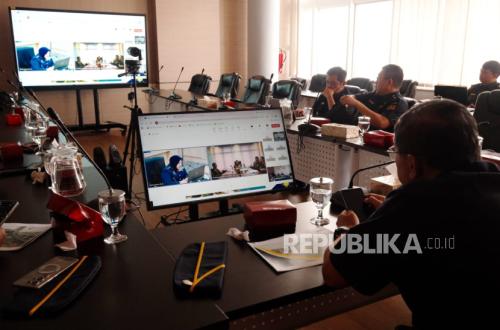
The Indonesia-Malaysia border remains a high-risk point for transnational smuggling. Various illegal goods, ranging from narcotics and cigarettes to second-hand clothing, enter through the same routes used for legitimate trade and human mobility. Consequently, surveillance is being strengthened to close these loopholes and ensure the border remains secure from the circulation of illegal goods.
Since 2018, Indonesia and Malaysia have strengthened joint border patrols to prevent the border from becoming a conduit for illegal trade. This surveillance is implemented through the Joint Task Force (JTF) operation, an annual agenda between Indonesian Customs and the Royal Malaysian Customs Department (RMCD).
The JTF operation involves the exchange of data and intelligence, alongside joint operations in border areas to eradicate transnational smuggling crimes. From its inception until 2024, the JTF focused primarily on disrupting narcotics networks along the Indonesia-Malaysia land border.
In 2025, surveillance began to expand to include illegal cigarettes and alcoholic beverages. Following a series of negotiations, the mandate for the 2026 operation has been further broadened, and the official name of the JTF has changed from the Joint Task Force on Narcotics (JTFN) to the Joint Task Force on Illegal Goods.
“Risks continue to evolve, as do the patterns used by perpetrators. Therefore, border surveillance cannot merely be directed at a single type of commodity. This situation has prompted Indonesian Customs and the RMCD to expand the scope of the JTF cooperation in 2026,” stated the Head of the Sub-directorate of Public Relations and Community Services of Indonesian Customs, Budi Prasetiyo, on Wednesday (2/9/2026).
While previously known for combating narcotics, the scope now covers various commodities prone to smuggling, including excisable goods such as cigarettes and alcohol, fuel, motor vehicles, second-hand clothing (ballpress), frozen meat, rattan, and gold bars.
“This expansion of surveillance objects demonstrates that border law enforcement cooperation continues to adapt to evolving risks. The exchange of information and coordination with partners in neighbouring countries is essential so that surveillance can be conducted earlier and more precisely,” said Buju.
The Opening Ceremony for JTF 2026 took place on 9 July 2026. Following this, joint operations were conducted from 13 July to 14 August 2026, targeting high-risk areas within the jurisdictions of the West Kalimantan and East Kalimantan Regional Customs Offices. The series of operations concluded with a closing ceremony on 1 September 2026.
“The determination of operation locations was based on intelligence risk management analysis along the Indonesia-Malaysia land and sea borders,” added Budi.
As a result, 30 smuggling cases were successfully intercepted. These included 3 narcotics cases, 25 cases of illegal cigarettes and alcohol, 1 case of second-hand clothing, and 1 case of illegal rattan smuggling.
In the narcotics cases, officers seized 61.04 grams of methamphetamine, 61.6 grams of cannabis, and 4 MDMA pills. Meanwhile, in the enforcement of illegal excisable goods, officers successfully seized 3,004,536 sticks of cigarettes and 1,044.4 litres of illegal alcohol. Enforcement against other commodities included four bales of illegal imported second-hand clothing and 99,500 kilograms of illegal rattan, which is prohibited for export.
Budi emphasised that these achievements are the result of cooperation between Indonesian Customs personnel—specifically the Directorate of Narcotics Interdiction, the Directorate of Enforcement and Investigation, and regional units in West and East Kalimantan—working alongside the RMCD. The operation was further enhanced by synergy with the National Narcotics Board (BNN), the National Police, and the Attorney General’s Office, including the handover of narcotics evidence for further legal proceedings.
“For the public, both in border areas and throughout Indonesia, JTF 2026 carries significant meaning. Every smuggling attempt we prevent means reducing the circulation of illegal goods, protecting the community from dangerous products, and ensuring that legitimate businesses can compete in a healthy business climate,” he explained.
Amidst evolving smuggling patterns, the JTF demonstrates that community protection requires cooperation that transcends national borders. Through information exchange, joint operations, and risk-based surveillance, Indonesian Customs and the RMCD are strengthening their role as community protectors while safeguarding national economic interests and the security of supply chains within the ASEAN region.