
Indonesian AI Begins to Take Shape at Bali Tech Week 2026
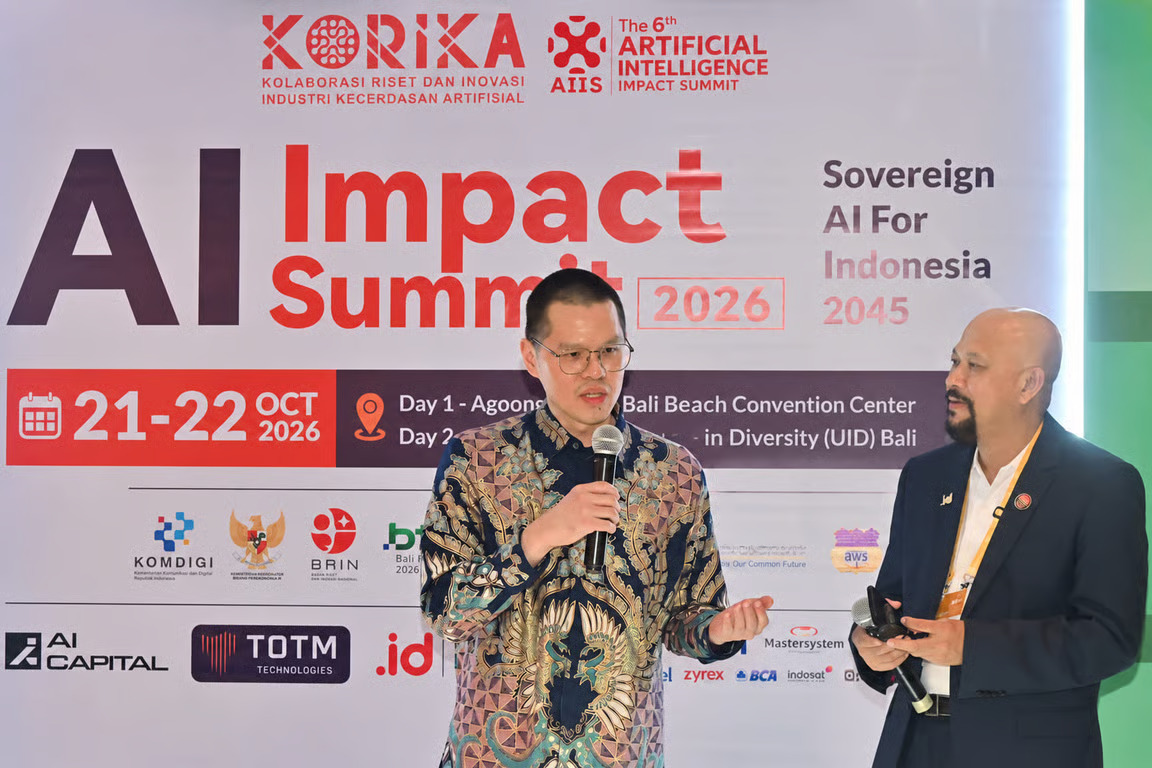
From an Indonesia–Singapore artificial intelligence (AI) initiative to the emergence of local game developers and efforts to attract startup investment, the third day of Bali Tech Week highlighted the challenge of turning technological ambition into national economic value.
Indonesia has become one of the world’s largest digital markets. However, a large number of digital consumers does not guarantee that Indonesia will become a leading technology producer. The next challenge is to build domestic capabilities, intellectual property, investment and international partnerships so that Indonesia can capture greater economic value from the digital transformation.
This theme came into focus on the third day of Bali Tech Week 2026 through the AI Impact Summit, the Indonesia Game Developer Exchange (IGDX) and discussions on startup investment. These initiatives reflect Indonesia’s efforts to move from being a technology user to a country capable of developing and commercialising it.
Project NUSA: A New Approach to AI Sovereignty
One of the main announcements at the AI Impact Summit was Project NUSA, short for Network for Unified, Secure AI. It is a collaboration between Indonesia’s Artificial Intelligence Industry Research and Innovation Collaboration (KORIKA) and AI Singapore. The initiative was introduced by KORIKA chairman Hammam Riza and AI Singapore representative William Tjhi.
The collaboration combines Singapore’s research ecosystem with Indonesia’s large market, growing technology workforce and demand for AI applications across various sectors.
Project NUSA’s success will depend on its ability to produce local expertise, functioning systems and commercially valuable applications, rather than merely announcing a partnership.
AI as a Driver of Economic Growth
Coordinating Minister for Economic Affairs Airlangga Hartarto, speaking via video, highlighted AI’s potential to support Indonesia’s economic growth.
AI can improve manufacturing efficiency, strengthen financial risk analysis, optimise logistics and enhance public services. However, these benefits require reliable infrastructure, high-quality data, trained professionals and adjustments to business processes.
Micro, small and medium-sized enterprises (MSMEs) also need access to the technology. Affordable tools, practical training and applications suited to industry needs can help them participate in the digital transformation.
KORIKA also plays a role in connecting research, government policy and industry needs. Universities and research institutions need access to computing resources, data, funding and business partners if their research is to be developed into commercial products.
Meanwhile, industry needs solutions relevant to Indonesia, from agriculture and urban mobility to financial inclusion and public administration. The aim is to foster local companies capable of developing valuable technology and competing in regional markets.
The Gaming Industry: Indonesia’s Digital Export Opportunity
The three-day Indonesia Game Developer Exchange (IGDX) 2026 brought together game developers, publishers and international industry players. Indonesian Game Association chairman Shafiq Husein said about 240 game developers took part.
Indonesia has a large gaming market, but much of its commercial value still flows to overseas developers and platform owners. Strengthening local studios could create opportunities to develop original intellectual property, generate export revenue and provide jobs in technology and the creative industries.
IGDX provides an important forum for building business relationships, exploring publishing deals and expanding distribution opportunities. This shows how Indonesia’s digital economy can generate greater value through products and intellectual property that can be marketed internationally.
Rp1 Trillion Startup Investment Target
Edwin Hidayat Abdullah, director-general of the Digital Ecosystem at the Ministry of Communication and Digital Affairs, said the government aims to facilitate around Rp1 trillion in startup investment during 2026.
As of 21 October, about Rp400 billion had been realised, while efforts were under way to secure a further Rp600 billion by the end of the year.
Amid increasingly selective funding conditions, investors are now paying closer attention to sustainable revenue, profitability, customer demand and clear business models.
Programmes such as HUB.ID can help connect startups with investors, corporate customers and strategic partners. However, investment targets must be distinguished from commitments and transactions that have actually been completed.
Indonesia’s priority is not simply to attract capital, but to ensure investment supports companies capable of building lasting technological and commercial value.
Open Networks: Lessons from India’s ONDC for Indonesia’s Digital Economy
Bali Tech Week 2026 also examined open digital commerce networks in a session featuring T. Koshy, founder, managing director and chief executive of India’s Open Network for Digital Commerce (ONDC), and a commissioner of Indonesia Open Network (ION). Moderated by Alvin Evander, the session discussed India’s experience in building interoperable digital commerce infrastructure.
Unlike conventional marketplaces, ONDC allows independent apps, merchants and service providers to connect through a shared protocol. This enables businesses to reach a wider commerce ecosystem without relying entirely on a single platform.
The approach is relevant to Indonesian MSMEs, which face challenges in expanding their markets, improving digital visibility, managing logistics and covering the costs of online commerce.
Indonesia Open Network (ION), which adopts India’s ONDC architecture and the Beckn interoperability framework, is developing a similar approach tailored to Indonesian market conditions. ION aims to connect buyer apps, seller platforms, logistics providers, payment services and other ecosystem participants through shared infrastructure.
Open networks could broaden market access, encourage competition and create room for service-provider innovation. India’s experience shows that digital economic growth need not depend on exclusive platforms; it can be built on shared infrastructure that allows different businesses to collaborate.
International Partnerships and National Economic Value
Project NUSA connects Indonesia’s AI development with Singaporean expertise, while IGDX gives local developers opportunities to engage with international publishers and investors. These partnerships are important for expanding access to knowledge, capital and international markets.
However, they will bring greater benefits to Indonesia if they strengthen domestic capabilities. In AI, priorities include developing talent, relevant data, local applications and responsible technology management. The gaming industry needs to strengthen intellectual property ownership, while startups need investment accompanied by market access and commercial experience.
Indonesia’s large market is an advantage, but it does not automatically guarantee technological leadership. The challenge is to make international partnerships a means of improving national competitiveness, rather than merely expanding the market for foreign technology.
From Digital Consumption to Technology Creation
The third day of Bali Tech Week 2026 highlighted progress across several sectors. AI researchers are building national capabilities through collaboration, the government is promoting productivity, game developers are creating products for global markets, and startups are seeking investment to expand their businesses.
These developments reflect the direction of Indonesia’s digital transformation: from an economy driven primarily by consumption towards one that can create more of its own technology, products and economic value.
This transition requires sustained investment in talent, research, commercialisation and coordination between institutions. Progress should be measured by working technologies, growing companies, high-skilled jobs and products capable of competing internationally.
Indonesia’s digital future will be determined not only by how widely technology is adopted, but also by the country’s ability to develop, own and commercialise it.
About Bali Tech Week 2026
Bali Tech Week 2026 (BTW 2026) is an initiative of Indonesia’s Ministry of Communication and Digital Affairs (Komdigi), managed with DS Group as a platform for collaboration among government, industry, startups, investors and the technology community.
The inaugural BTW 2026 is taking place from 19 to 23 October 2026 at the Bali Beach Convention Centre in Sanur, Bali, under the theme “Archipelago Ascending — Advancing Together, Innovating Further”. Bringing together 13 main events, BTW 2026 covers startups, gaming, AI, cyber security, digital assets, infrastructure, policy and investment. The event is expected to attract more than 4,000 participants, including 1,000 international delegates from over 30 countries.