
Indonesian Agriculture Adopts Advanced Technology, Including Drones, with Significant Results
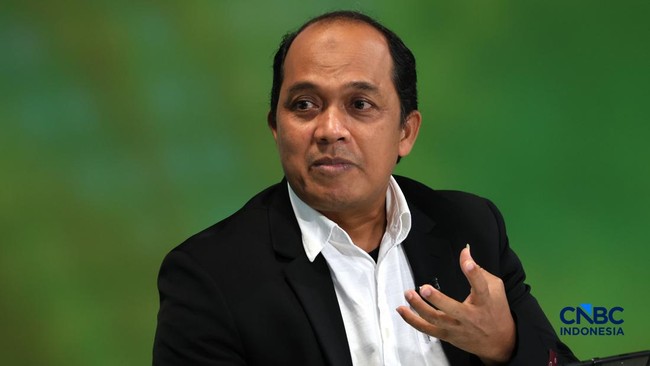
Jakarta, CNBC Indonesia – The Ministry of Agriculture says technology in Indonesia’s agricultural sector is advancing, with mechanisation now being introduced in farming.
Amin Nur, head of the ministry’s Centre for Rice Crop Assembly and Agricultural Modernisation (BRMP), said mechanisation was expanding through methods including direct seeding, drone seeders and other approaches.
“Mechanisation systems continue to develop, from planting using direct seeding and drone seeders to transplanting. The Agriculture Minister is also encouraging the use of drones,” Amin said at CNBC Indonesia’s World Food Day event on Friday (30 October 2026).
He said the ministry is currently scaling up the Modern Agriculture – Advanced Agriculture System (PM-AAS).
“PM-AAS has its own distinctive features. This is what will now be developed on a large scale, accompanied by support each season, so farmers and agricultural extension workers can work together to expand it among communities,” Amin said.
The ministry aims to use PM-AAS to develop 2,000 hectares of new rice fields using conventional planting methods, with a crop density of around 250,000–300,000 plants per hectare.
“With PM-AAS, crop density increases to around 800,000 to one million plants per hectare. We have seen yields rise from the existing conventional level of 6.32 tonnes to more than 10 tonnes using this model. In some places, yields have reached 13 tonnes per hectare,” he said.
Amin said the 2,000-hectare target would be spread across 15 provinces, but did not specify which provinces would take part.
“For 2026, we have been asked to run a 2,000-hectare pilot project in 15 provinces. Each province is expected to develop up to 100 hectares of rice fields, while two or three provinces will have 300–400 hectares each. That brings the total to around 2,000 hectares or more,” he said.
Amin said PM-AAS had significantly increased paddy production.
“Based on the pilot projects we have carried out on both swamp and irrigated land, there has been a significant increase. The highest yield recorded across the 15 provinces was 12.5 tonnes per hectare of harvested dry paddy,” he said.