
Indonesia wants more sway over commodity prices - here’s how its new exchange can win over market
analysis Asia
Indonesia wants more sway over commodity prices - here’s how its new exchange can win over market
Indonesia hopes a new commodity exchange will give it greater influence over prices of key exports, but experts say it must first convince producers and traders to use it.
JAKARTA: The success of Indonesia’s plan to launch a commodity exchange will hinge on whether it can build a credible benchmark and persuade producers and traders to use it, experts say.
The exchange, which is set to launch on Jan 1, aims to have greater influence over prices of key exports such as nickel products, palm oil and coal.
The plan, announced by President Prabowo Subianto in his 2027 budget speech to parliament on Aug 14, received a thunderous response from lawmakers.
“For decades, Indonesia has become one of the largest producers of some of the world’s most essential commodities,” Prabowo told the lawmakers.
“Yet all too often, the prices of our wealth, extracted from our land and through the sweat of our people, are determined overseas, in another country’s commodity exchange,” Prabowo said.
“I ask the people’s representatives, do we want to continue in this situation?”
“No!” lawmakers roared back, rising to their feet.
At their simplest, commodity exchanges are organised marketplaces that bring together raw ingredient producers, manufacturers, traders and financial institutions to buy and sell commodities or contracts linked to them.
The industry’s response has been mixed. The Indonesian Nickel Miners Association, which has lobbied for a national mineral exchange, welcomed the plan but emphasised the importance of data integrity and clear governance, Reuters reported.
The Indonesian Palm Oil Association (GAPKI) told news outlet Detik the majority of its members currently prefer to strike deals directly with buyers instead of listing themselves on a commodity exchange.
Meanwhile, the Indonesian Coal Miners Association (APBI) said in a statement that it is still monitoring how the plan will be implemented before commenting further.
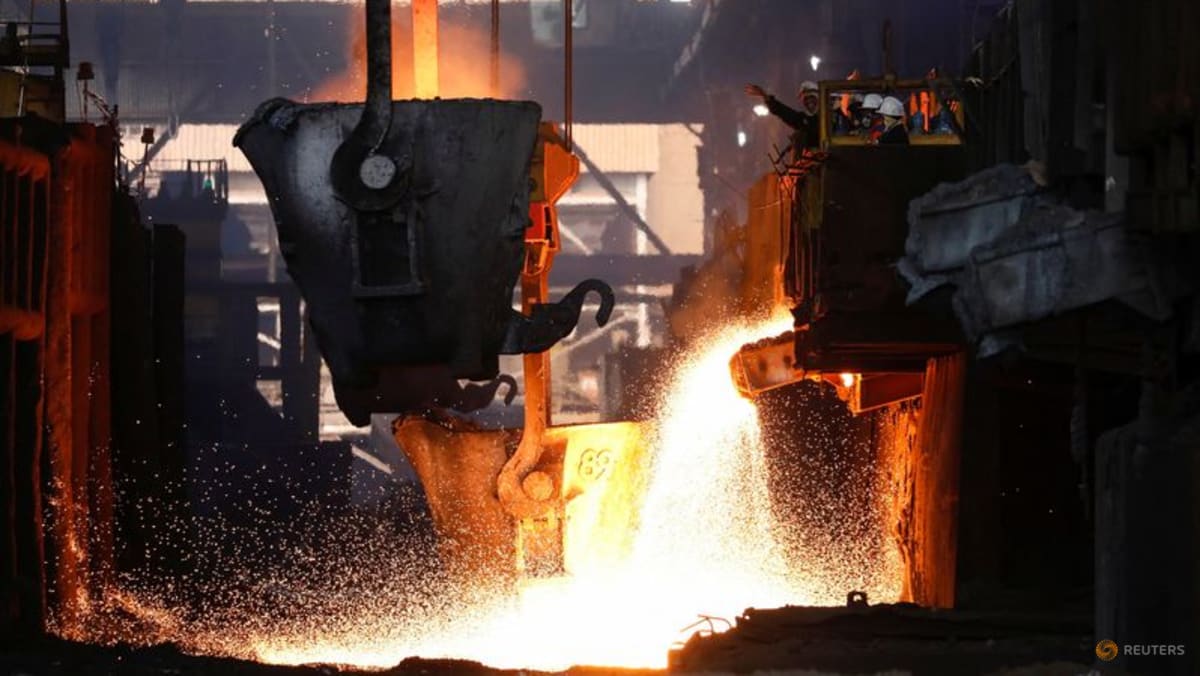
Indonesia has the world’s largest nickel reserves, and is the world’s largest exporter of thermal coal and palm oil.
The plan for the Indonesian Commodity Exchange, or Icomex, comes amid headwinds such as a sharp decline in nickel prices, which fell from an average of US$21,474 per metric tonne in 2023 to US$15,349 in 2025.
The slump prompted the government to cut its nickel ore production target from 379 million tonnes in 2025 to around 250 million tonnes this year in hopes of creating temporary scarcity to drive up the price.
The new target, which was announced in January, caused prices to soar and reach a two-year high of US$19,350 per metric tonne in April. The prices have since cooled to around US$17,000 per metric tonne in August.
The exchange plan also comes as Jakarta seeks to stamp out unlawful trade practices that it says deprive state coffers – in particular transfer-pricing, where a company sells goods too cheaply to an overseas sister company to avoid higher taxes and customs fees, and under-invoicing, when a company underdeclares the value of goods and transactions for the same tax evasion reasons.
Prabowo has launched a series of policies to address these practices, including a plan in May to centralise exports through a single company, called Danantara Sumberdaya Indonesia, under sovereign wealth fund Danantara.
The plan rattled the commodity markets, forcing Jakarta to clarify that commodity exports would be monitored and not controlled by Danantara.
Prabowo’s latest initiative is the commodity exchange.
“The prices formed at the bourse will serve as a reference for many institutions like the customs office and tax office,” said Wijayanto Samirin, an economist from Jakarta’s Paramadina University.
Experts like Wijayanto told CNA that having its own bourse would allow Indonesia to better reflect the strategic value of the minerals and commodities it produces, but the authorities will need to convince producers and traders to shift away from more established exchanges.
How exchanges become price benchmarks
At their simplest, commodity exchanges are organised marketplaces that bring together raw ingredient producers, manufacturers, traders and financial institutions to buy and sell commodities or contracts linked to them.
Because it can take weeks or months to produce, process and ship a commodity, much of an exchange’s activities revolve around futures contracts — agreements to buy or sell a specified quantity and quality of a commodity at a future date at an agreed price.
For producers and buyers, futures offer a way to protect themselves against price swings. Traders and other financial investors also buy and sell these contracts based on their expectations of where prices are heading.
“All these market participants have to factor in possible changes in supply and demand, weather, government policies and the global economy not just in the coming days but in the coming weeks or months,” said Tauhid Ahmad, a researcher from Jakarta-based think tank Institute for Development of Economics and Finance (INDEF).
The more producers, consumers and traders congregate and transact on a particular exchange, the greater its liquidity – the ability to conduct large volumes of trades smoothly without dramatic price swings.
Over time, a highly liquid and trusted bourse can become the place the wider industry looks to when deciding what a commodity is worth, even for transactions that never actually take place on that exchange.
The London Metal Exchange, for example, has become a leading global benchmark for industrial metals such as aluminium, copper and nickel, while the Bursa Malaysia Derivatives has developed into the palm oil industry’s leading international benchmark.
As a major supplier of palm oil, nickel products and thermal coal, Indonesia has the potential to wield greater influence over how these commodities are priced. But being a major producer alone is no
Source: jawawa.id (https://jawawa.id/newsitem/indonesia-wants-more-sway-over-commodity-prices-heres-how-its-new-exchange-can-win-over-market-1788130246)
Originally published by CNA (https://www.channelnewsasia.com/asia/indonesia-commodity-exchange-nickel-palm-oil-coal-6333186)