
Indonesia-US Trade and Investment Council to Shape Economic Direction
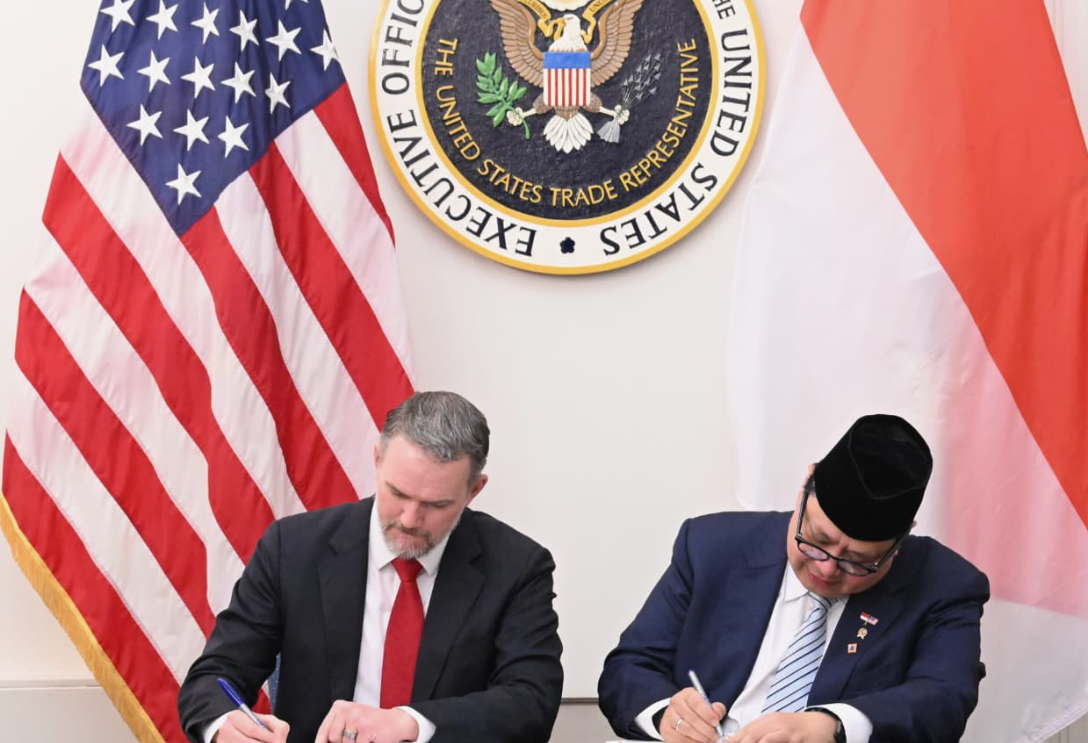
Indonesia and the United States have signed a reciprocal trade agreement. One of the key aspects of this agreement is the establishment of a Trade and Investment Council. This move has been welcomed by business leader Engel Glendy Sahanggamu.
According to him, this initiative reflects the vision of President Prabowo in recognizing the current geopolitical and economic momentum. In a world filled with uncertainty, the decision to establish this strategic bilateral forum is considered a breakthrough in economic diplomacy that deserves appreciation.
“This bilateral forum is not just a symbol of strengthening diplomatic relations, but a concrete instrument that can determine the direction of national economic policy in the coming years,” said Engel in a statement on Wednesday (February 25).
In the context of economic diplomacy, the meeting and direct signing by President Prabowo Subianto and President Donald Trump demonstrate the seriousness of both parties in opening a new chapter in trade relations that is more measured and focused.
The establishment of this council, he explained, is an important moment for Indonesia to strengthen its position on the world economic map, especially in terms of how its impact can be felt by businesses and the national industry.
Amidst the fluctuating global economic dynamics, Engel believes that the council can be an instrument for stabilization as well as accelerating national growth. However, its success still depends on consistent policies, transparent negotiations, and a firm commitment to protecting domestic interests.
“This is not just about the relationship between two presidents, but about how Indonesia positions itself on the world economic map. This council can strengthen the foundation or become a critical point, it all depends on how we play it,” he said.
Engel sees the United States having a significant interest in Indonesia’s strategic resources, especially critical minerals needed in the global supply chain for the electric vehicle and clean energy technology industries.
On the other hand, he said, Indonesia needs broader market access, tariff certainty, and access to technology to increase the added value of its industries and maintain export stability.
“This cooperation must be mutually beneficial. Indonesia should not just be a source of raw materials. Downstreaming and technology transfer must be a priority in every negotiation,” he explained.
In addition, Engel believes that the establishment of the Trade and Investment Council will influence global investors’ perception of Indonesia’s policy stability. He predicts that the downstream mineral sector, renewable energy, defense, and the digital economy will be the initial focus of discussions.
However, Engel cautioned about the risk of dependence if the cooperation is not balanced with diversification of trading partners. In the context of a dynamic global geopolitical landscape, any economic closeness can have broader strategic implications.
“The government needs to maintain a balance so that national interests remain the top priority. If managed precisely, Indonesia can strengthen its economic foundations. If not, global pressures could increase,” he said.
For information, the Indonesian Government and the United States Government officially signed a Reciprocal Trade Agreement entitled “Toward a New Golden Age for the US-Indonesia Alliance”.
The signing was carried out directly by the President of the Republic of Indonesia, Prabowo Subianto, and the President of the United States, Donald Trump, in Washington DC, on Thursday (February 19).
Coordinating Minister for Economic Affairs Airlangga Hartarto stated that the signing marked a new chapter in the economic relations between the two countries.
In the agreement, Indonesia and the United States agreed to strengthen economic cooperation and promote mutual growth, including the establishment of a Trade and Investment Council as a forum for resolving trade and investment issues.
“This is the result of a reciprocal trade agreement, so all investment issues and trade issues between Indonesia and the United States will be discussed first in the trade council, if there is an increase that is too high or something that is considered to disrupt the balance of both countries,” he concluded. (I-1)