
Indonesia Urges ASEAN Nations to Strengthen Community Forest Management Rights
The Ministry of Forestry (Kemenhut) is encouraging the strengthening of social forestry governance in the ASEAN region as an effort to reinforce tenure certainty while increasing the role of communities in sustainable forest management.
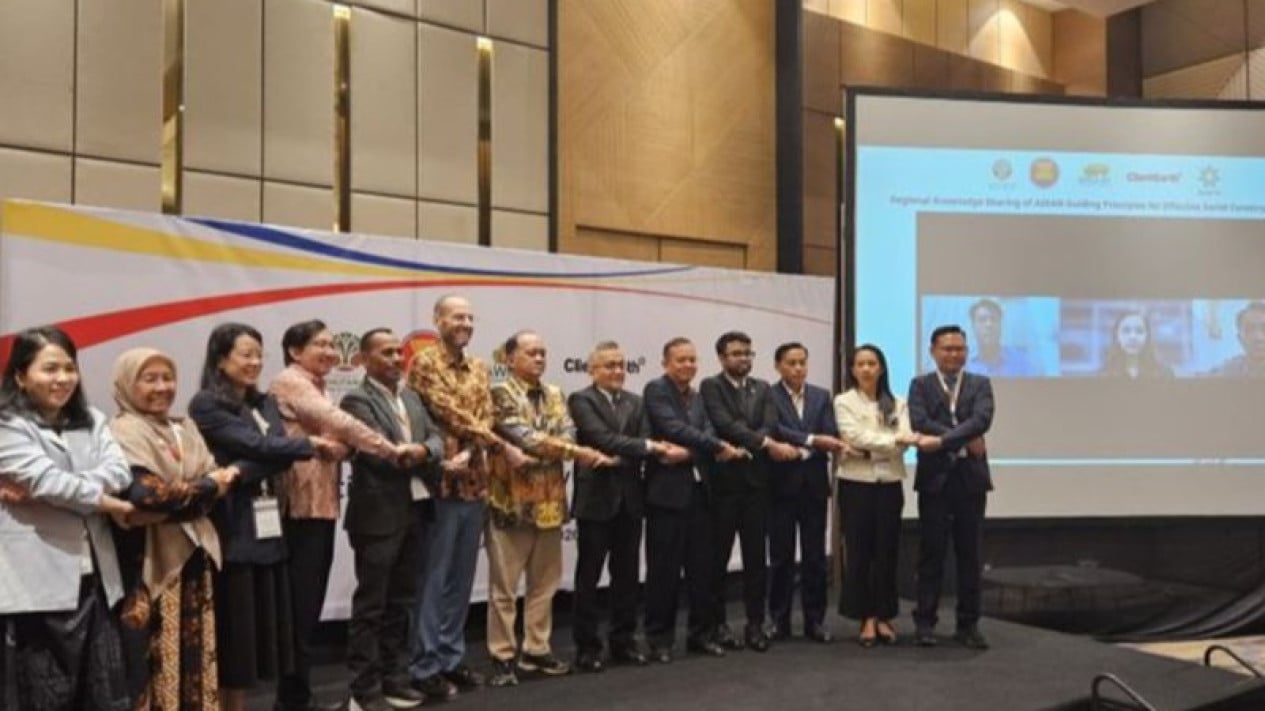
This commitment was one of the key focuses of the Regional Knowledge Sharing of ASEAN Guiding Principles for Effective Social Forestry Legal Frameworks event held in Jakarta on 4–5 August 2026. The forum was attended by representatives from 11 ASEAN countries along with forestry sector stakeholders.
The convening of this forum is in line with President Prabowo Subianto’s commitment to continue promoting the strengthening of social forestry as one of the strategies for achieving equitable and sustainable forest management. Minister of Forestry Raja Juli Antoni has positioned communities as primary partners in safeguarding forest sustainability through the provision of legal management access, improved welfare, and the strengthening of community institutions around forest areas.
Director of Social Forestry Control at the Ministry of Forestry, Marcus Octavianus Susatyo, said that cooperation among ASEAN countries in the field of social forestry continues to develop through the formulation of shared guidelines and the exchange of experiences regarding policies and implementation in each country.
“This collaboration serves as an important foundation for aligning national policies with regional aspirations, strengthening tenure certainty, and increasing community participation in forest management,” Marcus said in a statement on Wednesday, 5 August 2026.
Marcus explained that during the workshop, participants shared good practices, innovations, and challenges faced in implementing social forestry. According to him, the forum is part of efforts to strengthen policy implementation at both national and regional levels.
He added that this year’s activity is a continuation of the capacity-building programme carried out previously. In 2024, a regional workshop successfully identified a number of priorities for implementing social forestry guidelines at the national level.
Then in 2025, national training for forestry agencies in Indonesia was held to strengthen institutional capacity while identifying various procedural obstacles in the implementation of social forestry programmes.
During the meeting, participants also discussed developments, achievements, and challenges in implementing social forestry in various countries. The discussions covered regulatory updates, replicable implementation models, strengthening central and regional government coordination, simplifying procedures, providing assistance to community groups, and expanding market access for social forestry enterprises.