
Indonesia Urged to Strengthen Strategic Autonomy in a Multipolar World
Indonesia is being urged to strengthen its strategic autonomy in facing an increasingly multipolar global geopolitical order. The country’s free and active foreign policy is considered to need re-actualisation so that Indonesia does not become trapped in the rivalry between the United States and China, while being able to safeguard national interests more firmly.
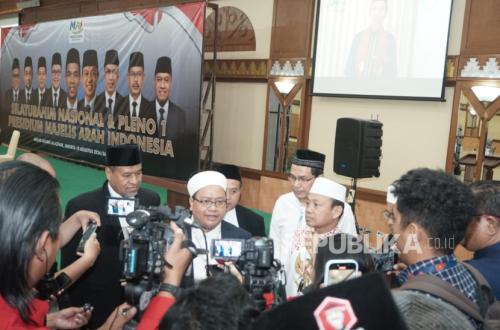
The call was one of the main recommendations of the National Gathering (Silatnas) and Plenary I of the Majelis Arah Indonesia held at the Al-Azhar Grand Mosque, Jakarta, on Monday (10/8/2026).
The forum was attended by a number of presidium members, including KH Toha Yusuf Zakariya, Das’ad Latif, Fahmi Salim, KH Nonop Hanafi, Habiburrahman El Shirazy, Slamet Ma’arif, and Iwel Sastra. They discussed issues concerning the Muslim community, geopolitics, the economy, education, media, security, Islamic boarding schools, and natural resource management.
In its recommendations, the forum encouraged Indonesia to develop a ‘Strategic Autonomy 2.0’ framework as an actualisation of its free and active foreign policy. Indonesia is seen as needing to build its position based on issue-based national interests, with national interests determined specifically for each strategic issue.
This approach is considered important so that Indonesia does not merely become an object of great power competition, but is able to emerge as a pivotal power with bargaining power in international relations.
Indonesia is also urged to expand strategic partnerships through ASEAN, the G20, BRICS, the OECD, and various other international forums while maintaining the independence of its foreign policy.
In the context of the Global South, the forum urged Indonesia to take a more active role in the global governance reform agenda. Reform is deemed necessary at the United Nations Security Council, the international monetary system, the International Monetary Fund (IMF), the World Bank, and the World Trade Organization (WTO).
The recommendations also place the issue of Palestine as an important part of Indonesia’s diplomacy. The government is urged to continue strengthening efforts to support the full independence of Palestine through political and diplomatic channels, economic reconstruction, and international legal mechanisms such as the International Court of Justice (ICJ) and the International Criminal Court (ICC).
Beyond geopolitics, national independence is also considered to need to be built through strengthening economic, food, energy, technological, and maritime sovereignty.
The forum urged the government to maintain the downstreaming policy for national strategic commodities, including nickel, bauxite, and rare earth minerals. Strengthening national industry is seen as needing to be accompanied by technology transfer, regional involvement, and increased economic benefits for the public.
In the food and energy sectors, Indonesia is urged to build a resilience system that is not easily shaken by geopolitical changes or global economic uncertainty.
Digital sovereignty is also a concern. National data infrastructure is seen as needing not to be in excessive dependence on foreign monopolies. The government is urged to strengthen cyber defence and actively participate in the formation of global norms regarding artificial intelligence and autonomous military technology.
Source: jawawa.id (https://jawawa.id/newsitem/indonesia-urged-to-strengthen-strategic-autonomy-in-a-multipolar-world-1786711965)
Originally published by Republika (https://news.republika.co.id/berita/tjr849451/ri-didorong-perkuat-strategic-autonomy-di-tengah-dunia-multipolar), translated from Indonesian