
Indonesia Urged to Accelerate Sharia Economy Innovation
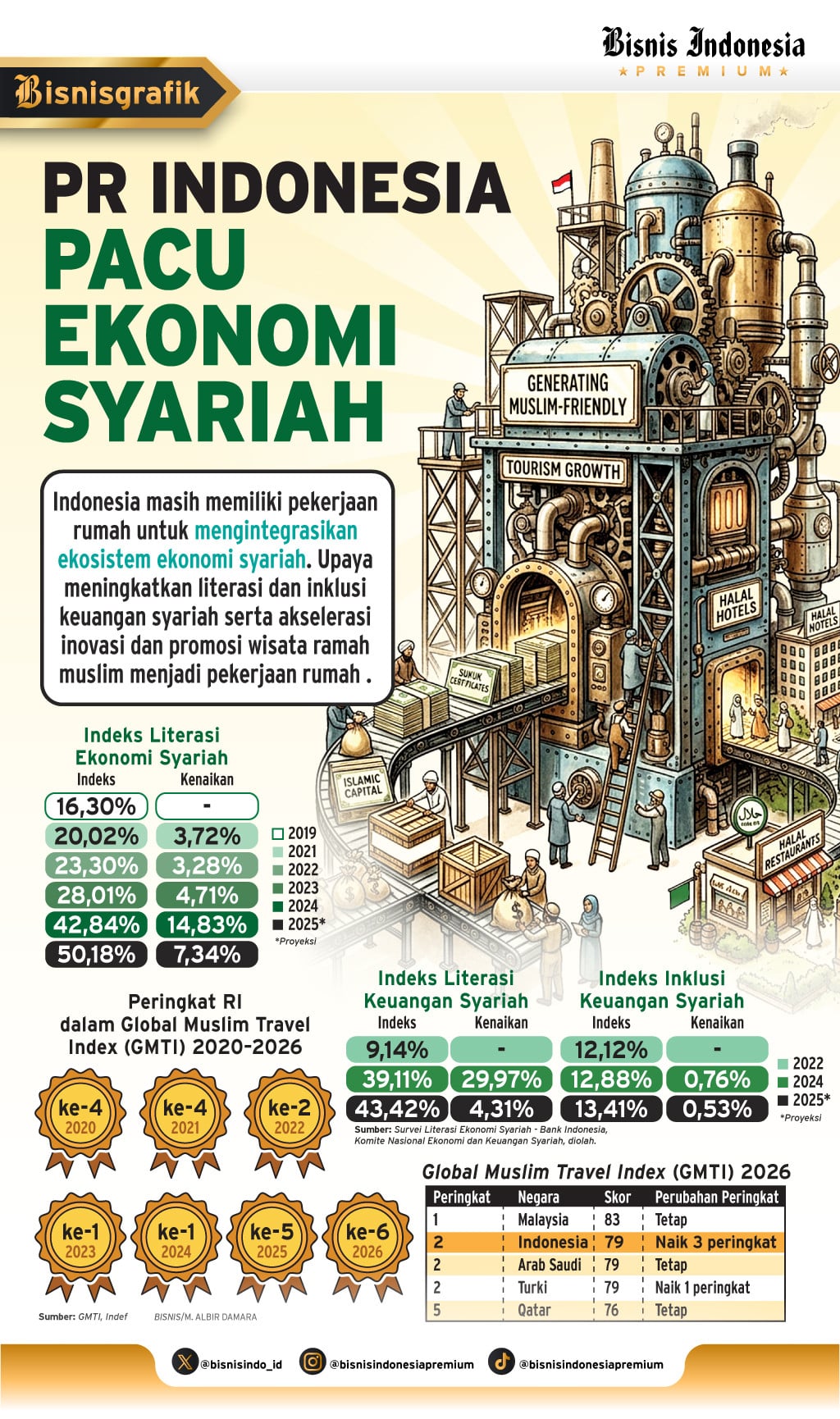
Indonesia has fallen out of the top five in the State of the Global Islamic Economy (SGIE) Report 2025/2026 regarding the indicators for Islamic finance and Muslim-friendly tourism. This situation serves as a signal that the acceleration of policy innovation and ecosystem strengthening must be undertaken immediately to ensure Indonesia does not fall behind other more aggressive nations.
In the Islamic finance sector, the greatest challenge remains the low utilisation of services. Bank Indonesia data shows that the Islamic economic literacy index surged from 16.3% in 2019 to 50.18% in 2025. Islamic financial literacy also increased from 9.14% to 43.42%. Unfortunately, this increase in knowledge has not been accompanied by a significant increase in inclusion, which only reached 13.41% in 2025.
Economists assess that the Islamic finance market share, which currently sits around 11%, needs to be pushed to 15%–20% to serve as a foundation for the development of the national halal industry. Strengthening Islamic financing is considered essential to support MSMEs, halal product exports, and investment, ensuring that Indonesia does not merely remain the largest consumer of halal products but also becomes a global Islamic finance hub.
Challenges are also evident in the Muslim-friendly tourism sector. Although Indonesia remains one of the favourite destinations for Muslim tourists worldwide, several countries such as Malaysia, Saudi Arabia, Turkey, Japan, and Thailand continue to accelerate promotion, infrastructure development, marketing digitalisation, and the provision of more integrated services. On the other hand, Indonesia still faces challenges regarding connectivity, halal certification, and public understanding of the Muslim-friendly tourism concept.