
Indonesia Under Global Economic Pressure: The Economic Path and the Spirit of Article 33 of the 1945 Constitution
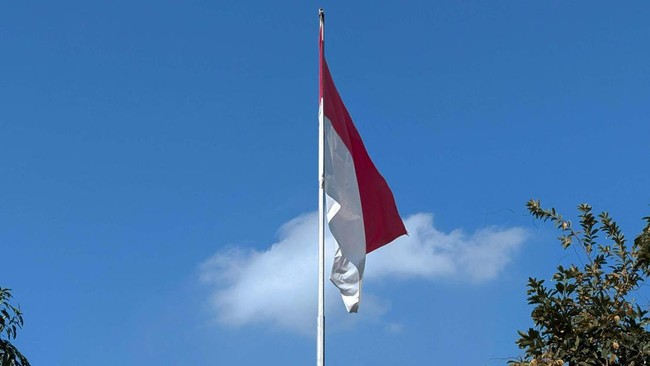
Indonesia, or the Republic of Indonesia, faces global geopolitical shifts, trade wars, fragmentation of the world economy, and rapid technological disruption. Indonesia needs an economic development path that relies not only on growth in numbers but also on the strength of a sovereign, inclusive, and fair national economic structure.
In this context, Article 33 of the 1945 Constitution regains its relevance. Article 33 is not merely a constitutional norm but a philosophical foundation for Indonesia’s economic path. It states that the national economy must be organised on the basis of economic democracy with principles of togetherness, efficiency with justice, sustainability, self-reliance, and a balance in national economic progress.
As the largest organisation of young entrepreneurs in Indonesia, the Indonesian Young Entrepreneurs Association (HIPMI) believes that the direction of the government’s policy currently has strong momentum to realise the spirit of Article 33 in a more contextual and modern manner.
Today we see the nation’s courage to rebuild the foundations of industrialisation through downstream processing of natural resources. The downstreaming policy for nickel, bauxite, copper, and the strengthening of the electric vehicle battery industry is a tangible form of how the country seeks to escape the trap of exporting raw materials. And the results are beginning to show.
Before downstreaming, Indonesia’s nickel export value was only around US$3 billion. After the ban on exporting raw materials and the development of processing industries, the value of nickel-derived product exports surged to around US$34 billion. This proves that domestic value addition can create leaps in foreign exchange, investment, jobs, and strengthened national competitiveness.
However, amid these achievements, Indonesia also faces significant economic challenges. In recent times, pressure on the rupiah exchange rate and the Jakarta Composite Index (IHSG) has become an important alarm that the resilience of the national economy still faces structural challenges.
The rupiah exchange rate has moved towards around Rp17,500 per US dollar, while the IHSG has come under pressure due to rising global uncertainty, outflows of capital, and market concerns about the direction of the world economy.
This situation should be read objectively and not solely as a matter of short-term sentiment. The volatility of the rupiah and IHSG shows that Indonesia’s economic structure still depends substantially on:
short-term foreign capital flows,
commodity-based exports,
energy and raw material imports,
and the depth of the domestic financial market which is not yet optimal.
Therefore, this momentum should be an important reminder that Indonesia requires more adaptive, responsive, and contextual economic policies.
From HIPMI’s perspective, national economic stability today cannot be safeguarded by monetary instruments alone. A more integrated synchronisation of fiscal, industrial, trade, energy, and investment policies is needed.
For example, Bank Indonesia’s rate hike is important to maintain rupiah stability and market confidence. However, businesses also need space for the real sector to keep moving and not face excessive liquidity pressure.
Thus national economic policy must balance macro stability with ensuring business growth.
In this context, deregulation becomes very important. The government’s step to form a deregulation task force and accelerate reforms to ease doing business should be welcomed as part of efforts to strengthen national economic resilience. The business sector requires legal certainty, bureaucratic efficiency, streamlined licensing, and competitive logistics costs.
Moreover, Indonesian logistics costs remain around 14% of GDP, higher than several other ASEAN countries. This poses a serious challenge to the competitiveness of the national industry.
Additionally, Indonesia still faces the challenge of energy import dependence. National LPG imports still reach almost 7 million tonnes per year with a value in the billions of US dollars. Pressure on the rupiah automatically impacts energy subsidies and the country’s fiscal burden.
In other words, a weaker rupiah not only affects financial markets but also has direct impacts on:
industrial production costs,
the prices of imported raw materials,
business cash flow,
and consumer purchasing power.
Therefore, energy resilience strategies, industrial downstreaming, and import substitution must be integral parts of the Article 33 agenda. In this context, the idea of establishing a National Export Agency or a state-based strategic exporter scheme becomes intriguing to examine.
On the one hand, an export agency could strengthen Indonesia’s bargaining position, preserve foreign exchange, and create stronger national trade integration. On the other hand, its implementation must be approached with great care to avoid creating new bureaucracy that slows the flexibility of the business world.
The business world requires policies that adapt to the dynamics of a rapidly moving global market. Therefore, HIPMI believes that the export agency must be built on the principles:
professional,
transparent,
digitally based,
and actively involve business players.
If well managed, the export agency can be a strategic instrument to:
strengthen Indonesia’s bargaining power,
maintain commodity price stability,
increase foreign exchange earnings,
reinforce downstreaming,
and expand access to national export markets.
However, if too centralised, it risks reducing the competitiveness and flexibility of national exporters.
Ultimately, the challenges of the global economy today teach that Indonesia can no longer rely solely on the eco model.
Source: jawawa.id (https://jawawa.id/newsitem/indonesia-under-global-economic-pressure-the-economic-path-and-the-spirit-of-article-33-of-the-1945-1779531612)
Originally published by CNBC Indonesia (https://www.cnbcindonesia.com/opini/20260523125138-14-737362/ri-dalam-tekanan-ekonomi-global-jalan-ekonomi-dan-spirit-pasal-33-uud), translated from Indonesian