
Indonesia Towards 2045: From Self-Sufficiency to Prosperity
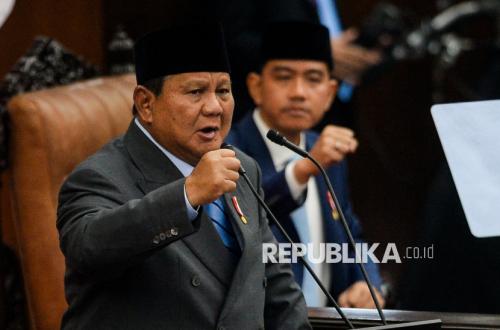
President Prabowo Subiability’s speech during the Annual Session of the MPR RI and the Joint Session of the DPR RI and DPD RI on 14 August 2026, was more than just a report on the government’s activities over the past 21 months. It also revealed the grand direction of Indonesia’s development: strengthening national independence, mastering strategic resources, developing the economy from rural areas, and ensuring that growth is truly felt by the community.
One recurring message emerged: the state must not merely act as an administrative manager. The state must be present to resolve the people’s problems. From the outset, the President mentioned four guidelines for government work: upholding the mandate of the 1945 Constitution, protecting vital national interests, resolving the people’s difficulties as quickly as possible, and considering the interests of both current and future generations.
The President also acknowledged that not all national issues can be resolved yet. This admission is important. State addresses are usually filled with lists of successes. However, when the government states that significant work is still ongoing, the achievements of the first 21 months can be understood as part of a process, rather than a finish line.
Independence and Value Add
If the speech is read comprehensively, sovereignty is one of the most prominent themes. Sovereignty relates not only to politics and defence but also to food, energy, industry, technology, natural resources, and supply chains.
In the food sector, the President stated that the government has achieved self-sufficiency in eight commodities, including rice, maize, consumer sugar, chicken meat, eggs, shallots, large chillies, and bird’s eye chillies. The government also targets resolving issues with commodities that are not yet fully self-sufficient, such as beef and garlic.
In the energy sector, B50 has been positioned as part of the effort to reduce dependence on diesel imports. The President mentioned that since 1 July 2026, Indonesia no longer imports diesel and estimates a foreign exchange saving of approximately Rp170 trillion.
Such independence does not mean Indonesia is closing itself off from the world. Indonesia still requires investment, trade, technology, and international cooperation. However, this openness must be built upon a stronger, even decisive, bargaining position. Indonesia needs the ability to withstand geopolitical conflicts, trade wars, or supply chain disruptions.
The same idea is evident in the downstreaming agenda. The government reported various processing projects for minerals, coal, industrial salt, alumina, and even waste-to-energy. The President also stated that the profits from State-Owned Enterprises (SOEs) are directed towards accelerating downstreaming and the development of the upstream sector.
As a country rich in natural resources, downstreaming is an inevitability and a sensible choice. For too long, Indonesia has frequently exported raw materials, while the greatest value-add is enjoyed by other nations. Therefore, the domestic processing of commodities needs to be continuously scaled up.
However, downstreaming must not stop at the construction of smelters or factories. The next stage must encompass the mastery of technology, research, product design, patents, human resources, and global markets. The government’s desire to acquire technology, intellectual property, management, and market access through cooperation or the acquisition of the world’s best companies should be read as part of this strategy to strengthen its position in the global supply chain.
In other words, the downstreaming of natural resources must go hand in hand with the downstreaming of knowledge. Indonesia must not only process raw materials into finished goods but must also master the knowledge that makes that process high-value and sustainable.
Economy for the People
The President reported that investment realisation in 2025 amounted to Rp1,931 trillion, creating more than 2.7 million jobs. In the first half of 2026, investment reached Rp1,010 trillion and created over 1.4 million jobs. Economic growth in the first quarter of 2026 reached 5.61 per cent, while growth in the first semester stood at 5.45 per cent.
These figures are important, but they are not the end goal. The President emphasised that growth and investment must result in the welfare of the people. Every rupiah of investment is expected to create jobs and improve the quality of life, especially for the lower layers of society.
This is where the measure of development success needs to be expanded. Economic growth of around 6 per cent, for example, must be reflected in increased real income, reduced poverty, the availability of decent jobs, decreased inequality, and increased productivity.
The same applies to SOE reform. The President stated that there are 1,074 SOEs, including the structures of subsidiaries, sub-subsidiaries, and further descendants. The government subsequently carried out restructuring and announced the closure of 290 SOEs, with a target of having a maximum of around 300 SOEs by the end of 2026. Overhead cost efficiency is reported to have reached approximately Rp50 trillion and is targeted to exceed Rp70 trillion.
Such consolidation can be understood as an effort to reduce fragmentation, clarify mandates, and increase efficiency. However, the success of SOE reform cannot be measured solely by the number of companies closed or the scale of savings. The government must ensure that the companies retained are truly healthy, professional, transparent, and possess strategic contributions.
A more important measure includes asset productivity, quality of governance, contribution to state revenue, job creation, innovation, and support for industrialisation and downstreaming. SOEs must truly be treated as the people’s property, not as a space for the interests of specific groups.
An orientation towards the people’s economy is also evident in the attention given to villages. The President…
Source: jawawa.id (https://jawawa.id/newsitem/indonesia-towards-2045-from-self-sufficiency-to-prosperity-1789354630)
Originally published by Republika (https://analisis.republika.co.id/berita/tlbzf7393/indonesia-menuju-2045-dari-kemandirian-ke-kesejahteraan), translated from Indonesian