
Indonesia to Update Single Socio-Economic Database Every Three Months for Targeted Aid
The government will continue to update the National Single Socio-Economic Data (DTSEN) regularly to make the distribution of social assistance (bansos) more effective and better targeted.
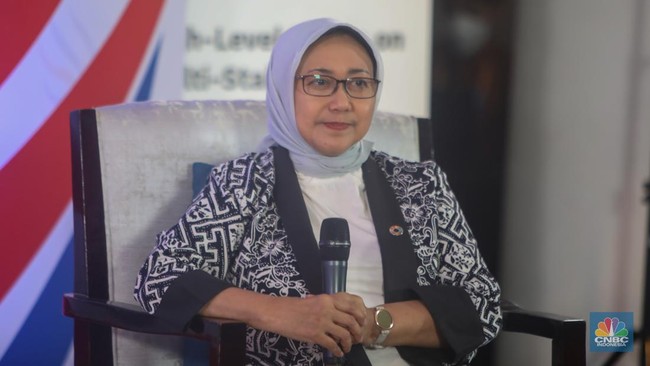
Deputy for Economic and Digital Transformation at the Ministry of National Development Planning/Bappenas, Vivi Yulaswati, stated that the refinement of DTSEN is ongoing to ensure the government can identify accurate data for distributing social assistance. "DTSEN is continuously being refined, and we also update it every three to four months, so the data is always changing," Vivi said in Jakarta on Wednesday (29/7/2026).
With these periodic updates, it is hoped that the list of social assistance recipients will improve and that distribution will more effectively reach people who are genuinely in need. "So there will be more improvements to the recipients of social assistance," Vivi added.
Previously, Minister of Social Affairs Saifullah Yusuf (Gus Ipul) requested that regional heads play an active role in updating the DTSEN regularly every three months. Data accuracy is key to ensuring social assistance and empowerment programmes are precisely targeted. "Every three months there will be updated data, the result of the updating process. We involve the Social Service and the regents to help process this data," Gus Ipul said during an audience at the Ministry of Social Affairs office.
The Minister explained that the data updating process involves facilitators of the Family Hope Programme (PKH), the Social Service, sub-district/village officials, and officers from the Central Statistics Agency (BPS) in each region. The data is then compiled and must be signed by the regional head before finally being issued by BPS on the 20th of each month to serve as a guideline for social assistance distribution. Before it is finalised, regents and mayors can check the data’s suitability with conditions on the ground.
"So every month, you can propose updates. Every three months, on the 20th, there will be updated results from BPS. The regent can then check whether the proposed updates are appropriate," Gus Ipul said.
The DTSEN will not only contain poverty data but also information on agriculture and health, integrated with relevant ministries and agencies in accordance with Presidential Instruction Number 4 of 2025 on DTSEN. "This is not just data on the poor; there is data on agriculture, everything, all in one. The mandate is the National Single Socio-Economic Data. All data is here, health data, livestock, rice fields, fields, all data is connected here. This data is all connected with the Civil Registry, with ATR/BPN, with BKN. So this is a single database," Gus Ipul explained. This data contains information on all Indonesian residents, both individuals and families, making its accuracy crucial as a basis for policymaking.