
Indonesia to Rely on Renewable Energy to Prevent Economic Development from Harming the Environment
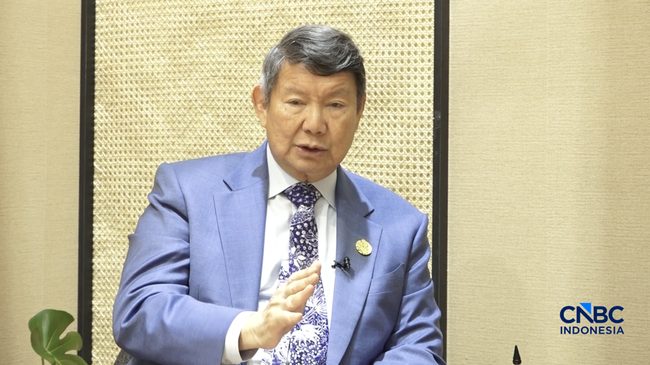
Jakarta, CNBC Indonesia – Presidential Special Envoy for Climate and Energy Hashim Djojohadikusumo has revealed that Indonesia will rely on new and renewable energy (NRE), which he considers an effective way to pursue environmentally friendly economic development.
Hashim said NRE power plants are clean energy sources that will not come at the expense of Indonesia’s forests and seas.
“Economic development must not sacrifice the environment. We will not sacrifice our forests or our seas. This is already government policy. The way to achieve it is to build power plants based on renewable energy,” Hashim said in a special interview with CNBC Indonesia at COP31 in Antalya, Türkiye, according to a report on Monday (16 November 2026).
Hashim said Indonesia would build a number of renewable power plants, including solar, wind, nuclear and geothermal facilities.
Indonesia is also studying the use of wave energy to generate electricity, particularly given the country’s roughly 17,000 islands and its substantial wave-energy potential.
“We are also investigating and studying wave power. Indonesia has 17,000 islands, so there are many waves. We are studying this as well. I believe these are technologies that can support development based on renewable energy in our country,” he said.
Indonesia’s renewable energy mix
The Energy and Mineral Resources Ministry said the domestic renewable energy mix is supported by bioenergy, particularly through the mandatory blending of biodiesel with fuel. In the first half of 2026, renewable energy accounted for 17.3% of the country’s total use of primary energy sources.
Eniya Listiani Dewi, director general of new, renewable energy and energy conservation at the ministry, said investment needed to accelerate to boost this figure, as growth in installed capacity remained relatively slow compared with long-term targets.
“Our national energy mix has currently reached only 17.3% this semester,” she told Deputy Energy and Mineral Resources Minister Yuliot at the 12th Indonesia EBTKE ConEx 2026 at JIExpo Kemayoran on Wednesday (2 September 2026).
The 17.3% share is divided between the electricity and non-electricity sectors. In the non-electricity sector, FAME biodiesel accounted for the largest share, at 5.01%, followed by biomass at 2.82%.
“Bioenergy is the largest source; it has the biggest share of energy sources in Indonesia,” she said.
In the electricity sector, bioenergy power plants contributed 4.19% and hydropower 2.69%. Geothermal power accounted for 1.84%, solar for 0.51% and wind for 0.06%.
“President [Prabowo] launched B50 in July. This is one way to show that energy self-sufficiency can be supplied from within the country. The B50 target could stop our diesel imports,” she added.
Indonesia’s total installed renewable power capacity has reached 16.32 gigawatts, rising gradually from 12GW in 2021. The government aims to increase the share of green energy to 30% by 2034 to achieve national energy independence.
Source: jawawa.id (https://jawawa.id/newsitem/indonesia-to-rely-on-renewable-energy-to-prevent-economic-development-from-harming-the-environment-1794901898)
Originally published by CNBC Indonesia (https://www.cnbcindonesia.com/news/20261117125823-4-785923/cegah-pembangunan-ekonomi-rusak-lingkungan-ri-bakal-andalkan-ebt), translated from Indonesian