
Indonesia to Regulate AI According to Risk, Komdigi Reveals Details of Rules
Jakarta, CNBC Indonesia — The government is preparing two measures to regulate AI in Indonesia: the National AI Roadmap for 2026–2029 and a Presidential Regulation on AI Ethics. They are intended to guide the safe and responsible use of the technology.
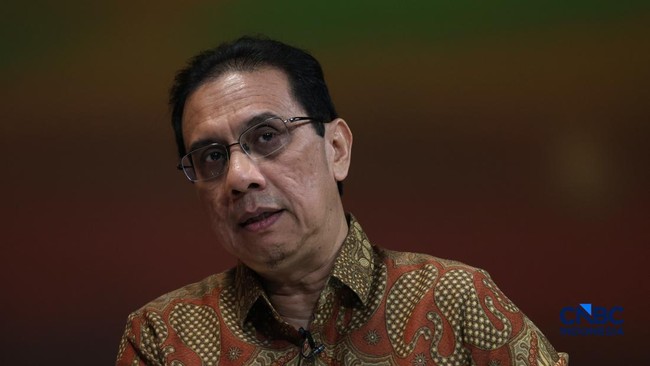
Said Mirza Pahlevi, Director of Artificial Intelligence and New Technology Ecosystems at the Ministry of Communication and Digital Affairs (Komdigi), said the ethics regulation would emphasise using technology to strengthen human expertise, rather than diminish it. The final decision on AI-generated outputs must remain in human hands.
He said the regulation would take a risk-based approach, with requirements depending on the level of risk involved.
“AI that could endanger people’s safety or citizens’ rights would, of course, be prohibited. One example is facial recognition used to monitor citizens en masse in public spaces without a legal basis,” he said.
“High-risk AI, such as systems used to diagnose particular illnesses in patients, would require special oversight. It would be permitted, but under special supervision. And, as I said, the final decision must not be made entirely automatically by AI; a human must make the final decision,” he explained.
The AI regulation would also require products generated by AI to be labelled. It would set out transparency obligations on how users’ data is processed, as well as provisions for deleting data.
“Finally, people harmed by an AI system can report it to the service provider or the relevant ministry, and those reports must, of course, be followed up,” Said said.
He added that the regulation would provide certainty for businesses in Indonesia. There would be no new additional permit for AI development; businesses would only need to conduct a self-assessment of the applications they create.
However, high-risk AI would be subject to additional requirements set by the relevant authorities. AI used for research would not need to be reported until it was officially put into commercial use.
“AI that is still at the research or prototype stage does not need to be reported until the product is used commercially, and there will be a two-year adjustment period,” he said.
AI talent
AI use in Indonesia has developed considerably. A 2024 Boston Consulting Group report placed Indonesia among the world’s top 10 countries for daily use of generative AI.
Nevertheless, Said acknowledged that its use remains concentrated in promotion and customer service. Indonesia also needs to move up the value chain and become a developer and producer, rather than merely a user.
That is why the government is preparing the two AI measures, which are currently awaiting signatures.
“The first is the National AI Roadmap for 2026–2029. It contains targets and programmes across ministries. Then there is the planned Presidential Regulation on AI Ethics, which will provide guidance to ensure AI is safe and responsible. Both are still in the process of being signed,” Said said on CNBC Indonesia TV on Friday (30 October 2026).
He said the roadmap aims to train 45,000 AI professionals a year. It also plans to establish talent training centres, known as Digital Talent Centres, in every province.
AI literacy will also become part of basic training for civil servants, with a dedicated programme for agency leaders. Schools are also being targeted to devote at least 15% of learning to coding and AI.
“We have also prepared AI competencies based on the Indonesian National Work Competency Standards (SKKNI), with tiered certification linked to global certification. So we are preparing both national capabilities and AI skills that meet global standards,” he said.
Source: jawawa.id (https://jawawa.id/newsitem/indonesia-to-regulate-ai-according-to-risk-komdigi-reveals-details-of-rules-1793429417)
Originally published by CNBC Indonesia (https://www.cnbcindonesia.com/tech/20261030162941-37-781009/ri-atur-ai-sesuai-risiko-komdigi-beberkan-isi-regulasinya), translated from Indonesian