
Indonesia to Ramp Up New LPG Alternative Gas with Abundant Raw Materials!
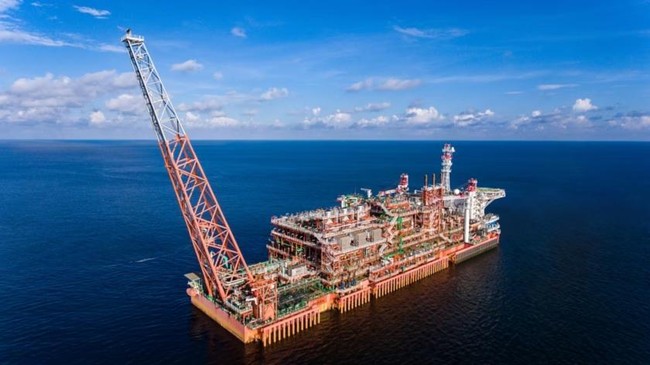
Indonesia’s Ministry of Energy and Mineral Resources (ESDM) is promoting the use of compressed natural gas (CNG) as an alternative to liquefied petroleum gas (LPG).
The main reason is that it aligns with the abundance of domestic natural gas resources, particularly those containing methane (C1) and ethane (C2). Meanwhile, the raw materials for LPG, namely propane (C3) and butane (C4), are increasingly depleting in the hydrocarbon chain.
The Director General of Oil and Gas (Dirjen Migas) of the Ministry of ESDM, Laode Sulaeman, explained that Indonesia has massive natural gas resources to produce CNG and support domestic gas needs.
Moreover, he added, there has recently been a large-scale gas field discovery that can support the sustainability of CNG supply in the future.
“We have a lot of gas, and now more large gas fields have been found, like the one Eni discovered (a jumbo gas field in deep sea off East Kalimantan)… that’s big,” he said when met at the Ministry of ESDM office in Jakarta on Wednesday (13/5/2026).
The government is striving to optimise domestic gas production to reduce dependence on LPG imports. By utilising gas from domestic production, the government hopes to create energy independence while reducing the subsidy burden previously allocated for imported gas.
“Actually, alternative and replacement mean the same thing. But if we say replacement, it’s massive and large; if alternative, there are stages. The correct thing is that we have stages,” he added.
The government is also preparing a roadmap for this energy shift to ensure the transition process does not disrupt public services. As an initial step, the government plans to utilise CNG cylinders through pilot projects in several regions.
“This year there will already be several pilot projects. This year there are already,” he emphasised.
Currently, the Ministry of ESDM is conducting trials for CNG use with smaller capacities of 3 kilograms (kg). CNG use has actually been implemented for the transportation, hospitality, and restaurant sectors with larger sizes of 12 kg to 20 kg or so.
The promotion of CNG is also to support the government’s efforts to curb massive LPG imports. Understandably, domestic LPG needs reach 8.6 million tonnes per year, but the government can only produce 1.6-1.7 million tonnes domestically, meaning the rest still relies on imports. Calculated, the share of domestic LPG imports reaches 80-84% of national needs.
To Be Subsidised
Previously, Energy and Mineral Resources Minister Bahlil Lahadalia stated that the subsidy policy for CNG aligns with President Prabowo Subianto’s directive that national energy programmes should remain supportive of the people in need.
“The President’s directive, whether CNG or LPG, will always prioritise helping the people who truly need our assistance. Thus, I assure that subsidies must still be provided for the people,” Bahlil said after the inauguration of officials at the Ministry of ESDM some time ago.
Therefore, the government is also endeavouring to ensure that the selling price of CNG in the future can be equivalent to the price of 3 kg LPG currently used by the public.
“Pray for that. At least the same. At least the same,” Bahlil said.
Currently, the government is still in the trial and study phase before full implementation of the programme. Thus, the pricing scheme and distribution mechanism are still being refined.
“Later, later. That’s why we’re trialling it. This hasn’t been implemented yet. I repeat, this is still in the exercise phase,” he said.
What is CNG?
For information, according to Presidential Regulation No. 64 of 2012 on the Provision, Distribution, and Pricing of Gas Fuel for Road Transportation, CNG is gas sourced from natural gas with methane (C1) elements.
The gas is compressed and stored in special pressure cylinders to make it easier to transport, store, and use as vehicle fuel.
According to the official website of PT PGN (PGAS), natural gas itself consists of a mixture of elements such as hydrocarbons comprising methane (C1), ethane (C2), propane (C3), and butane (C4). CNG itself consists of 95% methane content.
Given the diversity of natural gas elements, their processing and utilisation vary. Natural gas can be processed into LPG, liquefied natural gas (LNG), including CNG.
Understanding CNG is often accompanied by understanding LPG and liquefied natural gas (LNG). However, it should be noted that CNG, LPG, and LNG are three different things.
The main difference between CNG, LPG, and LNG lies in their physical state and storage pressure. CNG is stored in gaseous form at high pressure, while LPG is in liquid form at moderate pressure and temperature. LNG, on the other hand, is transported in liquid form at very low temperatures.