
Indonesia to Produce 3kg CNG Cylinders, Sourcing from China
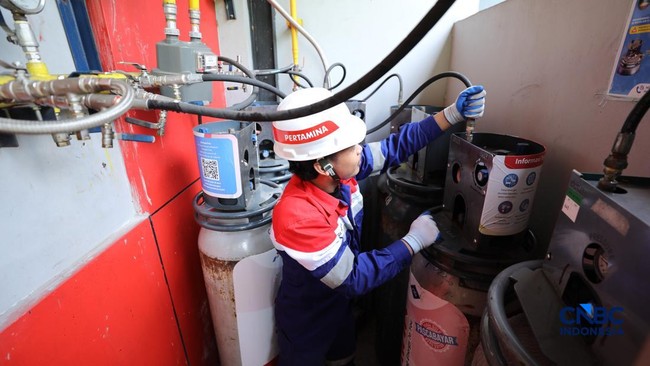
The Ministry of Energy and Mineral Resources (ESDM) is preparing gas cylinder infrastructure to support the shift from 3kg Liquefied Petroleum Gas (LPG) to Compressed Natural Gas (CNG) as an alternative energy source. Initially, the government has decided to import cylinders from abroad, particularly China, to ensure the technology used is of high quality and robust.
Director General of Oil and Gas at the ESDM, Laode Sulaeman, explained that importing 3kg CNG cylinders refers to countries with experience in this field due to the higher and stricter technical specifications required compared to conventional LPG cylinders. “China is the current choice. There are other countries, but for now, it’s China. This is the initial phase,” he stated during an interview at the ESDM office in Jakarta.
The decision to source from China is based on the readiness of its manufacturing industry to produce high-pressure cylinders. Laode noted that domestic technological capabilities are not yet at the required economic scale for independent production. “This is high-tech. Currently, only overseas manufacturers can produce this technology. However, once production scales up, we can transition to domestic manufacturing,” he added.
The imported cylinders will be Type 4, made from fibre composite materials. Unlike iron-based Type 1 cylinders, Type 4 offers significantly lighter weight while maintaining strength to withstand gas pressures of 200-250 bar. “Type 4 uses fibre, making it very light and strong but expensive. The more advanced the technology, the higher the cost,” he explained in an ESDM podcast.
The ministry aims to place the first order for pilot project requirements soon, with a minimum order of 100,000 units to ensure supply continuity before technology transfer for domestic production. “You need to order at least 100,000 or more. That’s why if people ask why it’s not being made yet, it’s because such a large order is required,” he said.
The government is focusing on finalising patents and standardisation to ensure the cylinders are safe for public use. Current conventional Type 1 cylinders have operational weight limitations, and the fibre composite innovation aims to ease distribution and improve safety through stable high-pressure resistance.
Research on CNG has been ongoing for years, with key components in the cylinder and valve now ready for implementation. The Lemigas agency will oversee production to ensure safety standards. Within three months, all administrative aspects, including patents for the 3kg cylinder design, will be completed.
“The development from Type 1 to Type 4 is based on thousands of journals and papers. The critical point now is whether it’s patented. That’s why within three months, it must be patented—this isn’t about assembling new parts,” he stressed.
The use of fibre composite CNG cylinders is projected to reduce energy subsidies by up to 30% compared to LPG, as CNG sources come from domestic gas fields with growing potential. “The key is that Type 4 for 3kg cylinders didn’t previously exist. The minister has set a three-month target to have this ready, after which mass production can begin,” he concluded.