
Indonesia to Modernise 4,582 Fishing Vessels, Boosting Catch and Exports
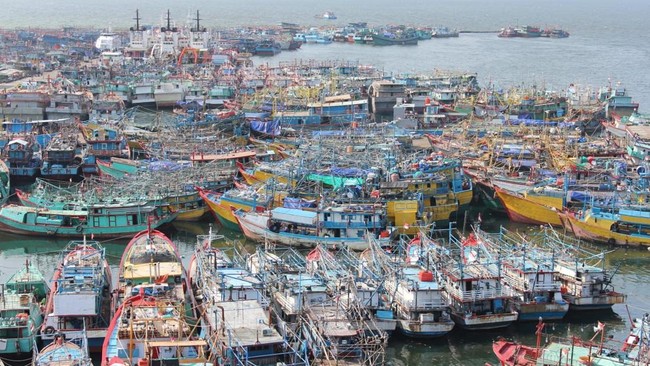
The Ministry of Marine Affairs and Fisheries (KKP) is preparing a programme to modernise 4,582 fishing vessels as part of the 2025-2029 national priorities. The programme is targeted to boost fish catch volume to 2.3 million tonnes per year, create approximately 58,000 new jobs for crew members, and strengthen the fisheries sector’s contribution to state revenue.
Minister of Marine Affairs and Fisheries Sakti Wahyu Trenggono stated that the fleet modernisation aims to improve the competitiveness of the national fishing sector, which has been hampered by the quality of its catch. He noted that the majority of Indonesia’s fishing fleet still consists of wooden vessels, resulting in suboptimal catch quality for penetrating international markets.
‘The government is implementing a modernisation programme for 4,582 fishing vessels,’ Trenggono said during a National Coordination Meeting at the KKP headquarters in Jakarta on Tuesday. Of the total vessels in the programme, 4,515 are fishing vessels ranging from 10 GT to 1,500 GT, while the remaining 67 are carrier vessels sized between 200 GT and 2,500 GT.
Trenggono explained that the modernisation is a government initiative prompted by the assessment that fisheries export performance is not yet commensurate with the scale of national production. He pointed out that over the past five years, Indonesia’s fisheries export value has hovered around US$6.2 billion annually, despite total capture and aquaculture production reaching approximately 13 million tonnes.
‘When comparing production with exports, exports are only US$6.2 billion per year over the last five years. Meanwhile, our production is 13 million tonnes from capture and aquaculture. Exports should actually be much higher because the catch quality is still not good,’ he said. Based on this, President Prabowo Subianto has asked the KKP to initiate the modernisation of the fishing fleet. The government needs to take the lead first, as renewing vessels would be difficult if left solely to the fishermen.
‘If we tell the fishermen to modernise, it is difficult. That is why the government must act first, initiating the process through modernisation,’ he stated. The modernised vessels will use steel materials, be equipped with more modern technology, and employ environmentally friendly fishing gear. This scheme is expected to improve catch quality and operational efficiency.
The KKP estimates the programme will also generate a ripple economic effect for the marine sector. In addition to increasing catch volume and creating jobs, improved vessel efficiency is expected to boost the profitability of fishing businesses. ‘It will contribute to increasing state revenue through foreign exchange, taxes, and non-tax state revenue,’ he said.
For the initial phase, the government is preparing the modernisation of 1,582 vessels financed through a foreign loan from the British government. The project is currently in the planning process, with a target of completing 50 units by the end of this year. ‘The modernisation of 1,582 units is financed by a foreign loan from the British government, which is now in the planning process,’ Trenggono said. ‘Hopefully, we are targeting 50 units to be completed by the end of the year. The remaining 1,582 units are expected to be finished by the end of 2028.’ For the remaining modernisation target of up to 4,582 vessels, Trenggono said the government will seek funding from the state budget and alternative financing sources.
Source: jawawa.id (https://jawawa.id/newsitem/indonesia-to-modernise-4-582-fishing-vessels-boosting-catch-and-exports-1782978723)
Originally published by CNBC Indonesia (https://www.cnbcindonesia.com/news/20260702132339-4-747507/nelayan-ri-bisa-happy-trenggono-akan-modernisasi-4582-kapal-ikan), translated from Indonesian