
Indonesia to Learn from Norway to Develop Hydroelectric Power
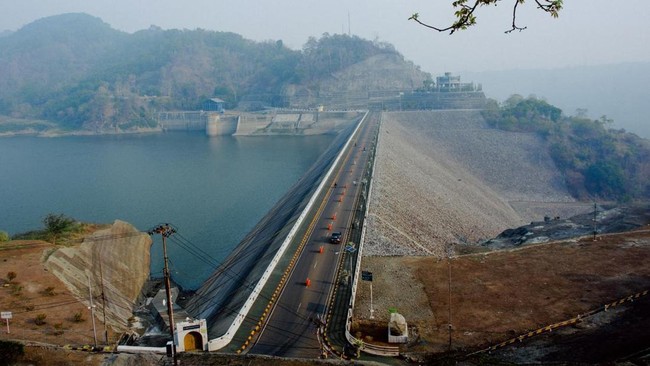
The Ministry of Energy and Mineral Resources (ESDM) has stated that Indonesia plans to adopt technology from Norway to develop Hydroelectric Power Plants (PLTA) across the country. This decision considers that Norway’s electricity supply is dominated by hydropower.
Deputy Minister of Energy and Mineral Resources, Yuliot Tanjung, revealed that Norway is one of the most advanced nations in managing New and Renewable Energy (EBT), particularly in the water utilisation sector. This is evidenced by the fact that almost all of the country’s electricity supply is sourced from hydropower.
“Like Norway, 90% of their electricity availability comes from hydropower. Meanwhile, we have quite many large river potentials, but we have not been able to utilise them to their maximum potential,” said Yuliot when met at the Ministry of Energy and Mineral Resources Office, Jakarta, on Friday (2/10/2026).
Yuliot explained that Indonesia is opening opportunities for technological cooperation and expects assistance from Norway. Through this exchange of technology and knowledge, Indonesia seeks to implement adaptive hydropower development schemes suited to the national hydrological potential.
“So, with Norwegian technology, we hope for their assistance, as well as the ability to adopt their experience in developing hydropower in their regions,” said Yuliot.
This effort is part of the government’s steps to strengthen national energy security and increase the proportion of renewable energy in the national energy mix through international collaboration.
According to data from the Directorate General of New, Renewable Energy, and Energy Conservation (EBTKE) of the Ministry of ESDM, the installed capacity of hydropower plants until the end of 2025 was recorded at 7,587.4 Megawatts (MW).
Based on PLN’s Electricity Supply Business Plan (RUPTL) 2025-2034, Indonesia will build an additional 69.5 Gigawatts (GW) of new power plants. Of this total capacity, 76% will come from renewable energy, amounting to approximately 42.6 GW, while 15% or about 10.3 GW will come from energy storage systems.
According to presentations from the Ministry of ESDM, of the planned 69.5 GW addition, approximately 42.6 GW will come from renewable energy plants, 10.3 GW from energy storage systems, and 16.6 GW from fossil fuel-based plants.
The breakdown for renewable energy capacity is as follows: Solar (PLTS) 17.1 GW, Hydro (PLTA) 11.7 GW, Wind (PLTB) 7.2 GW, Geothermal (PLTP) 5.2 GW, Bioenergy 0.9 GW, and Nuclear (PLTN) 0.5 GW.
Meanwhile, the energy storage system capacity includes pumped storage hydropower of 4.3 GW and batteries of 6.0 GW. Furthermore, fossil fuel plants will still see 16.6 GW of construction, consisting of 10.3 GW from gas and 6.3 GW from coal.