
Indonesia to Lead with Mandatory B50 Biodiesel Implementation Starting 1 July
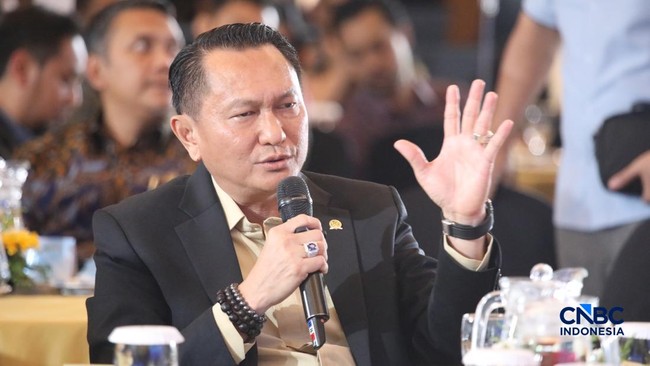
Jakarta, CNBC Indonesia - Indonesia’s House of Representatives Commission XII has stated that the country is a pioneer in utilising a 50% palm oil-based biodiesel blend (B50) in diesel fuel. The government is set to enforce the B50 mandate starting 1 July 2026. This policy is considered to place Indonesia at the forefront of utilising plant-based renewable energy to strengthen national energy security. Commission XII Chairman Bambang Patijaya stated that this achievement is a major leap that has not been undertaken by any other country in the world. He emphasised that optimising domestic resources through the B50 programme is tangible proof of Indonesia’s seriousness in carrying out the energy transition amidst global dynamics. ‘From early on, government policy has been reflected in how we support the energy transition, we optimise our own resources, for example B40 which will become B50. This is extraordinary. No other country in the world is implementing this yet,’ he said at the CNBC Indonesia Energy Forum in Jakarta. Bambang explained that Indonesia’s position is far more advanced compared to neighbouring countries in the region, including Malaysia. Although Malaysia has a large palm oil industry, its level of biofuel blending is still recorded at a much lower level. ‘I asked the Director General of New, Renewable Energy and Energy Conservation, the only country that might be able to approach Indonesia is Malaysia. And even they are only at B10, B20. B10 is still in the planning stage. We will have B50 on 1 July. This is not easy. What is Malaysia’s consumption capacity, and what is Indonesia’s consumption and production capacity? We are big,’ Bambang said. The success in managing this energy mix has also strengthened Indonesia’s position in the global energy security index. JP Morgan placed Indonesia second out of 52 countries as having the best energy security, reflecting the effectiveness of government policies in maintaining supply availability. ‘This is not just a release to please us, but it illustrates Indonesia’s effort in overcoming everything. The government is on the right track, this is the cooperation of all parties and we hope to maintain this hard work together to guarantee energy supply for the community,’ he stressed. Meanwhile, Director General of New, Renewable Energy and Energy Conservation at the Ministry of Energy and Mineral Resources, Eniya Listiani Dewi, said that her party has prepared all stages of implementation. According to her, the legal basis for implementing B50 has been established through Ministerial Decree Number 257 of 2026. ‘The concept is that the mandate starts on 1 July. On 1 July with B50. Then the second point is a transition period. The transition period is set at 3 months,’ Eniya said. Eniya explained that the transition period aims to give business actors time to use up the remaining B40 biodiesel stocks available in refineries and blending facilities. ‘So for this specification, we provide a transition period, it will certainly be above 40% but will gradually move towards 50%. Pertamina has promised to clear all stocks within 2 months. Besides, it is not only Pertamina that blends biodiesel,’ she said. Previously, based on data from the Ministry of Energy and Mineral Resources, the implementation of the B50 programme is projected to provide significant economic benefits for the country through increasing the added value of crude palm oil. From a fiscal perspective, the policy has the potential to save the country up to Rp 157.28 trillion in foreign exchange in 2026, an increase from the initial B40 programme target of Rp 140 trillion. ‘Regarding supply, as I said earlier, we are continuously calculating, but I predict the FAME supply is sufficient,’ Eniya concluded.