
Indonesia to Host RCLHM 2026, Discussing New Narcotics Trends and Customs Laboratory Cooperation
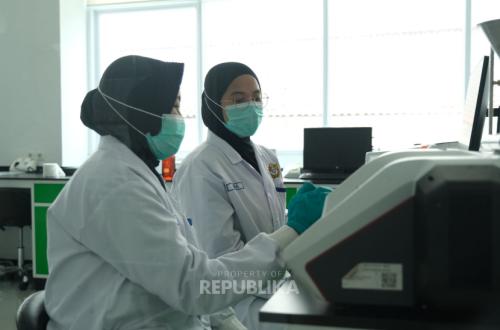
Not all goods crossing national borders can be identified solely by their appearance, packaging or accompanying documents. Some require more thorough examination to establish their contents and characteristics.
Accurate identification is essential, particularly when dealing with narcotics, new psychoactive substances, hazardous chemicals or goods that require precise classification.
This is where Customs and Excise Laboratory Centres (Balai Laboratorium Bea dan Cukai/BLBC) play a role. By testing and analysing samples within their remit, laboratories provide scientific and technical support for customs and excise operations. Their findings can help monitor high-risk goods while also providing businesses with greater certainty in customs procedures.
The strategic role of customs laboratories was among the issues highlighted at the fifth Regional Customs Laboratories Heads Meeting (RCLHM), held from 7 to 9 October 2026 in Tangerang Selatan, Indonesia. Representatives of five Regional Customs Laboratories (RCLs) from the Asia-Pacific region attended the meeting, which provided a forum for exchanging information, experience and best practice in addressing evolving customs challenges. RCLs are laboratories recognised by the World Customs Organization (WCO) in their respective regions. They work to strengthen chemical analysis capacity, share information and expertise, and support accurate tariff classification, origin determination, efforts to combat narcotics smuggling, revenue collection, trade facilitation and public protection.
Indonesia hosted the meeting and took an active part through the Indonesian RCL, which operates under Customs and Excise. The Indonesian delegation comprised the heads of the Class I BLBCs in Jakarta, Medan and Surabaya, with support from relevant Customs and Excise units. Representatives also attended from the RCLs of China, India, Japan and Korea, as well as the WCO Secretariat and the WCO’s Asia-Pacific regional office.
Netty Hartawati, head of Customs and Excise’s Public Relations and Outreach Subdirectorate, said a key issue was the development of narcotics and new psychoactive substances (NPS). “Changes in the types and characteristics of substances in circulation mean identification capabilities must be continually updated. Etomidate, for example, was among the substances discussed in the context of regional NPS trends,” she said.
These developments show that goods monitoring requires sufficient expertise and analytical methods. Accurate identification is necessary to recognise substances by their chemical characteristics, particularly when a trade name, physical form or packaging does not adequately indicate their true contents.
Customs and Excise laboratories provide technical support by analysing samples and identifying the characteristics of goods. This is relevant to monitoring narcotics and hazardous chemicals, as well as conducting tests to help classify goods under the Harmonized System (HS). “Reliable analytical results enable more targeted monitoring, while businesses gain greater certainty in classification and compliance with customs requirements,” Netty said.
The RCLHM also gave the five Asia-Pacific RCLs an opportunity to present developments in their activities, analytical methods, innovations and laboratory management. Discussions covered implementation of the ISO/IEC 17025:2017 quality standard, workplace safety, chemical handling, laboratory information systems and staff skills development.
Participants also received updates on WCO policies, including the WCO Strategic Plan 2025–2028, HS 2028, developments at the Scientific Sub-Committee and the WCO RCL Professional Programme. The experiences of the RCLs of India, Korea and Japan in professional development programmes for customs chemists were also cited as a reference for building laboratory capacity across the region.
For Indonesia, the exchange offered an opportunity to strengthen BLBC capabilities through learning about testing methods, laboratory governance and staff development. Indonesia, one of ten RCLs worldwide, has been part of the WCO laboratory network since 2021. Since then, the Indonesian RCL has contributed to regional activities, including customs laboratory workshops for ASEAN countries in 2023 and 2024.
At this meeting, delegates also agreed to jointly ask the WCO to organise a Pre-Accreditation Workshop. The proposal is intended to increase the capacity and number of customs laboratory experts accredited by the WCO. The WCO Secretariat will forward the request to the relevant unit for consideration.
Meanwhile, delegates broadly supported plans for regional seminars or webinars, exchanges of analytical methods and sessions to share best practice. Further discussion is still needed on their mechanisms, scope, information confidentiality and feasibility. The meeting also agreed to India’s proposal to host the next RCLHM around October 2027. The final date is subject to approval by the WCO Vice-Chair for the Asia-Pacific region.
Netty said the meeting demonstrated that strengthening customs laboratories depends on cross-border collaboration. Changes in traded goods and the risk of their misuse call for information-sharing and continually developing technical capabilities.
“For the public, stronger laboratory capacity supports efforts to identify and monitor goods that could threaten health, safety and security. For businesses, accurate and accountable test results help provide certainty in classification and customs treatment,” she said.
Netty said Customs and Excise would follow up the meeting’s outcomes through coordination among technical units, international cooperation and the BLBCs. Mapping capacity-building needs, developing analytical methods and making use of WCO professional programmes are among the planned next steps. Through the Indonesian RCL, Customs and Excise aims to ensure that advances in laboratory knowledge and technology benefit monitoring while supporting safe, orderly and predictable trade.
Source: jawawa.id (https://jawawa.id/newsitem/indonesia-to-host-rclhm-2026-discussing-new-narcotics-trends-and-customs-laboratory-cooperation-1793357620)
Originally published by Republika (https://republika.co.id/berita//tnpto3430/jadi-tuan-rumah-rclhm-2026-indonesia-bahas-tren-baru-narkotika-dan-sinergi-laboratorium-kepabeanan), translated from Indonesian