
Indonesia to Export Electricity to Singapore, Rosan Reveals Power Source
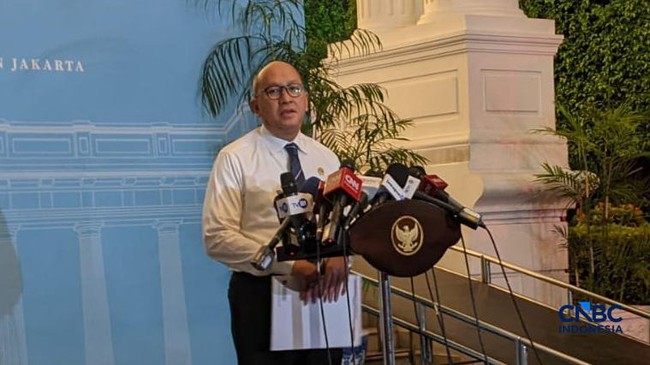
Minister of Investment and Downstreaming, who is also CEO of Danantara, Rosan Perkasa Roeslani, has spoken about Indonesia’s plan to export electricity to Singapore. Several potential areas have been identified for the construction of power plants to facilitate these exports.
Rosan stated that Danantara will act as the exporter, collaborating with Singaporean companies Keppel Electric, Sembcorp Industries, and Singapore Energy Interconnections. “We, as the Indonesian company, will develop the electricity. Keppel and Sembcorp will be the off-takers. They are also state-owned enterprises,” Rosan explained at the State Palace on Monday (6/7/2026).
He detailed that one of the power plants will be built in the Batam, Bintan, and Karimun (BBK) region, with a total capacity of 3.4 Gigawatts (GW) over several years. “However, the first phase of construction will be between 600 Megawatts and 1.2 GW. This will be renewable energy,” Rosan revealed.
Meanwhile, Minister of Energy and Mineral Resources, Bahlil Lahadalia, noted that a Memorandum of Understanding (MoU) covering electricity exports, green electricity development, and Carbon Capture Storage (CCS) development was signed with Singapore a year ago. “That is a unified package we signed last year. Regarding the electricity to Singapore, the process is ongoing, but we are still negotiating the price and our regulations stipulate that pricing is determined by the government. We want a win-win, mutually beneficial outcome,” Bahlil said at the State Palace on Monday (6/7/2026).
According to Bahlil, the electricity cooperation must benefit both countries. Therefore, discussions on the export are still focused on ensuring mutual advantages. “But I think a meeting point will be reached soon. We want everything to have benefits, a win-win for both parties. It is not yet win-win. I feel it is not yet win-win at the current price,” Bahlil explained.