
Indonesia to Engage US Companies to Develop Hydrogen Potential
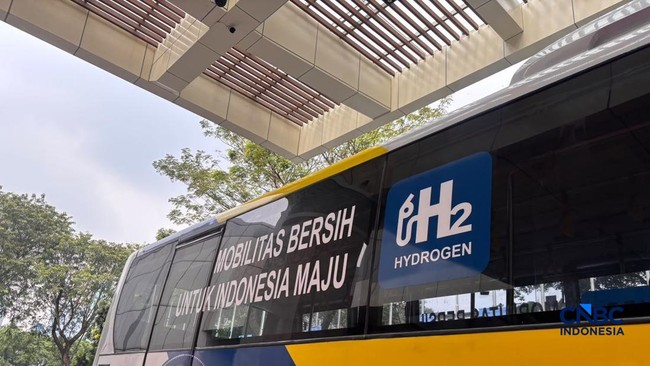
The Ministry of Energy and Mineral Resources (ESDM) plans to explore cooperation with several companies from the United States to develop Indonesia’s hydrogen potential. This move comes as Indonesia possesses significant hydrogen reserves that have yet to be fully utilised.
Deputy Minister of ESDM Yuliot Tanjung revealed that the US is a leader in developing hydrogen as a new and renewable energy source. By leveraging technology from the US, the government aims to accelerate the domestic utilisation of hydrogen potential.
“We also have indications that our hydrogen reserves that can be mined are quite large, but we have not yet pursued them. Therefore, we will also cooperate with several companies from America,” Yumbot stated at the Ministry of ESDM office in Jakarta on Friday (2/10/2026).
Yuliot explained that the hydrogen development cooperation plan is also part of a series of diplomatic agendas and the G20 Forum to strengthen global energy security. In addition to the United States, Indonesia is also exploring renewable energy technology exchange with other advanced nations such as Norway, Japan, and France.
“During this meeting, for example, we have technology cooperation agreements with several countries,” he added.
Beyond focusing on hydrogen potential with the US, Indonesia also wishes to adopt Norway’s experience in utilising large river potentials for Hydroelectric Power Plants (PLTA). “Like Norway, 90% of their electricity comes from hydropower. Meanwhile, we have significant potential in large rivers that we have not yet maximised,” he explained.
Minister of ESDM Bahlil Lahadalia emphasised that Indonesia can build a hydrogen ecosystem because its raw materials are abundant domestically. He believes that energy downstreaming is a solution to face global geopolitical uncertainties that often disrupt fossil fuel supplies.
“What I want to convey to all of you is that the raw materials for hydrogen in our nation are beyond doubt, and this is a part that must continue to be pushed,” Boleh said at the Global Hydrogen Ecosystem Summit and Exhibition (GHES) 2026 in Jakarta on Tuesday (21/7/2026).
Bahlil detailed that hydrogen can be produced through various Indonesian resources, ranging from water and natural gas to the processing of low-calorific coal. He noted that availability exists in various regions and can serve as capital for the hydrogen industry to develop independently without import dependency.
“Because hydrogen is produced from water, gas, and low-calorific coal. We can transform our low-calorific coal fossils into hydrogen using technology. We have the water,” he added.
The potential water reserves to support the hydrogen industry are also recorded as very large, such as in Mamberamo, Papua, with a capacity of 21 Gigawatts (GW), and the Kayan River, which reaches 14 GW. Furthermore, the national gas supply is predicted to surge following the discovery of new reserves in East Kalimantan and the development of the Masela Block.
Through the utilisation of these domestic resources, the government targets the creation of energy self-sufficiency so that Indonesia no longer relies on foreign powers. The use of more efficient technology is a primary focus to ensure that the price of hydrogen in the future can be much more competitive compared to fossil fuels.
“For me, the state’s commitment is determined by three things: first, that we continue to use clean energy; second, that it is efficient energy; and third, that the energy can be produced within the Unitary State of the Republic of Indonesia,” he concluded.
The Director General of New, Renewable Energy, and Energy Conservation (EBTKE) at the Ministry of ESDM, Eniya Listiani Dewi, stated that there are currently 93 hydrogen ecosystem development initiatives spread across various regions of Indonesia.
She stated that the investment potential from the development of this green fuel is estimated to reach approximately Rp 32 trillion.
“We currently have 93 hydrogen ecosystem development initiatives, with projects spread throughout Indonesia. These projects represent an investment of Rp 32 trillion that we will oversee,” Eniya said during the same event.
She noted that her department will oversee all projects to ensure they are realised according to the Minister of ESDM’s directives. One focus is implementing hydrogen projects that support the ‘de-dieselisation’ programme, which aims to reduce the use of diesel-powered power plants in remote areas.
She cited a project in Sumba, which is targeted to begin commercial operation (COD) in 2028. Additionally, a similar project is being developed on Rengit Island in collaboration with PT PLN (Persero).
Eniya revealed that the implementation of this system has the potential to significantly cut power generation costs. At the very least, diesel-based electricity costs, which currently reach around Rp 20,000 per kWh or approximately US$ 1 per kWh, could be reduced to around US$ 0.25 per kWh.
“This is one of our efforts to prove the concept of using solar power plants in remote areas, using hydrogen as energy storage,” she said.