
Indonesia to Develop Hydrogen, Bahlil Says Raw Materials Abundant Domestically
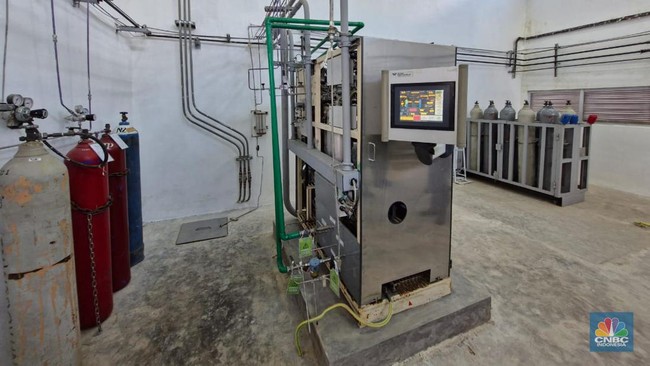
Jakarta, CNBC Indonesia — The Ministry of Energy and Mineral Resources (ESDM) is prioritising the development of hydrogen as a future energy source by harnessing the potential of local natural wealth. This aligns with the government’s programme to achieve energy self-sufficiency and independence.
Minister of Energy and Mineral Resources Bahlil Lahadalia affirmed that Indonesia can build a hydrogen ecosystem because the availability of raw materials is abundant domestically. According to him, this energy downstreaming serves as a solution to face global geopolitical uncertainty that often disrupts fossil energy supplies.
“What I want to convey to you all is that the raw materials for hydrogen that our nation possesses should not be doubted, and this is a part that must continue to be encouraged,” Bahlil said at the Global Hydrogen Ecosystem Summit and Exhibition (GHES) 2026 in Jakarta, quoted on Wednesday (22 July 2026).
Bahlil detailed that hydrogen can be produced through various resource instruments that Indonesia possesses, ranging from the use of water, natural gas, to the processing of low-calorie coal. He said their availability exists across various regions and could serve as capital for the hydrogen industry to develop independently without dependence on imports.
“Because hydrogen can be produced from water, from gas, from low-calorie coal. So we can transform our fossil resources from low-calorie coal into hydrogen with technology. And we have the water,” he added.
The potential water reserves to support the hydrogen industry are also recorded as very large, such as those found in Mamberamo, Papua, with a capacity of 21 Gigawatts (GW), as well as the Kayan River, which reaches 14 GW. In addition, national gas supply is predicted to surge following the discovery of new reserves in East Kalimantan and the development of the Masela Block.
“On the other hand, we have the capability and water reserves in Mamberamo — 21 GW in Mamberamo in Papua. At the Kayan River, we have 13 GW to 14 GW,” he added.
Through the utilisation of these domestic resources, the government aims to create energy self-sufficiency so that Indonesia no longer depends on foreign powers. The use of more efficient technology is the government’s main focus so that the price of hydrogen in the future can be far more competitive than fossil fuel oil.
“For me, the state’s commitment will be determined by three things: first, we continue to use clean energy; second, energy that is efficient; and third, energy that can be produced from the Unitary State of the Republic of Indonesia,” he concluded.