
Indonesia-Thailand Relations Grow Closer, Anindya Bakrie Sets Ambitious Target
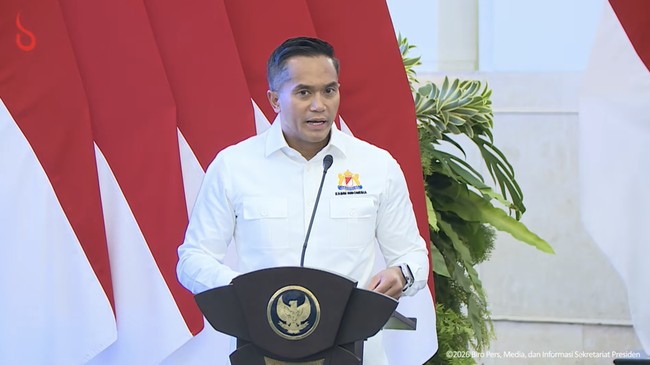
Jakarta, CNBC Indonesia – Chairman of the Indonesian Chamber of Commerce and Industry (Kadin), Anindya Bakrie, has revealed that trade between Indonesia and Thailand is expected to reach US$30 billion by 2030. Bilateral trade between the two countries currently stands at US$17.5 billion.
“We know that Thailand and Indonesia are the two largest economies in ASEAN. Today, our economies represent 357 million people and nearly US$2 trillion in output. Trade between us is worth US$17.5 billion, and I believe both leaders have already discussed breaking through the US$30 billion mark by 2030, hopefully,” he said at the Indonesia-Thailand Business Forum held at the Fairmont Hotel in Jakarta on Tuesday (3/8/2026).
Anindya said bilateral relations between Indonesia and Thailand have been well established to date, from the founding of ASEAN to Thailand’s support as host of the United Nations Economic and Social Commission for Asia and the Pacific in Bangkok.
Most recently, bilateral ties were cemented through a meeting between Prime Minister Anutin and President Prabowo, who launched a Strategic Partnership Plan for 2026 to 2030.
Anindya noted that Kadin Indonesia is also cooperating with the Thai Board of Trade and the Thai Chamber of Commerce, including in the carbon market sector.
“I would like to report that, together with our colleagues, my friends, we signed two MOUs. One between the Indonesian Chamber of Commerce and Industry, or Kadin, and the Board of Trade and the Thai Chamber of Commerce, and we also signed a cooperation agreement on the carbon market,” he said.
He went on to explain that the carbon market cooperation aims to advance a high-integrity carbon market and mobilise investment in carbon projects. This comes amid developments in artificial intelligence and industrial growth that are driving energy demand ever higher.
“Companies globally will need credible and affordable ways to offset their emissions, and the carbon market turns that obligation into an opportunity,” he said.
In addition, Kadin and the Thai Chamber of Commerce are also cooperating in the halal economy, services, downstreaming, and manufacturing. “There are many opportunities in halal, clean energy, digital connectivity, advanced manufacturing, and the digital economy,” he added.
Anindya further said he is optimistic that Indonesia and Thailand can become global leaders in food security. According to him, Thailand excels in agriculture, from jasmine rice to tropical fruits.
“Thai products are enjoyed around the world. I will not begin to debate whose durian is better, Thailand’s or Indonesia’s; I believe that is best left unresolved. Indonesia brings abundant natural resources, biodiversity, and scale, while Thailand brings decades of expertise, innovation, and global leadership in agriculture,” he explained.
Anindya said supply chain shifts, technologies transforming industries, and food and energy security priorities must all be considered in building the world. “Because when Indonesia’s scale meets Thailand’s excellence, we can create solutions that reach far beyond our national borders,” he said.
“So let us deepen trade, let us increase investment, let us encourage more entrepreneurs and families to work together, and most importantly, let us innovate together, so that the prosperity we create can be enjoyed together by our peoples,” he added.
At the same event, Chairman of the Thai Chamber of Commerce (TCC), who also serves as Chairman of the Thai Board of Trade, Poj Aramwattananont, said the partnership has become increasingly important. As global business faces geopolitical uncertainty and supply chain shifts, companies are seeking trusted partners and more resilient supply chains, and ASEAN is receiving greater attention than ever before.
According to him, this cooperation creates opportunities, especially if Indonesia and Thailand work more closely together — not only government to government, but also business to business, private sector to private sector, and people to people.
“We help businesses explore new markets, build regional value chains, and create real opportunities for growth for both countries,” he said.
He added that the challenges faced today do not stop at national borders, so the response should not stop there either.
“Let us strengthen regional value chains, expand investment and trade, and create more opportunities for businesses across ASEAN. ASEAN’s future will not be determined by how we compete against one another, but by how well we compete together with the rest of the world,” he concluded.