
Indonesia Targets Upstream Oil and Gas Revenue at 109% of State Budget Goal
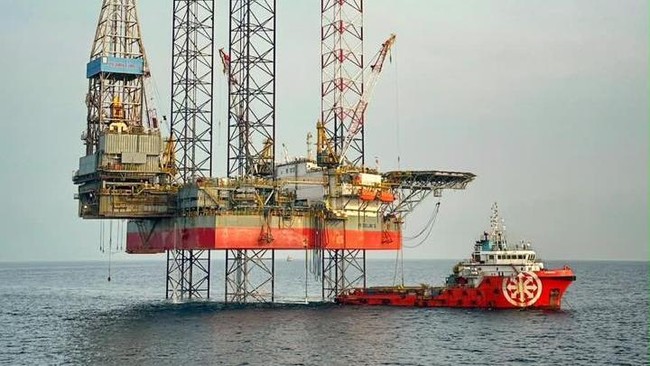
Jakarta, CNBC Indonesia – The Special Task Force for Upstream Oil and Gas Business Activities (SKK Migas) projects that state revenue from the upstream oil and gas sector could reach 109% of the 2026 state budget target of Rp113.06 trillion by the end of the year.
The projected result is being driven primarily by rising global crude prices amid geopolitical tensions, as well as the optimisation of commercialisation strategies.
SKK Migas Deputy for Finance and Commercialisation Desti Melanti said state revenue had so far reached around 80% of the target. She said the surge in the Indonesian Crude Price (ICP), which at one point reached US$106 a barrel compared with the state budget assumption of US$75 a barrel, was the main factor behind the increase in receipts.
“Given the current geopolitical developments, the global ICP is contributing to higher state revenue. In 2026, God willing, we will achieve more than 109% of the state budget target,” Desti said at a press conference for the 2026 Upstream Oil and Gas Economic Forum (FOREK Hulu Migas) in Jakarta on Tuesday (20 October 2026).
Rising international crude prices are the main driver expected to make up for constraints on the volume of national oil lifting. The 2026 state budget’s crude price assumption of US$75 a barrel has risen sharply, and prices are expected to remain in the range of US$95 to US$98 a barrel through year-end.
“State revenue-sharing is initially determined by prices and lifting. When prices rise, even if lifting does not increase significantly, that can still raise state revenue,” Desti said on the sidelines of the event.
In addition to global oil price trends, which are beyond domestic control, faster commercialisation of lifting is also expected to boost receipts. SKK Migas and production-sharing contract contractors are taking advantage of high market prices to maximise the uptake and distribution of upstream oil and gas output.
“Prices are something we cannot control. What we can optimise is the commercialisation scheme to accelerate lifting,” Desti said.
Commercialisation schemes and improved governance are seen as key to the upstream sector’s ability to contribute more than the targeted amount to state revenue. Desti said that without strategic management involving policymakers and other stakeholders, higher oil prices could not be fully converted into government income.
“Nevertheless, without the commercialisation strategies pursued by SKK Migas, production-sharing contractors and policymakers, the state revenue target would be difficult to achieve,” she said.
Source: jawawa.id (https://jawawa.id/newsitem/indonesia-targets-upstream-oil-and-gas-revenue-at-109-of-state-budget-goal-1792489875)
Originally published by CNBC Indonesia (https://www.cnbcindonesia.com/news/20261020151757-4-777883/setoran-hulu-migas-ri-ditarget-tembus-109-dari-apbn-ini-pendorongnya), translated from Indonesian