
Indonesia Targets Nuclear Power Plant Operation by 2032, Preparations Underway
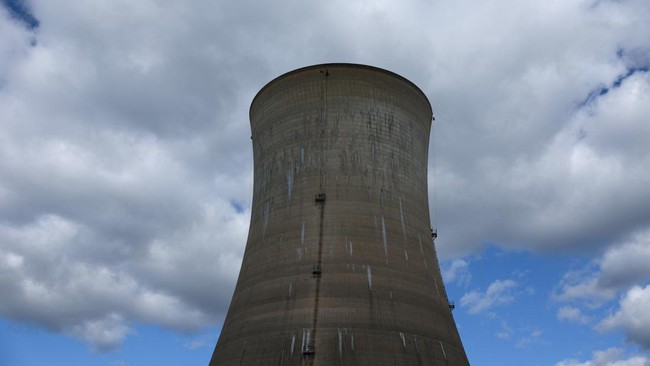
The Nuclear Energy Regulatory Agency (Bapeten) is gradually preparing regulations and oversight mechanisms for the target operation of Indonesia’s first Nuclear Power Plant (PLTN), which is aimed to be operational by 2032. This is driven by the planned development of nuclear capacity up to 35 GW by 2060.
Acting Head of Bapeten, Zainal Arifin, stated that the agency is mapping the potential of nuclear energy in the country as part of the decarbonisation strategy towards net-zero emissions by 2060. He emphasised that regulatory capacity and oversight readiness must be built from the outset, in parallel with the stages of the nuclear power programme.
“The first nuclear power plant is targeted to begin commercial operations in 2032. We will then develop it until 2060 to reach 35 GW,” he said during a Hearing Meeting with Commission XII of the Indonesian House of Representatives (DPR RI) in Jakarta.
The operation of nuclear power plants is a key component of the national energy sector’s decarbonisation strategy. In the long-term planning, the contribution of electricity from nuclear power is projected to be 14.2%, or approximately 276 TWh, of the total national electricity production by 2060.
“For Bapeten, this figure indicates that regulatory readiness must be established. Oversight should not only be prepared once the construction of the nuclear power plant is already underway,” he added.
The agency is strengthening five pillars of oversight infrastructure to support domestic nuclear operations. This includes oversight governance, safety analysis, radiation laboratories, human resources for inspectors, and technical organisational support. Furthermore, oversight evaluations will be adjusted to the characteristics of reactor technologies, such as large-scale land-based reactors, floating nuclear power plants, and Small Modular Reactors (SMR).
“Bapeten is not in a position to promote or hinder the construction of nuclear power plants. BAPETEN is in a position to ensure that any nuclear power plant construction, regardless of the technology used, can only operate if safety and security requirements are met,” he concluded.
Through the 2025-2034 Electricity Supply Business Plan (RUPTL), the government has targeted the first nuclear power plant to be operational between 2032 and 2034.
Previously, the Secretary General of the National Energy Council (DEN), Dadan Kusdiana, stated that at least 500 Megawatts (MW) of nuclear capacity is targeted to begin operating from 2032, with potential locations in Sumatra or Kalimantan.
He explained that national nuclear policy has shifted, where nuclear energy is no longer viewed as a last resort, but rather as a balancer for the primary energy mix to achieve net-zero emission targets.
“The target for the 2025-2034 RUPTL is an initial capacity of 500 Megawatts. This will be strategically distributed starting from 2032, whether in the Sumatra or Kalimantan electricity systems,” Dadan said during a workshop in Jakarta.
Dadan noted that the technology to be promoted is the Small Modular Reactor (SMR). This technology is considered highly suitable for Indonesia’s geography as an archipelagic nation, offering flexibility for placement in remote areas or integration into smaller regional power grids, such as industrial zones.
“For an archipelagic nation like Indonesia, SMR technology offers a transformative solution. Unlike large-scale reactors, SML provides the flexibility to be placed in remote areas and integrated into small regional power grids,” he added.
In the long term, the government plans to increase nuclear energy capacity to a total of 44 Gigawatts (GW) by 2060. Of this total, 35 GW is allocated for power generation, while the remaining 9 GW is dedicated to supporting national hydrogen production, which is planned to commence in 2045.
“Regarding location, we have identified several potential sites across the archipelago. Our principle is simple: we will only proceed with locations that meet the strictest safety and environmental standards,” he concluded.