
Indonesia Targets Nationwide 5G Coverage by 2029 to Support AI-Driven Economy
The Ministry of Communication and Digital Affairs (Kemkomdigi) is targeting nationwide 5G coverage by 2029, so that optimisation of the latest technologies such as artificial intelligence (AI) can be realised for the Indonesian people.
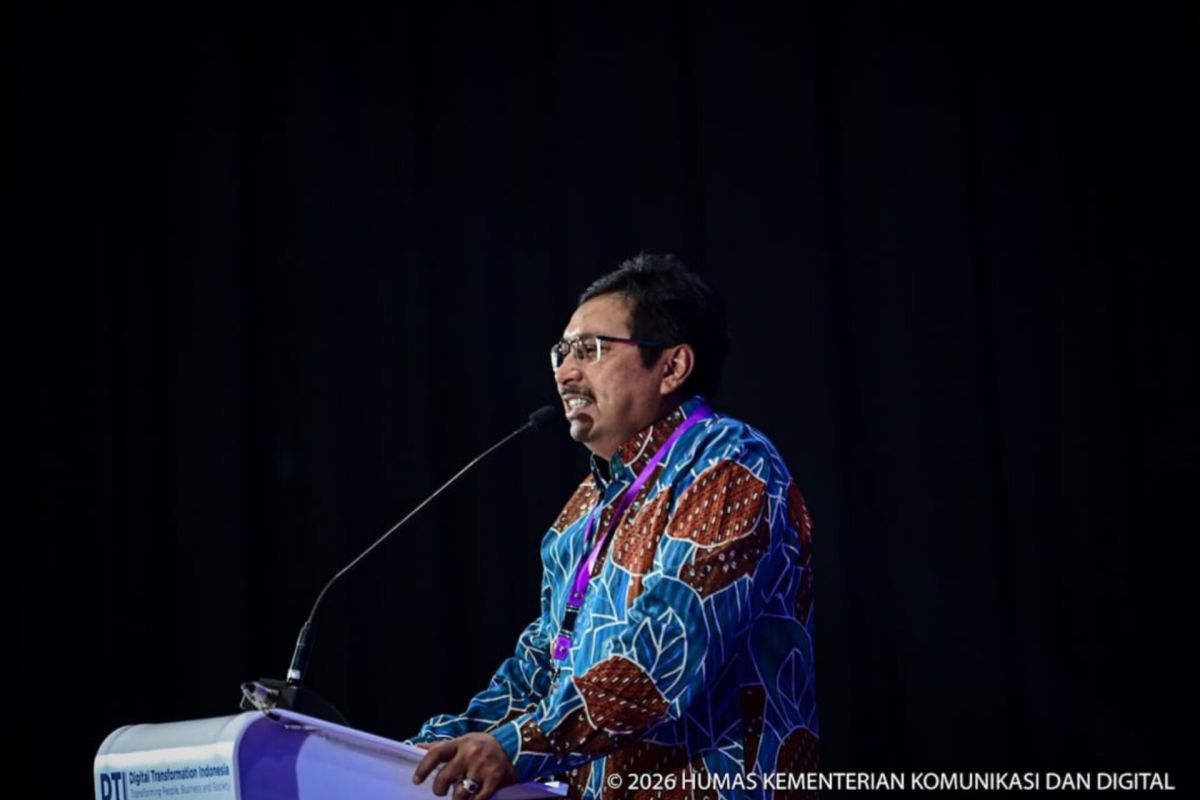
“The 5G roadmap must be accelerated. We hope that by 2029, 5G coverage in Indonesia will continue to expand to the remotest corners of the country. This is important because the world is moving towards an AI-based economy, so digital infrastructure must be able to keep pace with those needs,” said Kemkomdigi Secretary-General Ismail in a statement received and confirmed in Jakarta on Thursday.
Ismail said it is undeniable that the development of AI as the latest technology is influencing the direction of digital infrastructure development in Indonesia.
One of these influences is changing the view that digital infrastructure no longer functions merely as a means of communication, but also as a foundation for productivity, innovation and national competitiveness, particularly in the AI era.
When discussing existing digital infrastructure, Ismail said Indonesia already has a foundation in the form of a fairly reliable fibre-optic backbone network.
The national fibre-optic network now spans more than one million kilometres, including submarine cables connecting various islands across Indonesia.
To make the existing foundation more optimal, the next phase of digital infrastructure development is directed towards increasing network capacity, quality and resilience so that it can support new-generation digital services.
“Our challenge is no longer simply expanding the basic network. What we are building now is infrastructure capable of supporting AI-based digital economic growth,” Ismail said.
Not only has AI changed the perspective on digital infrastructure, it has also changed the way the telecommunications industry is built.
Previously, telecommunications operators focused on providing bandwidth capacity. Now their services must be able to support AI cloud services, high-performance computing, the Internet of Things, and various digital applications that increase the productivity of society and businesses.
“In the past, operators sold bandwidth. Now infrastructure must be able to support AI cloud services and various productive applications that provide added value for society and industry,” said the Kemkomdigi Secretary-General.
With all these changes in perspective and industry development, accelerating the implementation of 5G nationally is no longer avoidable.
The latest effort is the provision of a spectrum auction for the 700 MHz and 2.6 GHz frequencies using a more affordable fee scheme, so that it does not become an obstacle to accelerating network development.
“We have just released the 700 MHz and 2.6 GHz spectrum at a more affordable cost than before. The government must be present to provide room for digital infrastructure investment to grow faster,” Ismail said.
In addition to spectrum provision, the government is also preparing regulations that provide certainty for long-term investment.
According to Ismail, regulatory certainty is an important factor so that the telecommunications industry can continue to expand networks while developing various new digital services.
This is because digital infrastructure no longer merely provides connectivity, but must also become a driver of digital solutions in various strategic sectors, from agriculture, mining, manufacturing, health and education to the financial sector.
“We want operators not only to provide networks, but also to deliver solutions that create added value for various economic sectors,” he added.