
Indonesia supports collaboration to tackle illegal waste movement in ASEAN forum
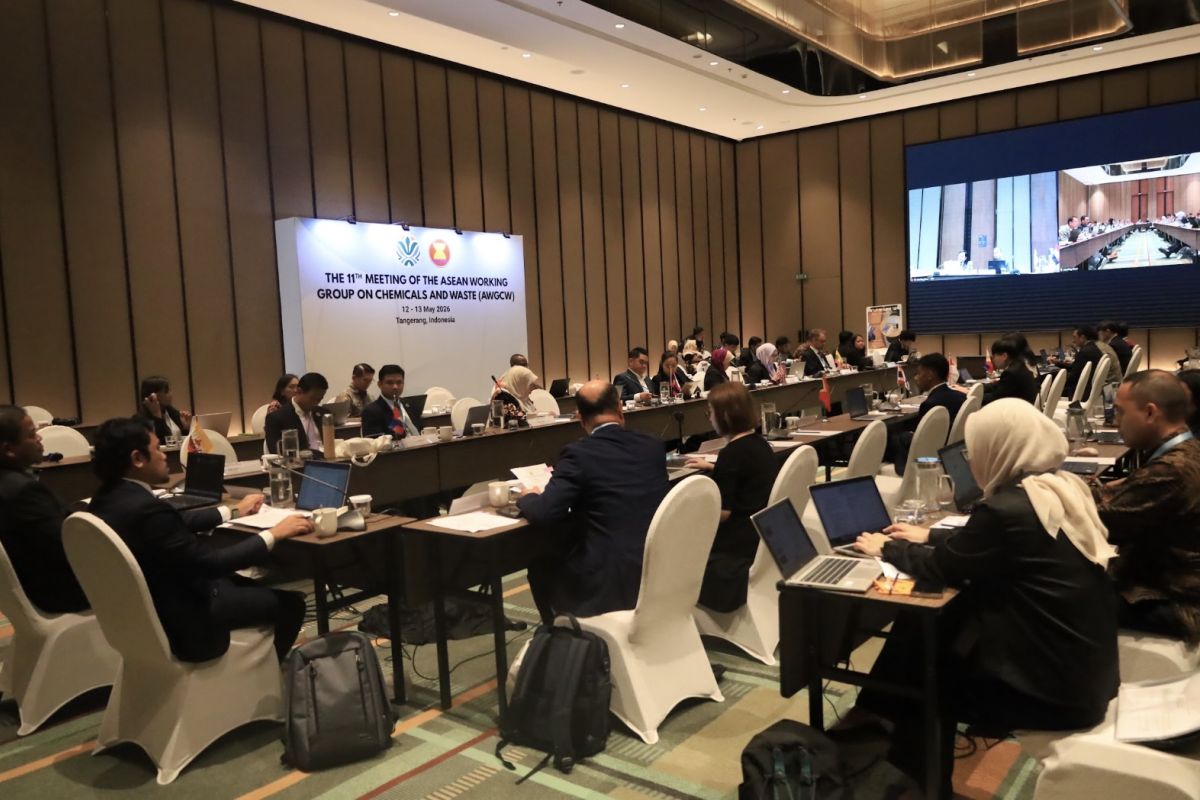
Jakarta (ANTARA) - Indonesia supports the strengthening of commitment among Southeast Asian countries in addressing the challenges of chemical and waste management, including the risks of cross-border movement, at the 11th ASEAN Working Group on Chemicals and Waste (AWGCW) meeting.
In a statement confirmed from Jakarta on Friday, the Acting Deputy for Waste, Hazardous Waste, and Toxic Materials Management at the Ministry of Environment and Forestry (KLH), Laksmi Widyajayanti, highlighted the importance of chemical and waste management as a shared responsibility among countries during the 11th AWGCW meeting.
“Healthy chemical and waste management can no longer be viewed as a purely national task, but must become a collective global movement. Without joint efforts at the international level, it will be impossible to combat illegal cross-border waste trafficking and realize a circular economy in this region,” said Laksmi.
As the host of the meeting, which will be held on May 12-13, 2026, the Indonesian representative also stated that countries in Southeast Asia need to strengthen regional synergy when faced with the challenge of balancing economic growth and environmental protection.
At the same event, the Chairman of AWGCW from Malaysia, Mahadi Bin Sukarno, stated that ASEAN should not become a dumping ground for global waste.
“As a rapidly developing region, ASEAN should not become a dumping ground for global waste. This meeting is important to align policy directions so that we can balance economic progress with environmental protection and public health,” he explained.
He invited ASEAN member countries to remain free from chemical and waste pollution through concrete actions, not just annual meetings.
The meeting also discussed seven priority programs in the AWGCW Action Plan, ranging from strengthening environmentally friendly technology towards a green industry, handling emergencies related to chemical accidents, to remediating contaminated land.
KLH/BPLH also encouraged the harmonization of operational standards among member countries to ensure readiness in meeting various international conventions such as Basel, Minamata, and the Montreal Protocol.
In addition, the meeting served as a forum for exchanging innovations related to the circular economy, by encouraging waste management that not only focuses on reducing environmental impact, but also creates sustainable economic added value.