
Indonesia Supplies 43% of Coal Traded Worldwide
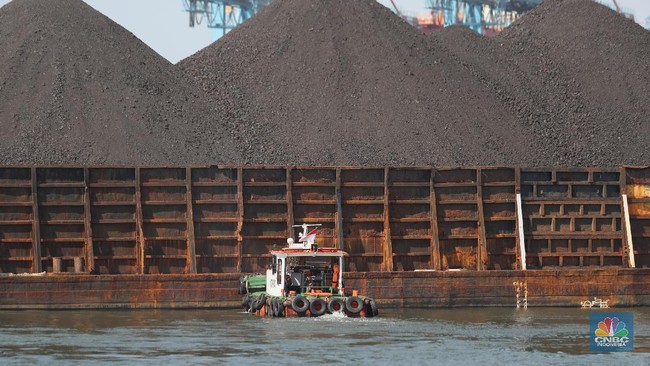
Jakarta, CNBC Indonesia — The government has recorded global coal consumption of 8.9 billion tonnes a year, with 1.3 billion tonnes traded on international markets.
Indonesia accounted for 540 million tonnes of that global trade, or around 43% of the coal circulating worldwide.
Bahlil Lahadalia, Coordinating Minister for Downstreaming and Energy Transition as well as Minister of Energy and Mineral Resources, outlined Indonesia’s significant role in the global coal supply chain.
He stressed the importance of balancing supply and demand so that foreign markets do not dictate prices for Indonesian commodities.
“Take global coal as an example. Worldwide consumption is 8.9 billion tonnes a year, while 1.3 billion tonnes are traded. In 2025, Indonesia contributed 540 million tonnes to the global coal trade,” Bahlil said at the Minerba Convention & Exhibition (Convex) 2026 at Jiexpo on Monday (2 November 2026).
The 540-million-tonne contribution initially put pressure on coal prices, as production volumes were abundant in 2025. Uncontrolled output affected state revenues and company profits, which fell short of their potential because selling prices were low.
“What happened? In 2025, coal prices were at their lowest. Companies did not make much profit, state revenues were not maximised, and we opened up vast areas of land; in the end, our product was sold cheaply,” he said.
To address low prices caused by oversupply, the government cut production quota allocations under the Work Plan and Budget (RKAB). Managing Indonesia’s share of 43% of global supply helped push prices for the highest-calorie coal, at 6,333 kcal, to US$154 per tonne.
“I said that if that is the case, rather than letting foreign parties set prices, given that our 540 million tonnes represent 43% of global coal supply, we should maintain a balance between supply and demand and cut the RKAB. What has happened? Today, coal prices can reach US$154 for 6,333-calorie coal,” he said.
The reduction in production quotas through the RKAB was said to have increased state revenues. Although production fell, total government receipts from the mining sector rose.
“This is the strategy: we maintain supply and demand. Our state revenue has surged while production has fallen. Output has been adjusted downwards, but revenue has risen. That is how you do it — don’t sell our goods cheaply,” he said.
Source: jawawa.id (https://jawawa.id/newsitem/indonesia-supplies-43-of-coal-traded-worldwide-1793623842)
Originally published by CNBC Indonesia (https://www.cnbcindonesia.com/news/20261102181310-4-781667/ri-suplai-43-batu-bara-di-perdagangan-dunia), translated from Indonesian