
Indonesia stresses importance of trade digitalisation and green economy
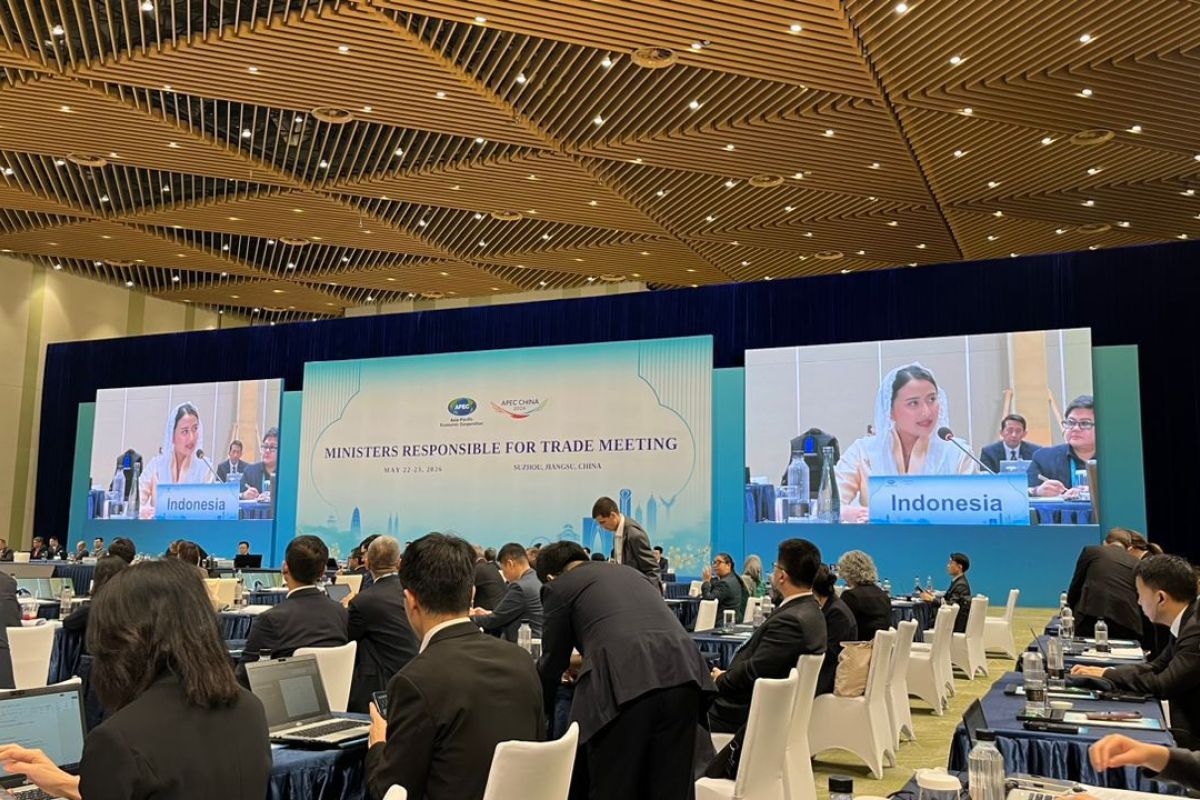
AI development must be grounded in principles of trust, security, and inclusivity, supported by investment in infrastructure and capacity building, Jakarta (ANTARA) - Indonesia has stressed the importance of trade digitalisation and green economy as new engines for regional economic growth at the 2026 APEC Trade Ministers Meeting. Trade Deputy Minister Dyah Roro Esti Widya Putri, in a statement in Jakarta on Tuesday, said that amid moderate and uneven global economic growth due to geopolitical tensions, climate risks, and fragmented global supply chains, APEC economies must strengthen cooperation to build a more resilient, inclusive, and future-oriented region. ‘Digital transformation and the green transition are reshaping global trade and investment patterns. Stronger cooperation is needed to ensure benefits are widely and inclusively shared across all economies,’ Trade Deputy Minister Roro said at the 32nd APEC Ministers Responsible for Trade (MRT) Meeting’s second session themed ‘Foster New Engines of Innovative and Dynamic Trade and Investment Cooperation’ in Suzhou, China, on Friday, 23 May 2026. During the meeting, Roro Esti said that in the digital sector, Indonesia sees technological advancements, including artificial intelligence (AI), as creating significant opportunities to enhance cross-border trade efficiency by lowering transaction costs and speeding up business processes. In line with this, according to the Trade Deputy Minister, Indonesia is strengthening AI use in trade facilitation through the TradeAI initiative, aimed at simplifying customs procedures, reducing logistics costs, and boosting cross-border trade efficiency. To ensure inclusive digital transformation, she added, Indonesia is focusing on three key priorities: expanding digital infrastructure, strengthening digital skills through training and technology transfer, and supporting MSME digitalisation and global market access via programmes such as MSME Go Digital and MSME BISA Export. Indonesia also stressed the importance of maintaining policy space in data governance and the digital economy, while strengthening regional cooperation on digital trade, harmonising inclusive standards, and digitalising trade facilitation. Beyond digital transformation, Indonesia views the green transition as an increasingly strategic new source of economic growth for the region. According to Roro Esti, Indonesia is currently advancing a green transformation agenda that integrates industrial development, trade, and sustainability. Under President Prabowo Subianto’s leadership, she added, the government emphasises building an economy aligned with improving public welfare, strengthening human resources, and sustainability principles. This commitment is being realised through strengthening critical mineral downstreaming and developing an integrated battery and electric vehicle (EV) industry ecosystem to bolster regional supply chains. As a potential ASEAN EV industry hub, Indonesia welcomes enhanced cooperation through initiatives such as the APEC EV Supply Chain. At the same time, Indonesia stressed the importance of industrial policies that support value addition and domestic processing to ensure fair and sustainable economic benefits. In this context, Indonesia believes APEC plays a key role in promoting green goods trade, supporting technology transfer, strengthening renewable energy and energy efficiency cooperation, and expanding capacity-building among economies. Indonesia also stressed that global decarbonisation efforts must not create new trade barriers. Carbon-related policies must be implemented in a transparent, non-discriminatory manner and in line with multilateral trade rules while considering each economy’s development conditions and stage.