
Indonesia strengthens strategic trade management to transition towards high-tech industries
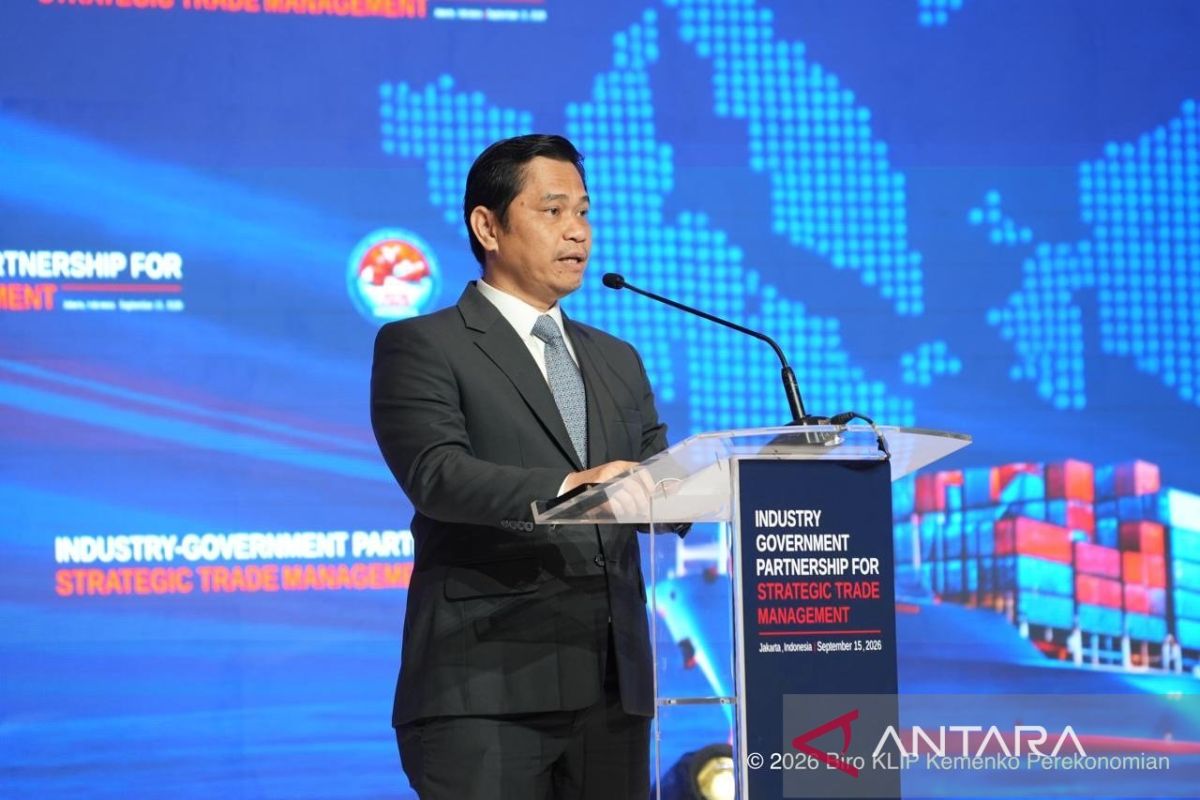
Jakarta (ANTARA) - The Indonesian government is strengthening strategic trade governance through the development of Strategic Trade Management (STM) to enable entry into high-technology-based industries.
Ali Murtopo Simbolon, Deputy for Coordination of Trade and Digital Economy at the Coordinating Ministry for Economic Affairs, stated that the development of STM is becoming increasingly relevant alongside rapid technological advancements. With the implementation of STM, Indonesia is expected to move beyond being merely a market and instead participate actively in global value chains.
“We must identify new sectors to boost economic growth to 6 per cent next year. Furthermore, by 2028, we must continue to seek new sectors to achieve our economic growth targets of 7-8 per cent,” Ali said during the Indonesia Strategic Trade Management Summit (IDSTM/SEAFEC) 2026, as reported in Jakarta on Thursday.
For context, STM is a governance and oversight framework for international trade designed to control goods with potential dual-use applications. According to Ali, Indonesia is currently driving new sources of growth through the development of industries based on technology and innovation, including semiconductors, artificial intelligence (AI), data centres, and various emerging technologies.
Ali explained that the application of STM is not intended to restrict trade, but rather to serve as an instrument for building safe and trusted commerce. Such governance is also necessary to ensure that strategic goods and technologies with dual-use potential are not diverted for activities that could potentially jeopardise national or international security.
Notably, exports of Indonesian semiconductor devices and electronic integrated circuits reached approximately US$4.1 billion in 2025, a significant increase from US$1.5 billion in 2024.
“The goal is to ensure that legitimate trade can continue, while simultaneously ensuring that the risks of diversion and misuse are well-managed. For Indonesia, we see this as vital because the nation is driving an economic transformation towards industries with higher technology and added value,” said Deputy Ali.
To strengthen the readiness for STM implementation, the government is encouraging cooperation with the United States through the exchange of knowledge, experience, and technical support. This collaboration also supports the development of strategic sectors such as semiconductors, aerospace, and energy, including the strengthening of industrial ecosystems, technology, and national talent capacity.
The involvement of the business community is also a crucial component to provide input regarding field conditions, industrial needs, and potential implementation challenges, ensuring that STM governance can be applied appropriately.
“I encourage business actors and associations to participate actively in today’s discussions. We expect input from the business world, particularly regarding field conditions and needs, potential implementation challenges, and aspects that require government attention in developing STM in Indonesia,” Ali concluded.
Source: jawawa.id (https://jawawa.id/newsitem/indonesia-strengthens-strategic-trade-management-to-transition-towards-high-tech-industries-1789654395)
Originally published by Antara (Indonesian) (https://www.antaranews.com/berita/5745868/ri-perkuat-manajemen-perdagangan-strategis-menuju-teknologi-tinggi), translated from Indonesian