
Indonesia strengthens its Pacific economic presence through Chile
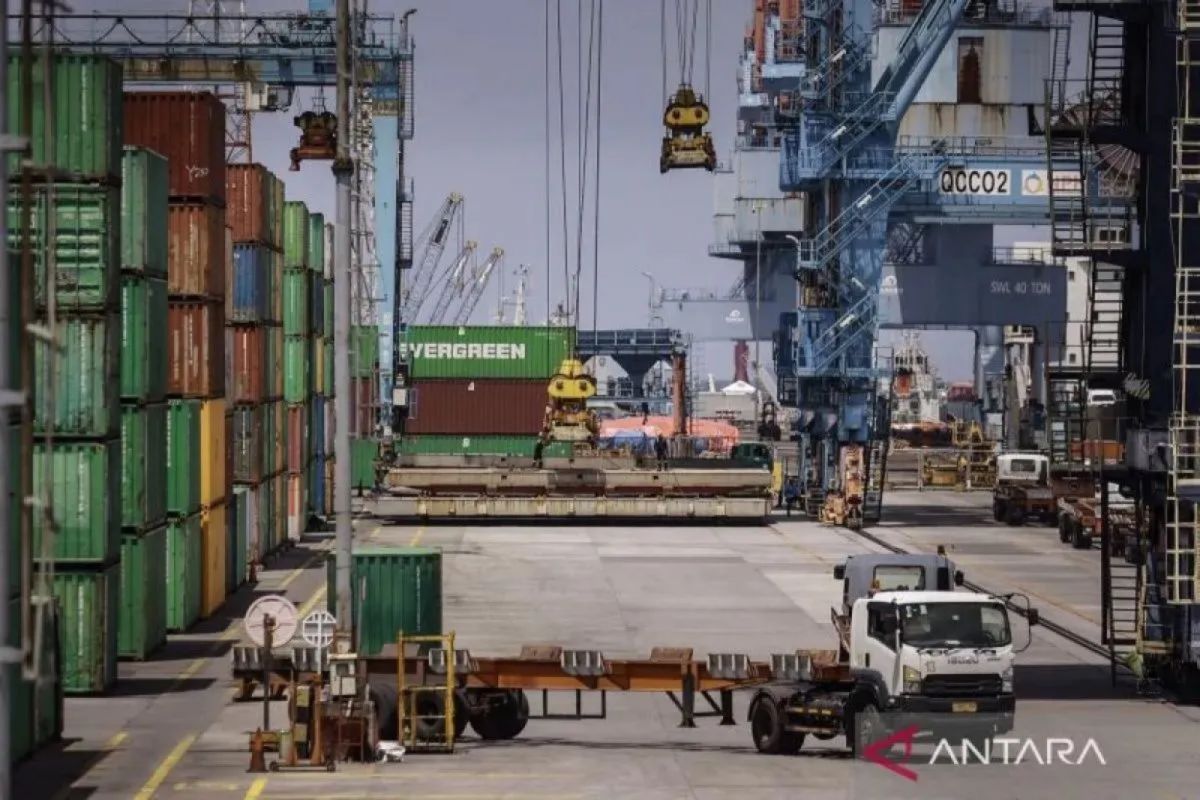
Located on South America’s Pacific coast, Chile occupies a strategic position in the region’s economic network, making it an increasingly important partner as Indonesia diversifies its export markets and strengthens its commercial presence across the Pacific.
The two countries’ economic relationship has strengthened through the Indonesia-Chile Comprehensive Economic Partnership Agreement (IC-CEPA), which has governed trade in goods since Aug. 10, 2019.
The agreement grants zero import tariffs on 6,704 Indonesian products entering Chile, significantly improving market access for Indonesian exporters.
Economic cooperation expanded further in early 2025 after both countries ratified the Trade in Services Protocol and began discussions on investment cooperation, broadening the agreement’s scope beyond trade in goods.
The growing partnership is also reflected in bilateral trade.
Bilateral trade reached US$535.5 million in 2025, up 12.4 percent from a year earlier. Indonesia exported US$441.5 million worth of goods and imported US$94 million, generating a trade surplus of US$347.5 million.
Indonesia’s leading exports included motor vehicles, fertilizers, and footwear, while imports were dominated by frozen fish, wood pulp, starch, fertilizers, and wine.
Although trade has grown steadily, Chile remains a relatively small destination for Indonesian exports. The next challenge is no longer securing market access but expanding Indonesia’s commercial presence and diversifying the range of products entering the Chilean market.
While lower tariffs have reduced trade barriers, stronger export performance will ultimately depend on competitive products, compliance with international standards, efficient distribution networks, and reliable supply chains.
Broadening a strategic partnership
The next stage of Indonesia-Chile economic relations is to translate improved market access into broader investment and industrial cooperation.
Indonesia’s Trade Minister Budi Santoso said considerable opportunities remain to deepen bilateral economic ties. One proposal is to establish a business forum connecting investors, exporters, and importers from both countries to facilitate partnerships and encourage more commercial transactions.
The proposal underscores that trade agreements alone are insufficient to expand business without stronger private-sector participation.
Cooperation is also expanding into higher-value sectors.
Indonesian Foreign Affairs Minister Sugiono and Chilean Foreign Affairs Minister Jose Francisco Perez Mackenna agreed to strengthen collaboration in critical minerals, science and technology, agriculture, and health, broadening bilateral cooperation beyond traditional merchandise trade.
Critical minerals present one of the strongest opportunities. Chile is among the world’s largest producers of lithium and copper, while Indonesia possesses abundant nickel reserves. Their complementary resources could support battery supply chains and electric vehicle manufacturing, reinforcing Indonesia’s downstream industrialization strategy.
Realizing that potential, however, will require more than abundant natural resources.
Indonesian Automotive Manufacturers Association (Gaikindo) Secretary-General Kukuh Kumara said vehicle exports depend on strong distribution networks, after-sales services, and well-established business ecosystems in destination markets.
Automotive analyst Yannes Martinus Pasaribu of the Bandung Institute of Technology (ITB) shared a similar assessment, noting that Indonesian manufacturers face intense competition from Chinese and South Korean companies that established production capacity and market networks in Latin America years earlier.
In this increasingly competitive market, success will depend on production efficiency, technological innovation, product quality, and the ability to respond to evolving consumer demand.
Trade Ministry Director General for National Export Development Fajarini Puntodewi said natural furniture, specialty coffee, coconut-based products, processed seafood, and environmentally friendly packaging also offer promising export opportunities in Chile.
Capitalizing on those opportunities will require consistent product quality, dependable supply chains, and compliance with sustainability standards that are becoming increasingly important in global trade.
Strengthening domestic competitiveness
Indonesia’s growing engagement with Chile also supports its broader ambition to integrate more deeply into regional trade frameworks.
In June 2026, members of the Comprehensive and Progressive Agreement for Trans-Pacific Partnership (CPTPP) agreed to begin preliminary accession talks with Indonesia, marking the first stage of the country’s membership process.
The CPTPP comprises Australia, Brunei Darussalam, Canada, Chile, Japan, Malaysia, Mexico, New Zealand, Peru, Singapore, Vietnam, and the United Kingdom.
Membership could significantly expand market access for Indonesian exports, strengthen integration into global supply chains, and attract greater foreign investment.
Greater market access, however, will also expose Indonesian industries to tougher international competition. Success will increasingly depend on productivity, innovation, technological capability, and compliance with international standards rather than tariff reductions alone.
To maximize these opportunities, economic diplomacy must be accompanied by domestic reforms.
Simplifying regulations, improving logistics, expanding export financing, strengthening certification services, and sharpening trade promotion will help businesses take fuller advantage of Indonesia’s expanding network of trade agreements.
Small and medium-sized enterprises also need greater support to meet international standards, allowing more businesses to participate in export markets and benefit from rising trade and investment.
More broadly, Indonesia’s partnership with Chile demonstrates that free trade agreements are not an end in themsel