
Indonesia Strengthens Industrial Diplomacy Through Palm Oil Bioenergy Innovation in Russia
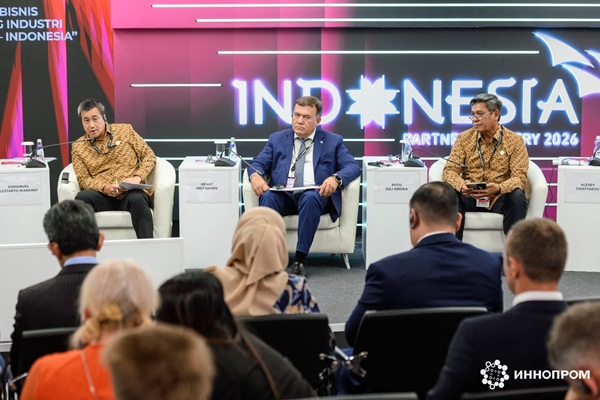
The Indonesian government is utilising the Indonesia–Russia Business Forum at the INNOPROM 2026 event in Ekaterinburg, Russia, as part of efforts to strengthen industrial diplomacy through the development of palm oil-based bioenergy. The forum, themed ‘Palm Oil and the Future of Sustainable Energy’, serves as a platform to introduce national industrial innovations while opening opportunities for investment cooperation, trade, and technology development with Russia and countries in the Eurasian region.
Minister of Industry Agus Gumiwang Kartasasmita stated that Indonesia has significant potential to become a major player in the development of palm oil-based bioenergy through cooperation with Russia and Eurasian nations. ‘Through innovation, downstream processing, and international cooperation, we want to make the palm oil industry not only a driver of the national economy but also part of the solution towards energy security and sustainable industrial development,’ Minister Agus said in a statement in Russia on Thursday (9/7).
Indonesia’s participation in the forum reflects the government’s commitment to expanding market access for national industries through international collaboration. Amid the world’s increasing need for cleaner energy, Indonesia is offering its industrial experience and capacity in developing palm oil-based bioenergy as a mutually beneficial cooperation opportunity for both countries.
The forum, attended by more than 100 industry leaders, government officials, business players, and INNOPROM 2026 visitors, provided a dialogue space for Indonesian and Russian industry players to exchange experiences, build business networks, and explore investment and technology development opportunities in the bioenergy sector.
On the same occasion, Director General of Resilience, Territorialisation, and International Industrial Access at the Ministry of Industry, Tri Supondy, said the forum was an important opportunity to demonstrate that the transformation of Indonesia’s palm oil industry has evolved far beyond its role as an export commodity. ‘This forum is excellent and a valuable opportunity to convey that Indonesia is not only moving towards cleaner and more sustainable energy but also continuing to innovate through superior national industrial products,’ Tri stated at the Ekaterinburg Expo.
As the world’s largest palm oil producer, Indonesia is using the forum to showcase its industry’s readiness to support the global energy transition. One of the steps presented was the implementation of the B50 biodiesel mandate, which came into effect in July 2026. The programme requires the use of diesel fuel containing 50 per cent biodiesel made from palm oil, thereby reducing dependence on imported fossil fuels, strengthening national energy security, and curbing carbon emissions.
Indonesia also introduced various policies supporting the sustainability of the palm oil industry, ranging from smallholder replanting programmes and human resource capacity building to technology development in the biodiesel industry and its derivative products through the Indonesia Plantation Fund. Additionally, the implementation of the Indonesian Sustainable Palm Oil certification system continues to be strengthened to ensure that Indonesian palm oil production meets global sustainability standards and becomes increasingly competitive in the international market.
Director of Legal Affairs and Institutional Cooperation at the Palm Oil Plantation Fund Management Agency, Pangihutan Siagian, said the success of the national biodiesel programme demonstrates that the development of the palm oil industry can go hand in hand with the energy transition and sustainable development agenda. ‘The agency’s support also includes smallholder replanting programmes, human resource development, research and innovation, as well as the construction of plantation facilities and infrastructure to strengthen the competitiveness of Indonesia’s palm oil industry from upstream to downstream,’ he explained.
Beyond promoting bioenergy innovation, the forum also served as a momentum to expand economic cooperation between Indonesia and Russia. One emerging opportunity is the strengthening of trade relations through the completion of a free trade agreement between Indonesia and the Eurasian Economic Union. With Russia’s position as a key partner in the region, collaboration in the bioenergy sector is expected to become an entry point for developing industrial cooperation, investment, technology transfer, and expanding market access for Indonesian manufactured products.
Through the Indonesia–Russia Business Forum at INNOPROM 2026, Indonesia affirmed that palm oil-based bioenergy innovation is not only part of the national energy transition strategy but also an instrument of industrial diplomacy to build closer partnerships with Russia. By combining the strengths of innovation, sustainability, and international collaboration, Indonesia hopes to create new opportunities for industrial growth while strengthening its position as a strategic partner in the Eurasian region.