
Indonesia Strengthens Downstreaming Through Technological Innovation and Talent Development
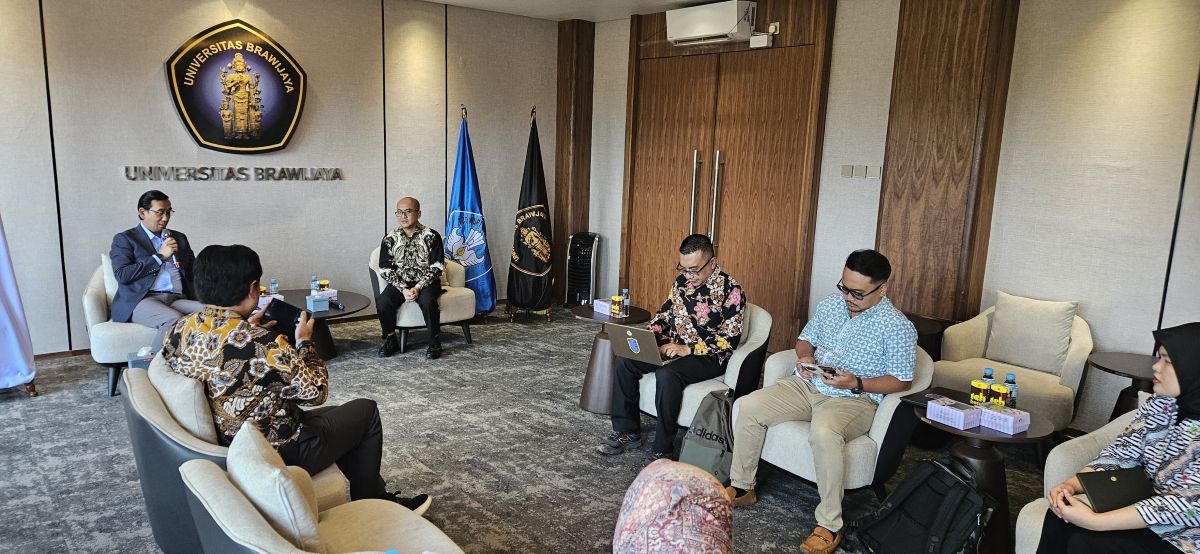
Efforts to accelerate national mineral downstreaming are being reinforced through collaboration between universities, the government, and the industrial sector. Universitas Brawijaya (UB) is exploring a strategic partnership with CNGR Indonesia and the Ministry of Energy and Mineral Resources (ESDM) to drive technological innovation, develop research, and prepare human resources capable of supporting Indonesia’s energy resilience and mineral industry.
The exploratory cooperation took place during a two-day working visit at the UB campus in Malang. The meeting began with an audience between UB Rector Prof Widodo, along with university leaders, and representatives from the Ministry of ESDM and CNGR Indonesia to discuss the direction of long-term collaboration.
The high-level meeting was attended by UB Vice Rector for Planning, Cooperation, and Internationalisation Prof Andi Kurniawan and Secretary of the UB Cooperation Directorate P M Erza Killian. Representing the Ministry of ESDM was Moch Syamsul Hadi, representing the Secretary General of ESDM and the Task Force for the Acceleration of Downstreaming and National Energy Security. UB Rector Prof Widodo emphasised that partnerships between universities, government, and industry are crucial so that research outcomes are not confined to laboratories but can be implemented to support national development.
“Universitas Brawijaya is exploring the opening of a new study programme focused on advanced materials to meet the needs of the downstreaming industry,” said Prof Widodo on Thursday (15/7/2026).
In addition to strengthening a curriculum relevant to industry needs, UB also presented plans for the development of a new campus in Kepanjen, Malang Regency. The campus is projected to become a Science, Technology, Engineering, and Mathematics (STEM)-based education centre to strengthen the research, innovation, and technology development ecosystem.
On the second day, discussions continued through a coordination meeting involving various faculties and study programmes at UB. The forum explored opportunities for long-term cooperation covering the Tri Dharma of Higher Education, including education, research, and community service.
As a follow-up, UB and CNGR Indonesia will form a cross-disciplinary task force to develop a roadmap for the cooperation, targeted to commence in the second half of 2026. The technical team has also begun preparing a draft Memorandum of Understanding (MoU) and a Community Development programme concept.
Representative of the ESDM Secretary General and the Task Force for the Acceleration of Downstreaming and National Energy Security, Moch Syamsul Hadi, affirmed the government’s support for strengthening collaboration between higher education and industry as part of the strategy to accelerate national downstreaming.
“In the near future, the three parties plan to sign a tripartite MoU at the Ministry of Energy and Mineral Resources as an initial step to strengthen technological innovation, human resource development, and the acceleration of the mineral industry downstreaming in Indonesia,” said Syamsul Hadi.
He expressed hope that the collaboration would accelerate the birth of innovations that can be implemented in the industrial sector while producing talent suited to the needs of the national industrial transformation.
“Synergy between universities, the government, and business actors is a crucial foundation for increasing the added value of mineral resources and strengthening Indonesia’s competitiveness amidst global industrial competition,” he concluded.