
Indonesia Strengthens ASEAN-China Air Connectivity
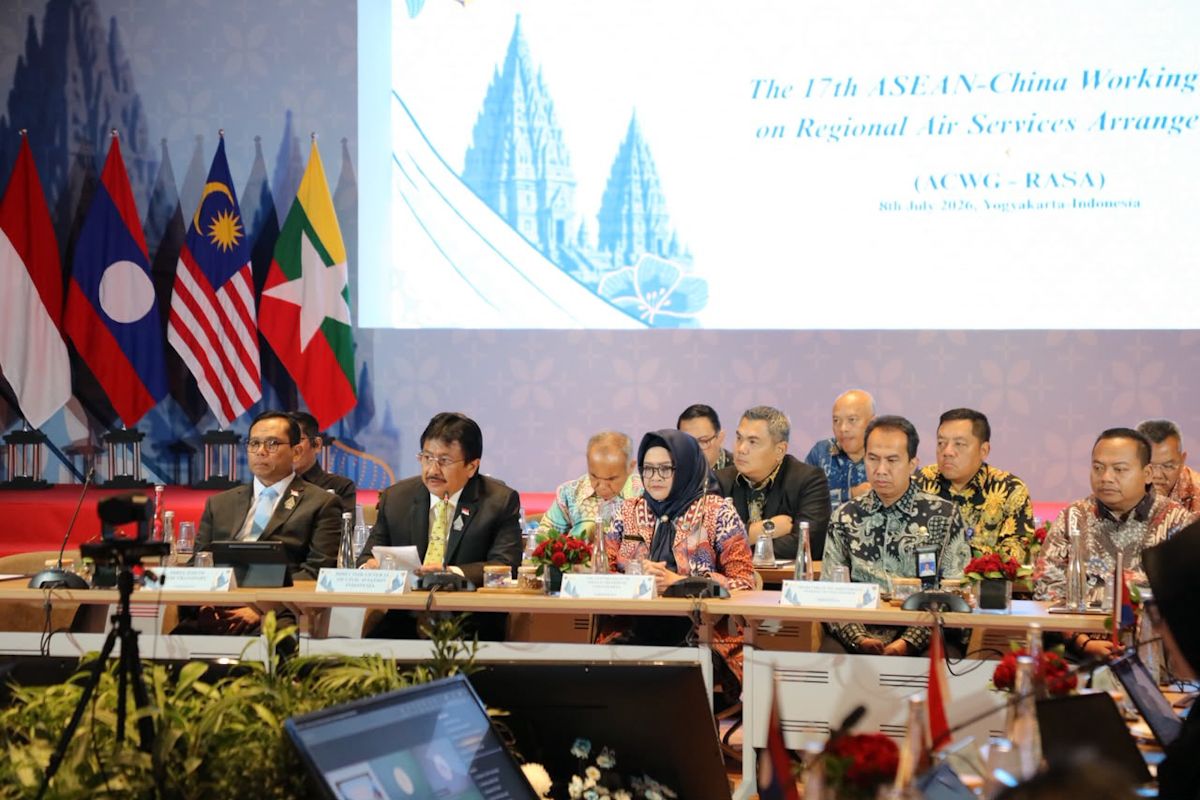
Indonesia is pushing to strengthen air connectivity between the ASEAN region and China through a meeting in Yogyakarta, aiming to expand market access, boost tourism, trade, and regional aviation industry cooperation. Director General of Civil Aviation at the Ministry of Transportation, Lukman F. Laisa, stated that the effort was undertaken during the 17th ASEAN–China Working Group on Regional Air Services Arrangements (ACWG-RASA) held in Yogyakarta. “Hosting the meeting in Yogyakarta is an important momentum to strengthen aviation cooperation between ASEAN and China,” Lukman said in a statement in Jakarta on Sunday. The Directorate General of Civil Aviation organised the series of meetings for the 17th ACWG-RASA in Yogyakarta. The meeting was attended by 61 delegates from ASEAN member states and China. Additionally, 127 representatives from airlines, airport operators, aircraft manufacturing and maintenance, repair, and overhaul (MRO) companies, as well as aviation associations from the ASEAN and China region, were present. He emphasised that Indonesia is actively encouraging the strengthening of ASEAN-China air connectivity as part of efforts to expand market access, increase tourist and trade flows, and strengthen Indonesia’s position in the regional air transport network. According to him, the meeting serves not only as a forum for technical aviation discussions but also as a strategic platform to foster closer inter-state cooperation in creating more open, safe, and competitive air connectivity. “Indonesia is committed to taking an active role in promoting the integration of ASEAN and China aviation services to support economic growth, tourism, and the regional aviation industry,” Lukman explained. The ACWG-RASA activities also featured the ASEAN-China Airlines Forum, which highlighted several strategic issues, including the role of air cargo growth as a driver of the economy and e-commerce, the challenges of implementing ASEAN-China flights amid global economic conditions, and airport slot availability. The forum produced various recommendations, including increasing slot flexibility, improving MRO mechanisms, enhancing capacity, simplifying visa and immigration processes, and strengthening cooperation on aviation safety and security regulations. In parallel, an ASEAN Caucus meeting discussed four main issues: the progress of ratifying Protocol 3 of the ASEAN-China Air Transport Agreement (P3 AC-ATA), a proposal to liberalise Fifth Freedom traffic rights for ASEAN-China cargo services, safety and operational aspects of implementing the AC-ATA, and slot arrangements, new route openings, and flight frequency increases. On this occasion, Indonesia, as the lead country for ASEAN cooperation with China, also presented a proposal for technical cooperation in the field of Unmanned Aircraft Systems (UAS). During the Plenary Meeting of the 17th ACWG-RASA, several important outcomes were achieved, including the rectification of the point from Mataram to Makassar in the P3 AC-ATA, a proposal to increase the liberalisation of Fifth Freedom traffic rights for cargo involving four major cargo hubs in China, and an ASEAN proposal to hold a Workshop and Sharing Information on UAS Regulation in China in the second semester of 2026. The meeting also discussed operational issues for ASEAN airlines, including slot allocation, language barriers, and licensing processes. Indonesia also conveyed developments in its Aviation Security Quality Control policy and the development of MRO facilities by GMF. Lukman added that hosting the 17th ACWG-RASA in Yogyakarta affirms Indonesia’s commitment to promoting more open, safe, and competitive air connectivity in the ASEAN-China region. “It also opens up new cooperation opportunities in the fields of cargo, MRO, manufacturing, and aviation technology,” Lukman said.