
Indonesia Stock Exchange Ready to Lower Minimum Share Price Limit to Rp 1
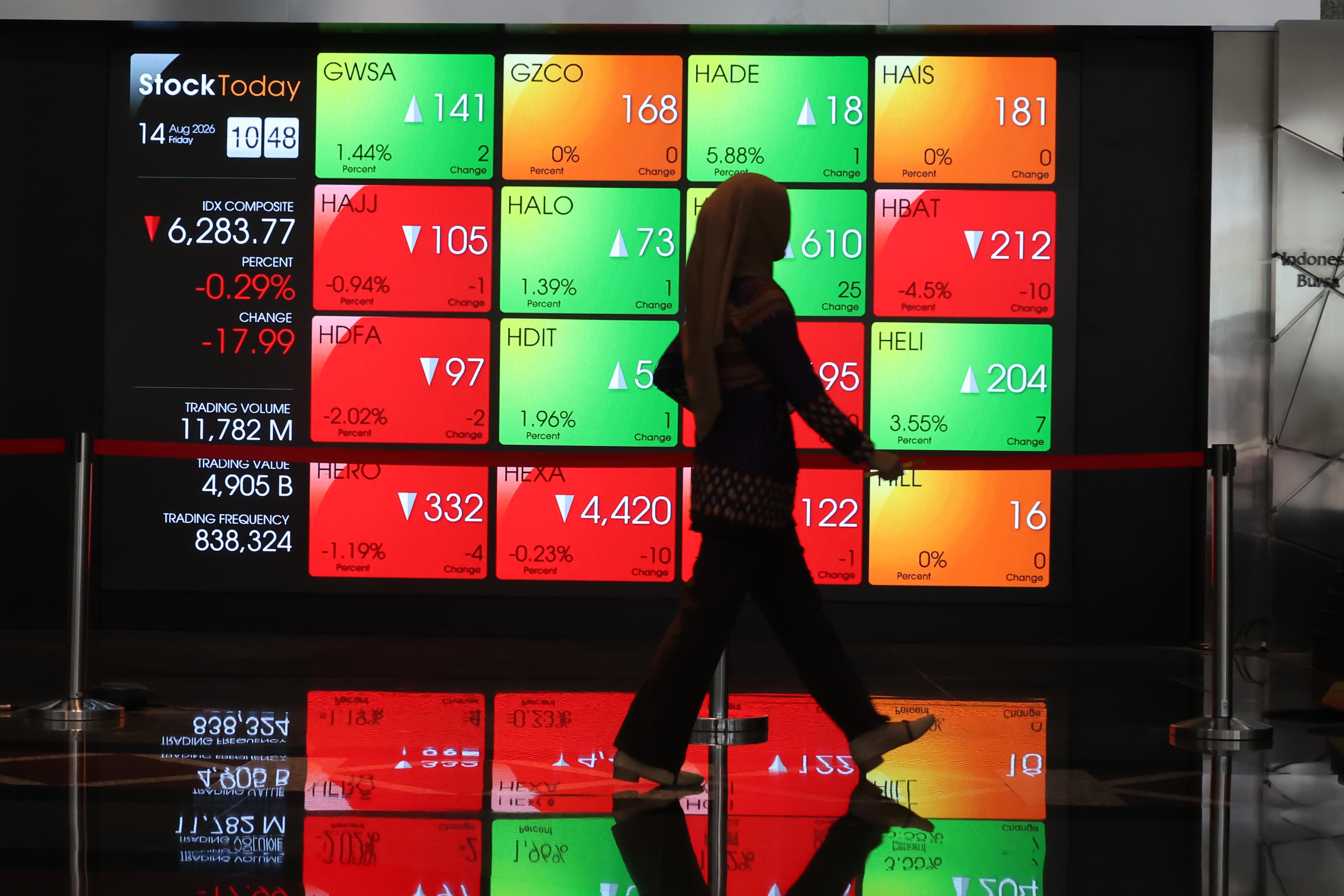
JAKARTA, KOMPAS — PT Bursa Efek Indonesia plans to change the minimum share price limit in the regular and cash markets from Rp 50 to Rp 1 per share. This policy is designed to provide wider price movement while improving the quality of price formation in the domestic capital market.
President Director of the Indonesia Stock Exchange (IDX) Jeffrey Hendrik explained that the removal of the Rp 50 minimum limit aims to provide better liquidity access for market participants. Discussions with relevant associations, such as the Indonesian Securities Companies Association (APEI), the Indonesian Investment Managers Association (AMII), and global investors, were held on Wednesday (19/8/2026) to gather input.
“To provide better liquidity access and price discovery, we will remove the Rp 50 minimum price limit. Details will be conveyed later after gathering input from market participants and measuring the readiness of trading platforms among exchange members,” said Jeffrey in his statement on Thursday (20/8/2026).
This policy will affect shares listed on the special monitoring board due to issues such as low liquidity, negative equity, bankruptcy, and failure to meet certain exchange requirements. Shares on the special monitoring board have so far been traded through periodic call auctions, unlike regular trading during trading hours (continuous auction).
With this rule change, shares on the special monitoring board will be able to be transacted on the regular market. This is expected to cause the frequency and value of share transactions on that list to surge two to three times.
Along with the change in the minimum share price limit, the IDX is also overhauling the rules on lower price limits or lower auto rejection (ARB) and upper price limits or upper auto rejection (ARA) to align with the continuous auction trading mechanism.
Shares with a price range of Rp 1–Rp 10 have ARB and ARA limits each using nominal values, not percentages. Shares with a price range of Rp 11–Rp 200 have an ARB limit of 15 percent and an ARA of 35 percent. Then, the price range of Rp 201–Rp 5,000 has an ARB limit of 15 percent and an ARA of 25 percent. For shares with a price range above Rp 5,000, the ARB limit is 15 percent and the ARA is 20 percent.
This provision will change the existing rule, where the ARB limit is set at 15 percent for all price ranges, while the ARA is set at 35 percent for shares in the Rp 50–Rp 200 price range, then 25 percent for shares priced at Rp 201–Rp 5,000, and 20 percent for shares above Rp 5,000.
This rule change is scheduled to be tested with exchange members on 22 August and 29 August 2026. The official implementation target is 7 September 2026.
Stock market analyst Hendra Wardana, in his statement to Kompas, assessed this policy as a positive step to remove price limit rules that have often locked share prices at levels not in line with their fair value. However, he stressed that regulators and investors should not forget the root cause of issuers’ price declines. “Lowering the minimum limit to Rp 1 makes the market more honest.”
The issue of ‘gocap’ shares, according to Hendra, is not only a matter of trading mechanisms, but also an evaluation of the quality of companies entering the exchange, from business performance, governance, to IPO process criteria. Hendra also reminded retail investors not to fall into the psychological illusion that nominally cheap shares (such as Rp 1–Rp 5) are automatically fundamentally cheap. Investors are required to be more selective in analysing the business quality of issuers rather than merely relying on numbers on the trading screen.
“Investors must return to fundamentals, such as revenue growth, net profit, operating cash flow, debt levels, ability to pay interest, asset quality, free cash flow, ROE, ROIC, and business prospects,” he said.
Similarly, capital market observer from the University of Indonesia, Budi Frensidy, when contacted separately, assessed that sustainable share liquidity still depends on the issuer’s fundamentals. In addition, it also depends on the number of shares traded publicly or free float, the number of genuinely interested investors, and the quality of governance.
The removal of the Rp 50 minimum limit also does not automatically create liquidity. Although the IDX has actually implemented a minimum price of Rp 1 on the special monitoring board, this rule carries risks. Shares that can fall far to the minimum price have the potential for increased volatility and speculation that needs to be monitored more strictly.
“Therefore, this policy needs to be accompanied by appropriate tick size, market makers or liquidity providers, manipulation supervision, and firm delisting rules,” he said.
As expected by the Financial Services Authority, he said, healthy liquidity is needed to support market deepening and price formation. “In short, I support the removal of the Rp 50 limit as long as investor protection is strengthened. Do not let the goal of improving price formation turn into a new arena of speculation on very low-priced shares,” said Budi.