
Indonesia Still Unable to Extract Rare Earth Metals, Here's Why
The export of minerals from several companies has faced disruption due to inspections for rare earth metal content before ships can leave Indonesian waters. However, Indonesia is still considered incapable of extracting these rare earth metals.
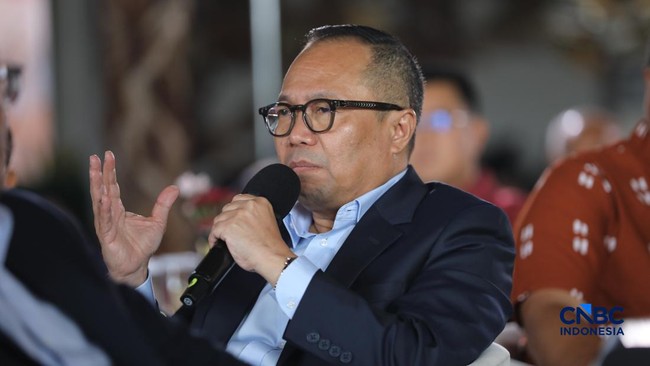
Chairman of the Indonesian Nickel Industry Forum (FINI), Arif Perdanakusumah, stated that extracting rare earth metals requires technological readiness, encompassing identification, mapping, testing, and extraction. “These three phases are crucial. During the upstream exploration identification phase, the focus is generally still on nickel, iron, and cobalt commodities,” he explained during a CNBC Indonesia Coffee Morning event on Thursday (30/7/2026).
According to Arif, the identification of rare earth metal content cannot be carried out due to limited testing equipment. Meanwhile, internal factory laboratories and those of local independent surveyors are focused on the main commodities: nickel, cobalt, iron, silica, and magnesium. “To test for rare earth metals, more sophisticated equipment with high sensitivity is usually required. This is not yet widely available in Indonesia; it is only concentrated in a few state-run research centres and laboratories,” he clarified.
From nickel, rare earth metal extraction can be performed via two routes: metallurgical and hydrometallurgical technologies. Arif noted that these technologies currently focus on the supply chain to support the battery and stainless steel ecosystem. “In metallurgical technology, even if rare earth metals are present, they will be seen either in the slag or discarded in the waste residue. The technology to extract these rare earth metals does not yet exist,” he said.
Arif explained that Indonesia needs to establish partnerships with global industry players to carry out rare earth metal extraction. This cooperation can be undertaken by both the government and business entities. “These rare earth metals represent a high-value, long-term potential. This means the approach must be gradual and realistic, because we are still far from being able to extract these rare earth metals commercially and profitably,” he stated.
On the same occasion, Chairman of the Indonesian Bauxite Association (ABI), Ronald Sulistyanto, said the issue of rare earth metal presence has been known for a long time. However, there is still no clear governance regarding the handling of these elements. “This is actually a problem we have known about for quite some time, that rare earth metals exist. But how to manifest these rare earth metals into something tangible requires regulation. Let us return to the fundamentals. For mining matters, it falls under the Ministry of Energy and Mineral Resources (ESDM). Let’s not go elsewhere first,” Ronald said.
He stressed that for commodities like bauxite, rare earth metals are generally associated minerals, not the primary product. Therefore, their regulation must be distinguished from the main commodities, which already have their own provisions. Ronald further explained that the rare earth metal content in processed bauxite products is very small because it has undergone washing, grading, sizing, and purification into alumina. However, Indonesia still lacks adequate technology to deeply analyse the content of these rare earth metals.
“Suddenly, exports are halted. It’s a pity. These business players have shed blood to carry out downstream processing, and we have manifested downstreaming into added value. The product is ready, it should be allowed to be sold. This is also naive, in my opinion. This is a mess, driven by the egocentrism of each ministry. In my view, just hand it over to the Ministry of Energy and Mineral Resources (ESDM). ESDM already has the regulations to manage it. The regulation states the content is 0.06 to 0.08 ppm. It’s very small,” he asserted.