
Indonesia Still Has Hope for its Students to Become Environmental Changemakers
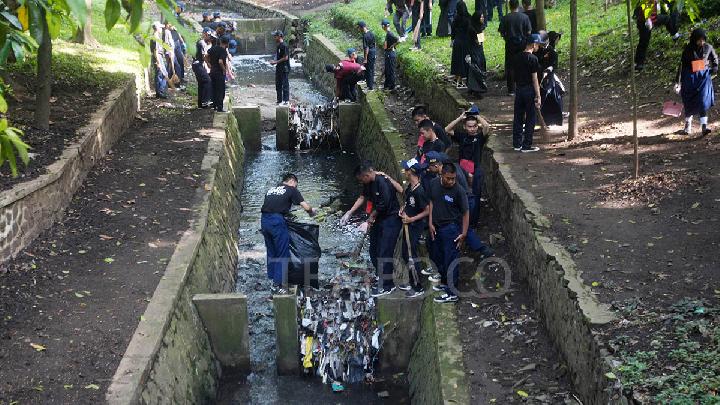
Indonesia Still Has Hope for its Students to Become Environmental Changemakers
Reporter
September 27, 2026 | 01:01 pm
By Adides Gidson Simanjuntak, Environmental Systems and Societies teacher at Beacon Academy, Jakarta
Volume I of the PISA 2025 results for 15-year-olds offers a more comprehensive assessment of students’ environmental agency than previous cycles. Its framework rests on four connected dimensions: environmental-science proficiency, environmental attitudes, environmental commitment, and opportunities for environmental learning at school. According to the report, no single dimension outweighs the others in shaping students’ environmental agency, as each can support and reinforce the rest.
The first dimension, the academic assessment, tests students’ understanding of Earth systems and their ability to explain human impacts, interpret scientific evidence, and reason about possible environmental solutions. Here, Indonesia scores below the OECD average, with only around 39.5% of its students reaching Level 2 or above.
At Level 2, students should be able to describe how human activities affect Earth systems, including both intended positive actions and unintended negative consequences. They should also be able to explain how practical solutions to socio-ecological challenges might affect them or their families, and to choose the best justification for decisions on environmental and climate-related risks using simple, clear reasoning. Students who fall short of Level 2 are classified as low performers.
The second dimension is about environmental attitudes. However, Indonesian students do not report particularly high environmental awareness; instead, they report very high belief in their personal capacity to generate environmental change and in collective environmental efficacy. This is one of the most interesting findings.
Around 94.4% of Indonesian students believe that if people work together, they can resolve environmental issues. Indonesian students therefore show high confidence that they can personally contribute to environmental change and that communities can act collectively. The report also shows that more than 90% of Indonesian students believe that looking after the global environment is important to them.
The third dimension is environmental commitment, which considers both short-term and long-term commitment. Around 94.5% of Indonesian students reported participating in at least one of the environmental activities measured by PISA during the previous year, one of the highest shares among participating countries and economies. For long-term commitment, 92.5% of Indonesian students reported at least some interest in contributing to environmental protection through their future jobs, placing Indonesia among the highest-performing countries and economies on this measure.
The fourth dimension covers the environmental learning opportunities available to students at school, and here the support Indonesian students report from their teachers is notable. Students say their teachers introduce environmental issues in class, discuss environmental solutions, give them opportunities to research environmental issues, and assess their environmental knowledge. These opportunities may be linked to stronger environmental awareness and agency, although PISA does not show that they directly cause these outcomes.
Another notable finding is that, although the majority of Indonesian students say that caring for the global environment is important to them, 54.7% of Indonesian students both care about the environment and still remain below Level 2 in environmental science. In PISA, students below Level 2 are considered not to have reached the baseline level of environmental-science proficiency. This means that strong environmental concern among Indonesian students does not always correspond with strong demonstrated environmental-science proficiency.
Comparison graphics. Image: OECD PISA 2025
This raises a central question about how the four dimensions support one another. The PISA report itself shows a positive relationship between environmental attitudes and environmental-science proficiency: students who perform better in environmental science tend to report stronger environmental awareness, stronger belief in their personal capacity to generate environmental change, and stronger collective environmental efficacy.
However, Indonesia presents an interesting country-level contrast. Despite relatively low environmental-science proficiency, Indonesian students rank among the highest in the world on several measures of environmental agency and commitment. How can this combination occur, and what might explain it?
To answer that, we first need to look at how the results differ among groups of students. The data show substantial inequalities in environmental-science proficiency. Advantaged Indonesian students have an average score of about 425 points, compared with about 375 points among disadvantaged students, a gap of roughly 50 points. Location also matters. Students living in Indonesian cities score about 422 points in environmental science, while those living in rural areas score about 364 points, a difference of roughly 58 points. This shows a substantial rural–urban disparity and unequal proficiency problem in terms of how environmental-science knowledge is distributed among students.
Yet even disadvantaged Indonesian students still report high participation in environmental activities. Around 92.7% of disadvantaged students reported participating in at least one environmental activity, while about 90.3% expressed interest in contributing to environmental protection through their future careers. The report did not discuss directly why this gap may exist, particularly the gap between environmental-science knowledge and environmental efficacy. The data does show that students living in more advantaged conditions tend to have higher environmental-science proficiency than those living in disadva