
Indonesia-South Korea Relations Level Up: Moving Beyond Factories to EVs and KF-21
The relationship between Indonesia and South Korea is entering a new chapter. For several decades, economic cooperation between the two nations has been characterised by manufacturing investment and labour-intensive industries. However, the direction of this relationship is now beginning to shift. Indonesia and South Korea are starting to target deeper cooperation, ranging from electric vehicles and batteries, shipbuilding, and clean energy, to the defence industry and aviation technology.
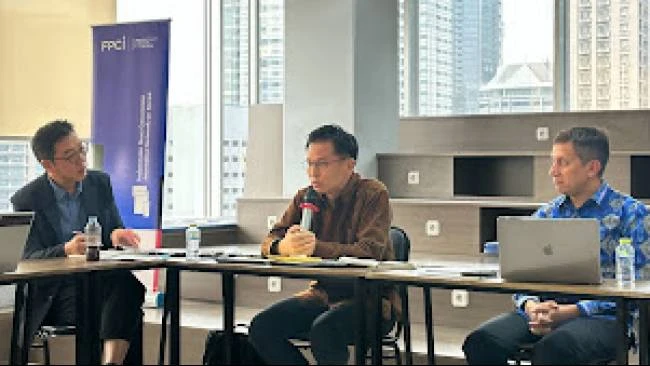
This change reflects a single reality: the Indonesia-South Korea economic relationship is no longer just about how many factories are built, but also about which technologies can be mastered and how much the capacity of Indonesian industry can grow. This new direction emerged during the discussion ‘Understanding the Indonesia–Korea Special Comprehensive Strategic Partnership in a Fragmented World’ held by the Foreign Policy Community of Indonesia (FPCI) and the Korea Foundation in Jakarta on 26 August 2026.
“We must look at new territories of cooperation in new industries that we can collaborate on,” said Uhm on Wednesday (26/8/2026). Meanwhile, the Head of the Centre for Asia Pacific and Africa Policy Strategy at the Indonesian Ministry of Foreign Affairs, Vahd Nabyl Achmad Mulachela, noted that South Korea now holds a vital position for Indonesia, including as a partner in closing the technological gap.
The strengthening of this relationship is proceeding within the framework of the Indonesia-South Korea Special Comprehensive Strategic Partnership (SCSP). In April 202 and, the two nations exchanged 10 Memorandums of Understanding (MoU) covering various sectors, including the economy, critical minerals, digital and artificial intelligence (AI), clean energy, carbon capture and storage (CCS), and financial cooperation.
The Indonesian government stated that the value of cooperation resulting from President Prabowo Subianto’s visit to South Korea reached approximately 10.2 billion USD, or around Rp173 trillion. However, the sheer scale of investment is not the only metric. The challenge lies in ensuring that such investments create new domestic capabilities.
As an archipelagic nation, Indonesia has a significant need for the maritime industry. On the other hand, South Korea possesses long-standing experience in the shipbuilding industry with companies such as Hyundai Shipyard, Hanwha Ocean, and Samsung Heavy Industries. Uhm assessed that this sector is one of the areas that could align Indonesia’s needs with South Korean expertise.
“In my view, the area of cooperation that bridges our (South Korea) expertise and Indonesia’s needs is the shipbuilding industry. I believe discussions are already taking place, and under the leadership of both our Presidents, I hope something will be produced from this,” said Uhm.
The targeted cooperation does not stop at the construction of production facilities. There are opportunities to drive technology transfer, enhance workforce competence, and strengthen the domestic shipbuilding supply chain. Nabyl stated that the shipbuilding industry is even one of the priorities being reviewed by the Indonesian Ministry of Foreign Affairs in its cooperation with South Korea.
South Korean capital is not only intended to build production facilities in Indonesia but is also expected to leave behind industrial capabilities that Indonesia can further develop. This shift is already visible in the electric vehicle industry. South Korean investment in Indonesia has evolved from building vehicle manufacturing facilities towards a longer industrial chain. This chain extends from nickel processing and battery raw materials to battery cell production and electric vehicles.
Uhm cited Hyundai’s investment in Indonesia, which subsequently expanded into the battery sector. This ecosystem has also attracted other Korean companies, including EcoPro, which is reported to have invested more than 1 billion USD in Indonesia’s nickel smelting industry. Within this chain, each country brings different strengths. One result mentioned in the discussion was the Hyundai Kona Electric, which has a local content requirement (TKDN) of approximately 80 percent.
However, the longer the industrial chain, the more complex the challenges. South Korea hopes the Indonesian government will provide incentives and regulatory ease for electric vehicles using nickel-based batteries. “We sincerely hope the Indonesian government can provide incentives and ease regulations for batteries using nickel, which will also be very beneficial for Indonesia,” said Uhm.
According to him, nickel-based batteries possess characteristics suitable for the industrial ecosystem being built, but their production costs are relatively higher compared to some other types of batteries. Therefore, policy certainty is a crucial factor for the sustainability of investment.
Energy is also part of the expanded cooperation. In the agenda strengthened in April 2026, both nations included clean energy and carbon capture and storage technology as part of their cooperation. If the investments are realised, Korean companies can bring technology and funding, while the Indonesian workforce participates in the operation of the facilities. Opportunities for knowledge transfer are also open through this cooperation.
For Indonesia, the energy transition has broader economic consequences. As more countries pay attention to carbon footprints in trade and production processes, Indonesia’s ability to develop clean energy is directly linked to the competitiveness of Indonesian products in the global market. Consequently, electric vehicles, solar energy, and low-carbon technology are not merely part of an environmental agenda, but are also integral to Indonesia’s industrial and trade strategy.
Indonesia-South Korea cooperation is also entering a new phase in the defence sector. The KF-21/IF-X fighter jet project serves as one of the most ambitious examples. Indonesia was previously involved in the scheme…