
Indonesia–South Korea Cooperation: Academic Proposes AI for Community Health Centre Services
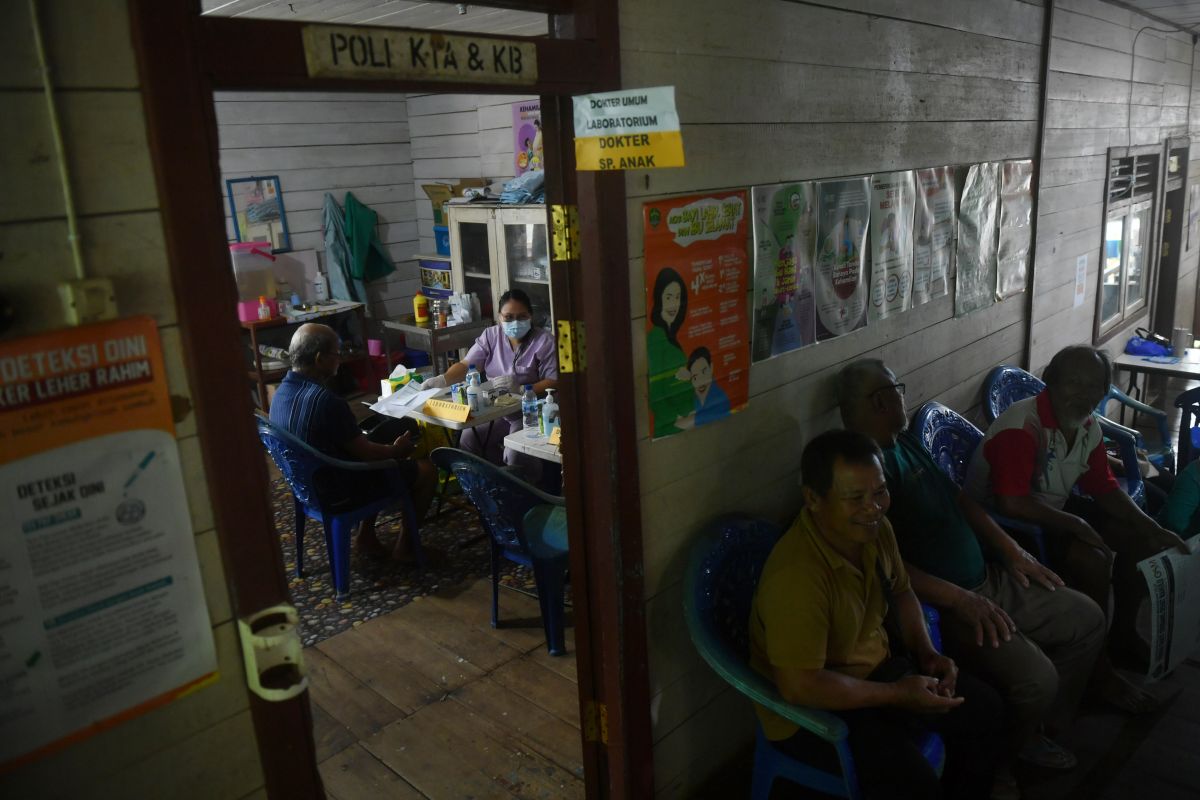
Jakarta (ANTARA) – Dedy Permadi, an academic at Gadjah Mada University (UGM), has recommended using artificial intelligence (AI) to support healthcare services at community health centres (puskesmas), particularly in remote areas, as a follow-up to cooperation between Indonesia and South Korea.
“Indonesia could improve healthcare services at puskesmas in rural areas, while Korea could test its technology model in archipelagic regions,” Dedy said at a workshop organised in Jakarta on Friday (30 October) by the Foreign Policy Community of Indonesia (FPCI) and the Korea Foundation, as part of the Indonesian Next Generation Journalist Network on Korea.
Dedy, a lecturer in international relations at UGM, said South Korea had developed an AI prototype for basic healthcare services which, he said, had been tested in one of the country’s rural areas. The technology could be developed further and deployed in Indonesia.
He also emphasised the importance of knowledge transfer, so that Indonesia would not merely use the technology but would also build the skills of healthcare workers, engineers and researchers.
The Indonesian and South Korean governments signed an agreement on AI for basic healthcare and human development in Seoul on 1 April 2026. It covers the use of AI in public healthcare, maternal and child health, community-based mental health, and health resilience through data and digital systems.
As part of the agreement’s implementation, the two countries will promote cooperation through information and technology exchanges, training and capacity-building, joint projects, and the involvement of experts from both countries.
Dedy said the scope and priorities of the cooperation were sufficiently clear. However, several aspects still needed to be strengthened, including funding arrangements, data governance, intellectual-property rights, and implementation targets and timelines. The memorandum of understanding does not set out a specific budget allocation.
Dedy said the two countries had established a working group and held ministerial-level communications as initial follow-up steps. However, agreement on funding and implementation arrangements remained to be finalised.
At the same event, Howon Kim, president of the Korea Institute of Information Security and Cryptology (KIISC), said cooperation needed to be translated into projects with clear objectives and measures of success.
He said each project should identify the problem it aims to solve, its service users and stakeholders, and how its results will be measured.
Kim said introducing AI in hospitals required more than simply providing the technology: systems also needed data for training, operational funding and clear procedures for dealing with errors in AI use.
He added that the two countries had complementary strengths. Indonesia has a young, technology-skilled workforce, knowledge of local infrastructure conditions and a large market, while South Korea has strengths in AI development, systems integration, cybersecurity and industrial systems.
Source: jawawa.id (https://jawawa.id/newsitem/indonesia-south-korea-cooperation-academic-proposes-ai-for-community-health-centre-services-1793451195)
Originally published by Antara (Indonesian) (https://www.antaranews.com/berita/5823863/kerja-sama-ri-korea-akademisi-usulkan-ai-untuk-layanan-puskesmas), translated from Indonesian