
Indonesia-Singapore Tensions Rise, Putting Investment and Gas Supplies in Focus
Relations between Indonesia and Singapore have again come under scrutiny after several Indonesian government officials made strong statements about the neighbouring country.
The tensions have emerged as President Prabowo Subianto’s administration faces pressure over its handling of forest fires, welfare programmes and market regulations.
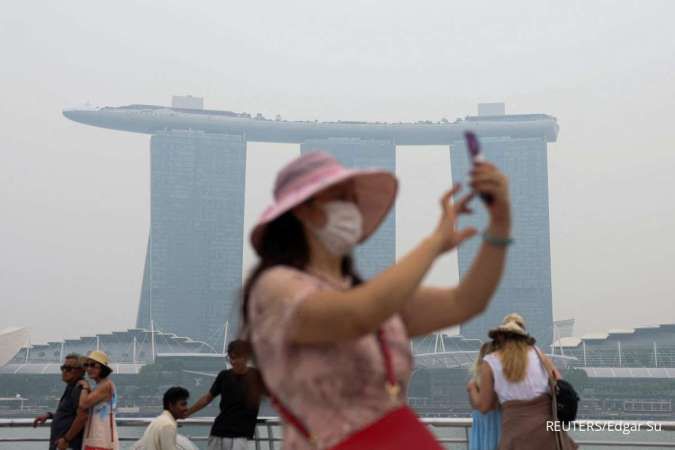
Reuters reported on Friday (30 October 2026) that the Indonesian government had stepped up its nationalist rhetoric after Singapore and Malaysia complained about haze from forest fires in Indonesia affecting the wider Southeast Asian region.
Tensions also surfaced after Indonesia cut gas supplies to Singapore. Indonesia’s Energy Minister said that a country described as a “brother” should not lecture Indonesia about honouring contracts.
The Singaporean government has sought to ease the situation. Singapore’s Foreign Minister Vivian Balakrishnan visited Indonesia this week and met President Prabowo Subianto.
Singapore has also summoned representatives of several companies suspected of having plantation land in Indonesia where fires broke out.
Yohanes Sulaiman, an analyst at Jenderal Achmad Yani University, said the Indonesian government’s nationalist rhetoric was likely to persist as long as domestic pressure on the Prabowo administration continued.
He said President Prabowo often linked various problems to foreign parties. Singapore, whose population is predominantly of Chinese descent, was seen as a relatively easy target.
In his view, the Singaporean foreign minister’s visit showed that relations between the two countries were not fracturing.
Syahganda also explained that the gas supply cut was driven by domestic requirements and had merely coincided with a period when relations between the two countries appeared to be worsening.
Domestic Pressure and Market Turmoil
Tensions with Singapore have arisen as the Prabowo administration faces several domestic challenges. The government had also come under international pressure after global index provider MSCI threatened to downgrade Indonesia’s capital market status.
The threat also shook Indonesia’s financial markets. A former Indonesian official even accused Singapore’s sovereign wealth funds of playing a role in the pressure on MSCI, but provided no evidence.
Yohanes said the threatened downgrade by MSCI had added to the pressure on the Prabowo administration, amid forest fires, food-poisoning cases and corruption allegations linked to the free nutritious meals programme.
Prabowo’s popularity was also reported to have declined. According to one poll, approval of his performance stood at 44.5 per cent in October, down from 81.2 per cent at the end of last year.
Demonstrations also took place in several Indonesian cities this week to protest the government’s response to the forest fires.
Analysts said the latest tensions resembled earlier episodes in which Indonesia criticised external powers, including Singapore, Malaysia and Western countries, while dealing with domestic problems.
In 1998, Indonesia’s president at the time called Singapore a “little red dot” that was not a friend of Indonesia while discussing the Asian financial crisis.
That period coincided with hyperinflation and domestic instability in Indonesia.
Economic Ties Remain Interdependent
Despite the forceful statements from several officials, current and former officials from both countries have sought to ease tensions.
Singapore’s Foreign Minister Vivian Balakrishnan said differences of opinion were normal in relations between countries. Polemical remarks, he added, could sometimes arise from time to time.
Suryo Pratomo, Indonesia’s former ambassador to Singapore, said statements by several Indonesian ministers were spontaneous reactions rather than official government policy.
The two countries also have close economic ties. Singapore is Indonesia’s largest source of foreign direct investment, with investment reaching US$17.4 billion last year.
Indonesia, in turn, remains dependent on fuel imports and global internet cable routes passing through Singapore.
Foreign policy analyst Dewi Fortuna Anwar said the tensions were more akin to an issue that had been blown out of proportion.
However, she warned that nationalism sensitive to criticism or interference from other countries could trigger strong reactions to differences of opinion with neighbouring states.