
Indonesia Showcases Shark and Ray Conservation Efforts at Global Forum
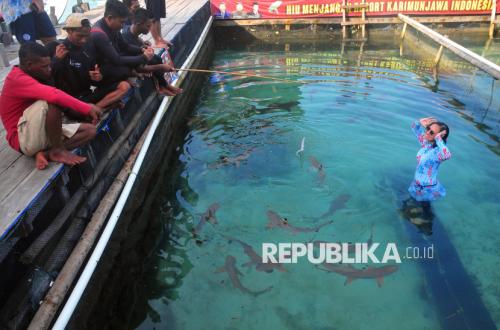
REPUBLIKA.CO.ID, JAKARTA – Indonesia, through the Ministry of Marine Affairs and Fisheries (KKP), has introduced a collaborative approach to shark and ray conservation at the international forum, Sharks International 2026, in Colombo, Sri Lanka. Through this forum, Indonesia shared lessons learned and best practices in implementing the Convention on International Trade in Endangered Species of Wild Fauna and Flora (CITES) as part of its efforts to manage marine resources sustainably.
Indonesia’s participation in the panel session titled ‘Listed but Vulnerable: Enforcing CITES for Sharks and Rays’ demonstrates the KKP’s active commitment to strengthening the governance of shark and ray conservation at the global level.
The forum served as a platform for inter-country discussions on the challenges and strategies for implementing CITES regarding the trade of sharks and rays listed in the CITES appendices.
Through the KKP, Indonesia presented its national approach to strengthening policies, sustainable fisheries management, developing Non-Detriment Findings (NDF), regulating quotas, and overseeing the trade of protected marine species through a presentation entitled ‘From Listings to Action: Indonesia’s Integrated Approach to Enforcing CITES for Sharks and Rays’.
The Director of Species and Genetic Conservation, Sarmintohadi, stated that Indonesia continues to strengthen the implementation of CITES through a collaborative approach involving the government, academics, researchers, law enforcement officials, conservation organizations, and coastal communities.
“As a country with high diversity of sharks and rays, Indonesia has an important responsibility to ensure that the trade of these species is conducted legally, measurably, and sustainably. The implementation of CITES not only focuses on controlling trade but also on maintaining the sustainability of marine resources and protecting the livelihoods of coastal communities,” said Sarmintohadi in a written statement in Jakarta, Friday (May 15, 2026).
According to him, various steps have been taken by the KKP, starting from preparing NDFs, strengthening the traceability system for fishery products, improving the capacity for species identification, and strengthening cross-ministerial and agency coordination in overseeing the trade of sharks and rays.
This approach is considered important to support the effectiveness of CITES implementation in the field.
The international panel also brought together representatives from Latin America, Ecuador, Sri Lanka, academics, conservation organizations, and customs authorities to discuss the various challenges of implementing CITES in their respective countries and regions.
The discussion included species identification, monitoring the trade supply chain, strengthening human resource capacity, and the importance of regional cross-country cooperation in supporting the sustainable conservation of sharks and rays.
The Director-General of Marine Resource Management, Koswara, affirmed that Indonesia’s participation in the international forum is part of the government’s commitment to strengthening Indonesia’s role in global marine conservation governance.
“The KKP continues to encourage the effective, measurable, and equitable implementation of CITES through strengthened trade supervision, improved product traceability, and multi-party collaboration to support the sustainable conservation of sharks and rays,” said Koswara.
This is in line with the policy of the Minister of Marine Affairs and Fisheries, Sakti Wahyu Trenggono, who reaffirmed the government’s commitment to strengthening the blue economy through the protection of marine ecosystems, the conservation of endangered species, and the sustainable management of marine resources to maintain the health of the ocean and the welfare of future generations.